
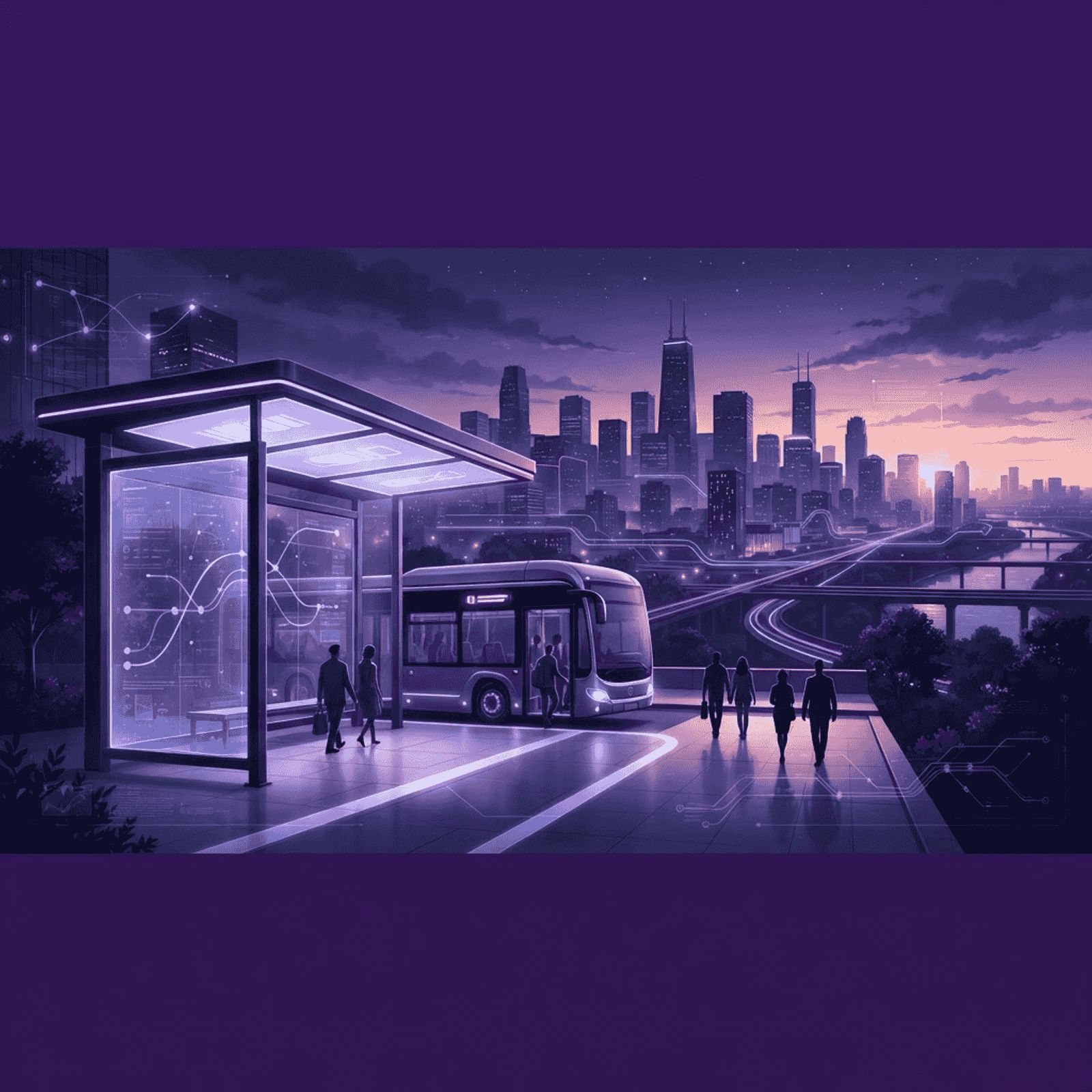
Mobility in a Car-Oriented City
Fort Wayne grew up around the automobile, and most of its street network reflects that. Yet the city also supports a working public transit system, a growing set of shared mobility options, and intercity connections that make car-free and car-light living genuinely feasible for students, downtown workers, older residents, and anyone trying to reduce transportation costs.
Transportation is typically the second largest household expense after housing. Replacing even one vehicle with a mix of transit passes, bike trips, and occasional rideshare can free a substantial amount of monthly income. Understanding the full menu of local options is the first step toward making that trade deliberately rather than by necessity.
The Top 10 Public Transit and Mobility Services in Fort Wayne
1. Citilink fixed-route bus service
Citilink is the backbone of public transportation in Fort Wayne, operating fixed routes that radiate from a central downtown transfer point and connect major destinations including hospitals, retail corridors, employment centers, and educational campuses. Fares are modest, day and monthly passes reduce per-trip cost significantly, and buses are equipped with bike racks and accessible boarding. For commuters along well-served corridors, it is the most economical option available.
2. Citilink Access paratransit
Access provides origin-to-destination service for riders whose disabilities prevent them from using fixed-route buses. Trips are reserved in advance, and eligibility is determined through an application process. For many residents, this service is the difference between independence and isolation, supporting medical appointments, employment, and daily errands that would otherwise require family coordination.
3. Citilink Flex and on-demand zones
On-demand and flexible service models supplement fixed routes in areas where ridership density does not justify frequent buses. Riders request a trip within a defined zone and are picked up at or near their location, often connecting to a fixed route for the longer portion of the journey. This hybrid approach has become one of the most important tools mid-sized cities use to extend coverage affordably.
4. Campus shuttle services
Purdue University Fort Wayne, Indiana University Fort Wayne, Ivy Tech Community College, and the University of Saint Francis operate or coordinate shuttle and parking circulator services that move students between lots, residence halls, and academic buildings. Students should also ask about discounted or fare-free transit arrangements, which frequently exist and are underused simply because they are not well publicized.
5. Greyhound intercity coach service
Greyhound connects Fort Wayne to Indianapolis, Chicago, Detroit, and points beyond, providing affordable intercity travel without a car. For students traveling home, families visiting relatives, or travelers connecting to major airports, scheduled coach service remains one of the lowest-cost options for regional trips.
6. Barons Bus and regional coach operators
Regional coach operators such as Barons Bus supplement national networks with additional Midwest routing, often serving college towns and secondary cities that larger carriers skip. Comparing schedules across operators frequently reveals a better departure time or a shorter total trip than any single carrier's timetable shows.
7. Airport ground transportation
Fort Wayne International Airport is served by taxis, rideshare, hotel shuttles, and rental agencies, and its relatively compact layout makes ground connections quick. Travelers on tight budgets should compare a rideshare to the airport against long-term parking, since for trips longer than a few days the ride is often cheaper than leaving a car behind.
8. Uber and Lyft
Rideshare has become part of the practical transit mix rather than a luxury alternative. Its most valuable role for transit-dependent residents is filling gaps: covering the first or last mile to a bus stop, handling late-night trips after service ends, and providing backup when a schedule fails. Used selectively alongside a transit pass, it costs far less than vehicle ownership.
9. Medical and senior transportation programs
Several healthcare systems, senior service organizations, and community agencies in the Fort Wayne area coordinate non-emergency medical transportation for appointments, dialysis, and therapy. Eligibility often depends on age, insurance coverage, or income, and these programs are chronically underutilized because patients do not know to ask. A single question to a care coordinator can uncover reliable, low-cost rides.
10. Vanpool and employer commuter programs
Larger Fort Wayne employers, particularly in manufacturing and healthcare with shift-based schedules, sometimes support vanpools, carpool matching, or subsidized transit passes. These programs reduce parking demand for the employer and commuting cost for the employee, making them one of the easiest wins available to workers who simply inquire with human resources.
How to Build a Practical Car-Light Routine
Start by mapping your fixed obligations. Identify your commute, your regular medical or childcare stops, and your grocery routine, then check which of those fall along a Citilink route. Most people discover that two or three of their four recurring trips are well served, and only one requires a workaround.
Next, buy the right fare product. Riders who take more than a handful of trips per week almost always save money with a monthly pass, and the psychological effect matters too: once the pass is paid for, choosing the bus stops feeling like a cost decision.
Then solve the last mile deliberately. A bicycle, an e-scooter, or a fifteen-minute walk turns a route that ends half a mile from your destination into a workable commute. Fort Wayne's expanding trail network makes this easier than the street grid alone would suggest.
Finally, keep a backup plan. Weather, overtime, sick children, and schedule changes will happen. Knowing in advance that you will use rideshare on those days, and budgeting for it, prevents a single disrupted trip from pushing you back into full-time driving.
Trends Shaping Local Transit
Mid-sized American cities are converging on a few strategies, and Fort Wayne reflects them. Real-time arrival information and mobile fare payment have raised rider expectations and reduced the anxiety of unfamiliar routes. On-demand microtransit zones are being used to serve low-density areas that fixed routes cannot cover economically. Fleet modernization, including cleaner and quieter buses, is improving both the rider experience and local air quality. And transit planning is increasingly tied to housing and employment development, so new corridors get service earlier than they once did.
Final Thoughts
Public transit in Fort Wayne rewards residents who take an hour to learn it. Citilink fixed routes, Access paratransit, and flexible on-demand zones cover the core needs, campus shuttles serve students, Greyhound and regional coaches handle intercity travel, and rideshare, vanpools, and medical transportation programs fill the remaining gaps. Combined thoughtfully, these services can replace a significant share of driving, lower household expenses, and make the city more accessible for everyone who cannot or chooses not to drive.