
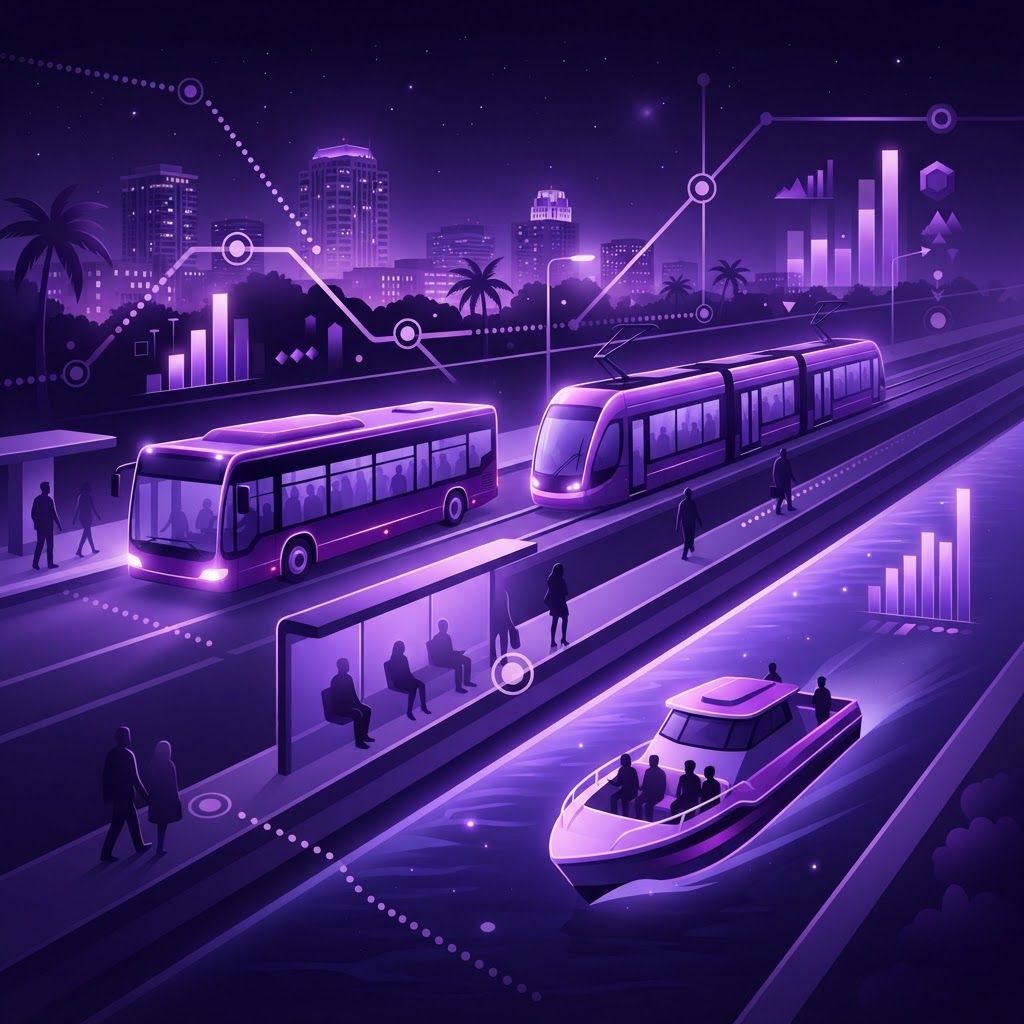
Getting Around Without a Car
South Florida has a reputation as car territory, and for much of Broward County that remains true. Fort Lauderdale itself, however, is more transit-friendly than many visitors expect. The downtown core, the beach strip, Las Olas Boulevard, and the cruise port are all within a compact area linked by buses, a free community shuttle, water transport along the Intracoastal, and rail connections reaching north and south along the coast.
For residents, the calculation is about cost and congestion. Parking downtown is expensive, Interstate 95 crawls during peaks, and a household running one car instead of two saves a substantial amount annually. For visitors, transit offers a way to reach the beach, downtown restaurants, and the airport without rental car costs and the perpetual hunt for parking near the shoreline.
Ten Transit Services Serving the City
1. Broward County Transit The backbone bus network, operating extensive fixed routes across the county with connections to rail stations, the airport, and neighbouring counties. Fares are low and day passes make multiple trips economical.
2. Tri-Rail Commuter rail running along the western corridor connecting Broward with Miami-Dade and Palm Beach counties, with an airport connection and park-and-ride facilities at most stations.
3. Brightline Express intercity rail with a downtown Fort Lauderdale station, linking the city to Miami, West Palm Beach, Boca Raton, Aventura, and Orlando with modern trains and premium seating options.
4. Sun Trolley A community shuttle network operating several routes around downtown, Las Olas, and the beach, with low or no fares on certain routes and a friendly, visitor-oriented service style.
5. Water Taxi Fort Lauderdale A genuinely useful transport option along the New River and Intracoastal Waterway, connecting downtown, Las Olas, the beach, and waterfront restaurants while doubling as a sightseeing experience.
6. Broward County Transit Express Routes Limited-stop services on major corridors designed to cut commuting times between suburban areas and the downtown core.
7. TOPS Paratransit Service Door-to-door transport for residents unable to use fixed-route services, operating county-wide with advance booking.
8. Fort Lauderdale Community Bus Municipal circulator routes serving neighbourhoods and connecting residents to shopping, medical facilities, and main transit corridors.
9. Airport Shuttle Connections Scheduled links between Fort Lauderdale-Hollywood International Airport, rail stations, and hotel districts, useful for travellers avoiding taxi and rideshare costs.
10. Micromobility Share Programs Docked and dockless bicycle and scooter services filling the first and last mile between transit stops and final destinations, particularly along the beach and downtown.
Building a Practical Journey
The most effective transit use in Fort Lauderdale combines modes. A typical commuter might drive to a rail station, take the train, and finish with a shuttle or scooter. A visitor might take rail from the airport area, transfer to a bus or trolley downtown, and use the water taxi to reach the beach.
Fares differ by operator, so check whether transfers are included. Day and weekly passes on the bus network usually pay for themselves within two or three rides. Rail tickets are separate, and the express intercity service operates on a distinct fare structure with prices that rise closer to departure.
Frequency is the main constraint. Core bus corridors run often enough for casual use, but suburban routes can have long gaps, especially in evenings and on weekends. Checking a real-time arrival app before leaving is the difference between a five-minute wait and a forty-minute one.
The Water Taxi Advantage
Few American cities offer a water-based transport network as practical as Fort Lauderdale's. With hundreds of miles of navigable waterways, the water taxi reaches destinations that road traffic struggles with, particularly during peak hours and when drawbridges are raised. It connects downtown, the Las Olas district, beachfront hotels, and waterfront dining without touching a road.
It is slower than driving in free-flowing traffic but often faster during congestion, and it is far more pleasant. Day passes allow unlimited hop-on travel, making it an economical way for visitors to cover the main districts while seeing the city from the water.
Accessibility and Equity
Fixed-route buses in the county are wheelchair accessible with ramps and securement areas, and rail stations offer level boarding. For those unable to use fixed routes, the paratransit service provides door-to-door transport with advance reservation, though booking early is essential during busy periods.
Transit also serves an important economic function locally. A significant portion of the county's service workforce, including hospitality and healthcare staff supporting the tourism economy, relies on buses to reach shifts. Improvements in frequency and route coverage have direct effects on employment access.
Tips for Riders
Use a real-time transit app rather than printed timetables, since traffic affects bus arrival substantially. Carry a reloadable fare card or use mobile ticketing to avoid exact-change requirements. Plan extra time during event weekends, when the beach corridor becomes heavily congested and buses run behind schedule.
For airport journeys, allow generous buffers. Transit connections to the airport work well but involve transfers, and missing one can cost half an hour. Visitors with early flights often find a pre-booked shuttle or taxi more reliable.
Where the System Is Heading
Investment continues in corridor improvements, additional rail stations along the coastal line, and better integration between modes. Efforts to coordinate fares and provide unified journey planning across operators would meaningfully improve usability, and progress is being made.
The broader trend is clear: as Broward County's population grows and road capacity remains fixed, transit becomes less of an alternative and more of a necessity. For residents and visitors willing to learn the network, Fort Lauderdale already rewards the effort with lower costs and less time stuck in traffic.