
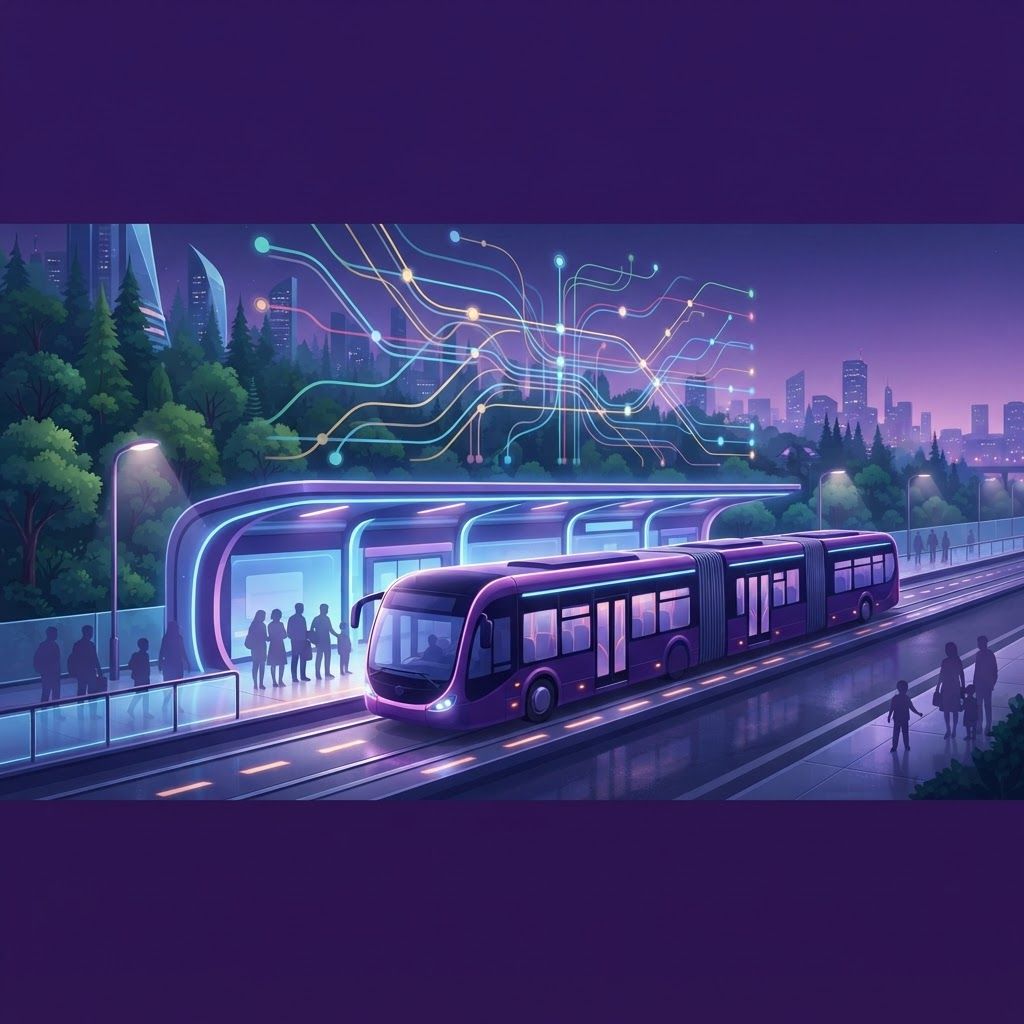
Eugene has a reputation for taking alternative transportation seriously, and public transit is the backbone of that reputation. The city was an early adopter of bus rapid transit in the United States, running frequent service in dedicated lanes with station-style stops and level boarding. For a metropolitan area of this size, the result is a network that makes living without a car genuinely practical for a substantial share of residents rather than merely theoretically possible.
Why Transit Works Here
Several conditions align favorably. The urban form is compact, with a dense downtown, a major university generating constant all-day ridership, and a linear corridor connecting Eugene to Springfield that concentrates demand along a single high-frequency spine. The terrain is flat, which supports the bike-and-ride combination that many riders use for first and last mile connections. And the community has consistently supported investment in service quality, which keeps frequency high enough that riders can travel without memorizing a timetable.
Ten Public Transit Services in Eugene
1. Emerald Express Bus Rapid Transit
The flagship corridor service connecting downtown Eugene, the university district and Springfield with frequent all-day departures, dedicated lanes for much of the route, raised platforms and multi-door boarding. Travel times are competitive with driving during peak periods, and the frequency is high enough that riders simply arrive at the station rather than planning around a schedule.
2. Lane Regional Transit Bus Network
The core fixed-route bus system covering neighborhoods across Eugene, Springfield and surrounding communities, radiating from a central downtown station. Routes are structured around timed connections, which allows reliable transfers even on lower-frequency suburban lines.
3. Accessible Ride Paratransit Services
Origin-to-destination service for riders whose disabilities prevent them from using fixed-route buses, operating with lift-equipped vehicles and trained drivers within the fixed-route service area. Trips are reserved in advance, and eligibility is determined through an application and assessment process.
4. Campus Connector Shuttle
Circulates between university buildings, student housing districts, research facilities and parking areas, with service frequencies tied to the academic calendar. Complements the main bus network by handling short internal trips that would otherwise consume road capacity.
5. Rural Valley Regional Connector
Links Eugene with outlying communities including Cottage Grove, Junction City, Veneta, Oakridge and Florence through scheduled regional routes. For residents of smaller valley towns, these connectors provide access to medical appointments, employment and services that would otherwise require a car.
6. Downtown Free Circulator
A short-loop service connecting the downtown core, government offices, the transit station and nearby cultural venues at no fare. Particularly useful for visitors, employees moving between meetings and anyone making a short midday trip.
7. Night Owl Late Service
Extended evening and late-night routes serving hospitality workers, students and evening event attendees on the main corridors. Late service is what allows people in shift work to genuinely rely on transit rather than treating it as a daytime-only option.
8. Park and Ride Network
A system of peripheral parking facilities where drivers from outlying areas leave vehicles and board frequent buses into the city. Reduces downtown parking demand and shortens the driving portion of longer commutes.
9. Medical Transit Access Program
Coordinates non-emergency transportation to medical appointments for eligible riders, including dialysis, therapy and specialist visits, through a mix of accessible vehicles and volunteer driver programs. Fills a gap that neither fixed routes nor commercial taxis serve well.
10. Group Pass and Employer Transit Programs
Institutional programs through which universities, employers and residential communities purchase transit access for their members, typically allowing boarding with an identification card. These programs account for a significant share of ridership and dramatically lower the per-trip cost for participants.
Fares and Payment
Fares in Eugene are modest by national standards, with single-ride, day and monthly options and reduced pricing for youth, older adults, riders with disabilities and qualifying low-income residents. Contactless payment and mobile ticketing have largely replaced cash handling, and fare capping arrangements mean frequent riders automatically pay no more than the equivalent pass price. Anyone commuting more than a few days a week should verify whether an employer or institutional program already covers their travel, since many residents are eligible without realizing it.
Accessibility
Buses in the network are equipped with ramps or lifts, securement positions for mobility devices, priority seating and audible and visual stop announcements. Paratransit serves riders unable to use fixed routes, and travel training programs help new riders build confidence on the regular system, which offers more freedom and spontaneity than reservation-based service. Riders with specific requirements should contact the accessibility office directly rather than relying on general schedule information.
Building a Car-Light Routine
Start with the trip you make most often, usually a commute, and solve that one first. Combine modes rather than searching for a single perfect route: cycling or walking to a frequent corridor stop typically beats waiting for a low-frequency neighborhood route. Use real-time arrival information rather than printed schedules. Keep a contingency plan for the occasional late night or awkward trip, whether that is a taxi, a bike or an occasional car share. Most households that reduce car use successfully do so by eliminating a second vehicle rather than by giving up driving entirely, and the savings from that single change are substantial.
Trends and Future Direction
Fleet electrification is progressing, with battery-electric buses entering service on urban routes and reducing both emissions and noise along corridors. Signal priority and transit lane extensions continue to improve reliability where buses previously sat in general traffic. Fare technology is simplifying, and integration with bike share and micromobility is making multimodal trips easier to plan in a single application. The sustained challenge, as in every transit system, is maintaining frequency and staffing levels, since frequency is what riders value most.
Final Thoughts
Public transit in Eugene is a genuine asset rather than a service of last resort. The bus rapid transit spine provides frequency most cities of this size cannot match, the supporting network reaches deep into neighborhoods and surrounding towns, and specialized programs cover riders whose needs fall outside the standard model. For newcomers, learning the main corridor first and expanding outward from there is the fastest route to using the system with confidence.