
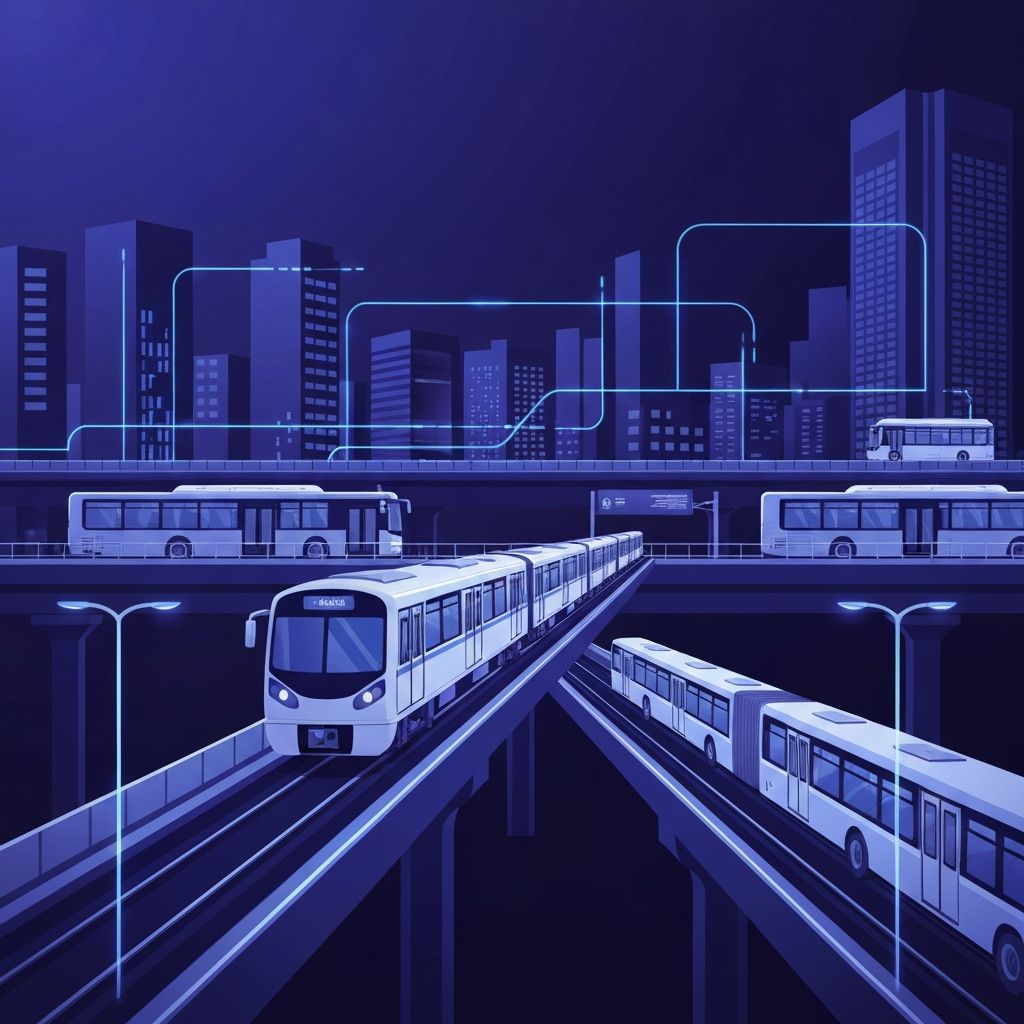
Public Transit in Modern China
China's public transit systems are among the most extensive, modern, and affordable in the world. With dozens of cities operating metro networks and hundreds running large bus systems, public transit serves billions of passenger trips annually. Integrated payment platforms, real-time arrival information, and clean energy fleets have transformed urban mobility into a model studied globally.
Beijing Subway
The Beijing Subway is one of the world's longest metro networks, covering the entire metropolitan area with high frequency. Its trains are clean, punctual, and air-conditioned, while signage in Mandarin and English makes it easy for international visitors to navigate.
Shanghai Metro
Shanghai operates the largest urban rail network on earth by route length, including the famed Maglev line connecting Pudong Airport to the city. The system serves the city's iconic skyline neighborhoods and stretches into surrounding suburbs.
Guangzhou Metro
Guangzhou Metro is renowned for its smooth driverless lines and seamless integration with intercity rail. The system supports the Pearl River Delta megalopolis, linking Guangzhou to Foshan and other surrounding cities through dense rail networks.
Shenzhen Metro
Shenzhen Metro has grown explosively to support the tech capital's booming population. Many lines feature platform screen doors, mobile payment readers, and 5G coverage throughout stations and tunnels.
Hong Kong MTR
While operating under a distinct system, the MTR is widely admired for its reliability, cleanliness, and integration with shopping malls and residential developments. Cross-border services link MTR with Shenzhen Metro, simplifying movement across the boundary.
Chengdu Metro
Chengdu Metro is a fast-growing system serving one of western China's largest cities. The network connects key tourist sites, including those near the famous Giant Panda Breeding Research Base, making it convenient for visitors and locals alike.
Wuhan Metro
Wuhan's transit system serves a sprawling city of more than ten million, with lines that cross both the Yangtze and Han rivers. The metro complements an extensive bus and bike-share network.
Nanjing Public Transit
Nanjing's combined metro and bus operations provide excellent coverage of the historic capital city. Its bike-share integration and smart bus stops contribute to a holistic mobility experience.
Hangzhou Public Transport
Hangzhou is a pioneer in mobile payment integration, with passengers routinely paying for buses and metro rides using Alipay QR codes. The system serves both daily commuters and the millions of tourists who flock to West Lake each year.
Xi'an Metro
Xi'an Metro elegantly weaves modern transit through an ancient city, with stations decorated to reflect historical themes. The network connects major tourist attractions including the Terracotta Warriors site via combined rail and bus links.
Smart Payment Revolution
Public transit in China leads the world in cashless payment adoption. Riders can tap their phones, scan QR codes through Alipay or WeChat Pay, or use stored-value transit cards. Many cities now accept contactless bank cards, simplifying travel for international visitors.
Green and Electric Fleets
Bus electrification is widespread, with cities like Shenzhen fully electrified and others rapidly transitioning. Metro systems are powered increasingly by renewable energy, and station energy efficiency upgrades reduce overall carbon footprints.
Integration Across Modes
Multimodal integration is a defining feature, with metros connecting directly to high-speed rail stations, airports, intercity buses, and bike-share zones. Unified mobile apps display all options in real time, with combined fare discounts in some cities.
Accessibility and Safety
Modern transit systems feature elevators, tactile paving, and audio announcements for accessibility. Security checks at metro entrances are standard, and surveillance combined with on-board personnel maintain high safety standards.
Conclusion
China's public transit services exemplify how urban mobility can be fast, affordable, and sustainable at extraordinary scale. The top ten systems profiled here serve hundreds of millions of riders and continue to set benchmarks that inspire transit planners around the world.