
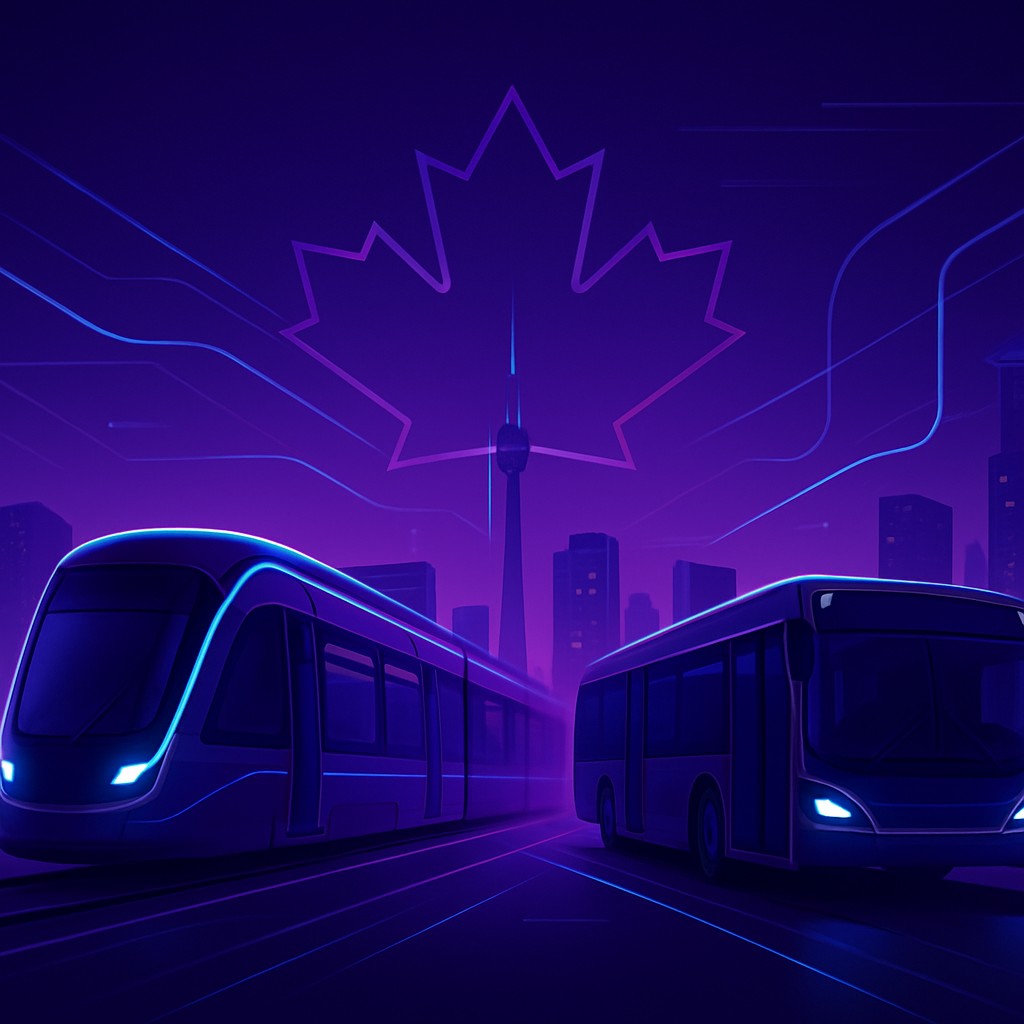
Keeping Canadian Cities Moving
Public transit is the lifeblood of Canada's urban centres. Every day, millions of residents rely on buses, subways, streetcars, light rail, and commuter trains to get to work, school, and everywhere in between. Efficient transit reduces traffic congestion, lowers emissions, and makes cities more livable and accessible for everyone.
Across the country, transit agencies are investing in expansion, modernization, and innovation to serve growing populations. Here are ten of the best public transit services operating in Canada.
Canada's Leading Transit Agencies
Toronto Transit Commission (TTC) is the largest transit system in Canada, operating subways, streetcars, and buses that carry enormous daily ridership. As the backbone of mobility in Toronto, it is undergoing significant expansion to keep pace with the city's growth.
Société de transport de Montréal (STM) runs Montreal's extensive metro and bus network, renowned for its iconic underground stations and high ridership. The integrated system makes navigating the city efficient and convenient.
TransLink serves Metro Vancouver with an integrated network including the automated SkyTrain, buses, and the SeaBus passenger ferry. Its seamless connectivity is widely admired across North America.
OC Transpo provides transit for Ottawa, including the O-Train light rail system and an extensive bus network connecting the national capital region.
Calgary Transit operates the CTrain light rail system, one of the most heavily used light rail networks on the continent, alongside a comprehensive bus service.
Edmonton Transit Service (ETS) serves Alberta's capital with light rail and buses, continually expanding its LRT network to connect more neighbourhoods.
GO Transit provides regional commuter rail and bus service throughout the Greater Toronto and Hamilton Area, linking suburban communities to the urban core for hundreds of thousands of daily commuters.
BC Transit delivers public transportation across British Columbia outside of Metro Vancouver, serving communities of all sizes with buses and specialized services.
Réseau de transport de la Capitale (RTC) serves Quebec City with an efficient bus network and is advancing major projects to enhance regional mobility.
Winnipeg Transit provides bus service throughout Manitoba's largest city, including rapid transit corridors designed to speed up travel across the urban area.
The Benefits of Strong Public Transit
Robust public transit delivers wide-ranging benefits. It reduces road congestion by moving large numbers of people efficiently, cuts greenhouse gas emissions compared to private vehicles, and provides essential mobility for those who cannot or choose not to drive. Affordable transit also promotes economic opportunity by connecting residents to jobs and services.
Well-designed systems enhance quality of life. Reliable, frequent service encourages ridership, while accessible vehicles and stations ensure that people of all abilities can participate fully in city life. Transit-oriented development around stations fosters vibrant, walkable communities.
Innovation and Modernization
Canadian transit agencies are embracing technology to improve the rider experience. Real-time arrival information, mobile fare payment, and trip-planning apps make using transit easier and more predictable. Contactless and unified fare systems are streamlining travel across modes and regions.
Electrification is a major trend, with agencies introducing battery-electric buses to reduce emissions and operating costs. Automated systems like Vancouver's SkyTrain demonstrate how technology can deliver frequent, reliable service efficiently.
Network expansion remains a priority across the country. New light rail lines, subway extensions, and rapid bus corridors are under construction in several cities, reflecting sustained investment in the future of sustainable urban mobility.
The Future of Transit in Canada
As Canadian cities continue to grow, public transit will play an ever more central role in shaping their development. Continued investment in capacity, reliability, and accessibility is essential to meet rising demand and climate goals.
The agencies profiled here represent the best of Canadian public transit, each working to move people efficiently and sustainably. Whether riding the TTC subway in Toronto, the SkyTrain in Vancouver, or the CTrain in Calgary, Canadians benefit from transit systems that keep their cities connected, dynamic, and moving forward.