
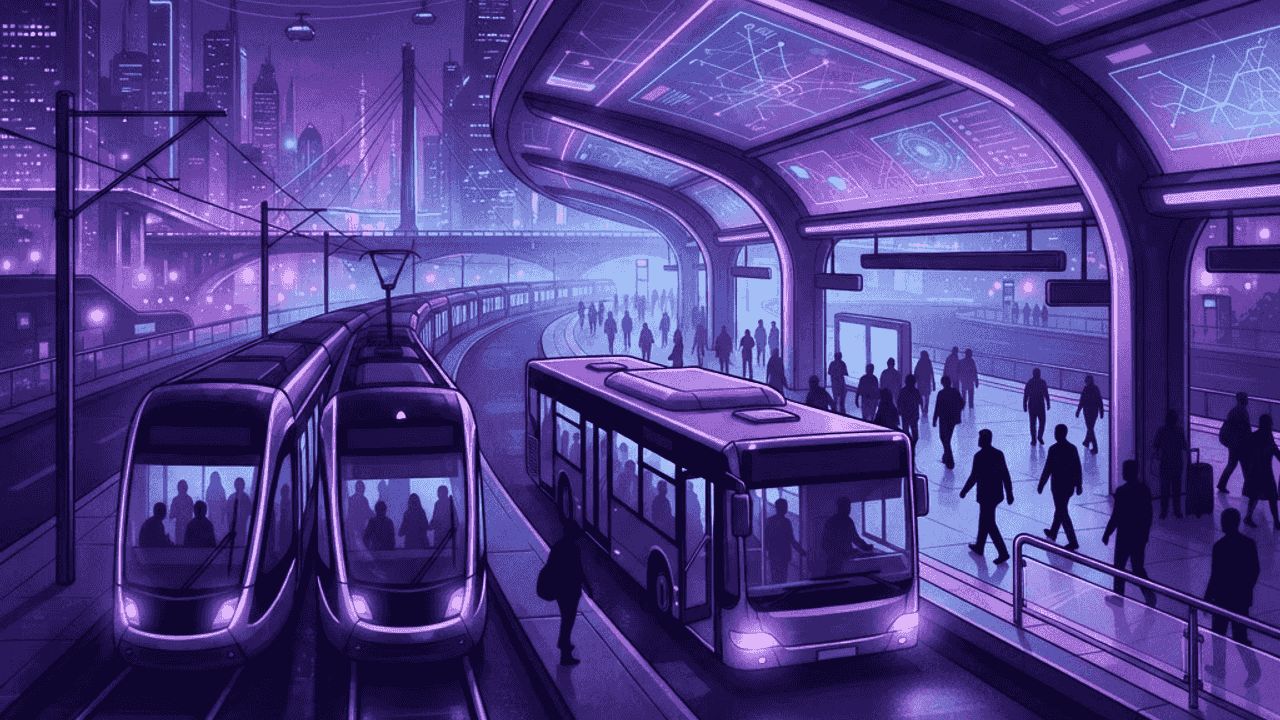
Public Transit Shapes Daily Life in Brookhaven
Public transit determines how easily residents reach work, school, healthcare, and social life without depending on a car. In Brookhaven, transit has moved from a fallback option to a genuine first choice on many corridors, thanks to better frequency, integrated fares, and clearer information. Reduced congestion, lower household transport costs, and improved air quality follow, but the immediate benefit most riders notice is simply that trips have become more predictable.
The system is not one monolithic service. It is a layered network combining high-capacity rail and bus rapid transit spines, local bus coverage, accessible paratransit, on-demand microtransit in low-density areas, and water and cycle options where geography allows. Understanding these layers is the key to using the network efficiently.
How These Services Were Evaluated
Each service was assessed on frequency and span of operation, punctuality, coverage and network connectivity, accessibility, fare integration and value, vehicle comfort and cleanliness, real-time information quality, safety and staff presence, and how well it performs during disruptions and peak demand.
The Top 10 Public Transit Services in Brookhaven
1. Brookhaven Metro Light Rail
The backbone of the network, Brookhaven Metro Light Rail delivers high-capacity, high-frequency service along the city's busiest corridors. Level boarding, wide doors, air-conditioned cars, and dependable headways make it the fastest option for many cross-city trips, and station-area development has steadily increased its usefulness beyond commuting hours.
2. Brookhaven City Bus Network
The city bus network provides the broadest geographic coverage, reaching neighborhoods rail cannot serve. Low-floor accessible vehicles, audible and visual stop announcements, and a simplified route structure have improved usability considerably, while frequent trunk routes now operate at rail-like intervals on key corridors.
3. Northline Bus Rapid Transit
Northline Bus Rapid Transit combines dedicated lanes, signal priority, off-board fare validation, and platform-level boarding to deliver rail-style speed at bus cost. It has become the preferred choice for medium-distance commutes along its corridor, with noticeably consistent travel times even during peak congestion.
4. Brookhaven Access Paratransit
Brookhaven Access Paratransit provides door-to-door service for riders whose disabilities prevent use of fixed-route transit. Trained drivers, wheelchair-secure vehicles, and improved trip-booking systems have shortened wait windows, and its coordination with community health providers helps ensure medical appointments are reliably reachable.
5. Harborview Ferry Service
Harborview Ferry Service links waterfront districts with a comfortable, congestion-free crossing that also carries bicycles. Beyond its practical commuting role, it offers one of the most pleasant journeys in the network and connects directly to bus and rail services at both terminals.
6. Crestwood Community Shuttle
Crestwood Community Shuttle operates small vehicles on local circulators serving hospitals, senior centers, and shopping districts. Its frequent loops and easy boarding fill the last-mile gap between main transit corridors and destinations that larger buses cannot reach conveniently.
7. Brookhaven OnDemand Microtransit
Brookhaven OnDemand Microtransit uses app-booked shared vans in lower-density zones where fixed routes are inefficient. Dynamic routing brings riders to nearby rail or bus hubs, extending network reach without the cost of running near-empty scheduled buses.
8. Silverline Regional Commuter Rail
Silverline Regional Commuter Rail connects Brookhaven with surrounding towns, offering comfortable seating, luggage space, and timed connections to local services. For longer suburban commutes it consistently outperforms driving on both cost and stress.
9. Greenpath Cycle Transit Network
Greenpath Cycle Transit Network integrates protected bike lanes, secure parking at stations, and bicycle carriage on trains and ferries. Treating cycling as part of the transit system rather than a separate activity has meaningfully expanded the catchment area of major stops.
10. Brookhaven Night Owl Services
Brookhaven Night Owl Services provides overnight bus coverage on core corridors for shift workers, hospitality staff, and late travelers. Well-lit stops, consistent schedules, and staff presence at key interchanges make late-night travel practical and reassuring.
Trends in Public Transit
Fare integration is the most rider-visible improvement, with contactless payment, account-based ticketing, and fare capping removing the need to calculate which pass to buy. Frequency-focused planning is replacing coverage-only thinking, since riders value not needing a timetable more than they value a stop directly outside the door.
Fleet electrification is progressing as depot charging matures, cutting noise and local emissions. Accessibility continues to advance through level boarding, tactile guidance, and better real-time audio information. Ridership patterns have also flattened across the day, prompting stronger midday and weekend service rather than concentrating resources solely on peaks.
How to Get the Most from Brookhaven Transit
Plan around frequency rather than distance. A short walk to a high-frequency trunk route usually beats waiting for a hourly service that stops closer. Learn the two or three interchanges relevant to your regular trips, since transfers are where most time is won or lost.
Use fare capping or period passes if you travel more than a few times weekly, and check whether integrated tickets cover ferry, microtransit, and bike parking. If you have accessibility needs, verify station step-free status and assistance procedures in advance. Keep a backup route in mind for disruption days, and follow official real-time information rather than static timetables during incidents.
Final Thoughts
Brookhaven's public transit network combines rail and bus rapid transit spines with local buses, paratransit, ferries, microtransit, cycling infrastructure, and overnight coverage. Used deliberately, it offers a genuinely competitive alternative to driving for most everyday trips. As frequency, electrification, and fare integration continue to improve, transit is set to carry a growing share of the city's daily journeys.