
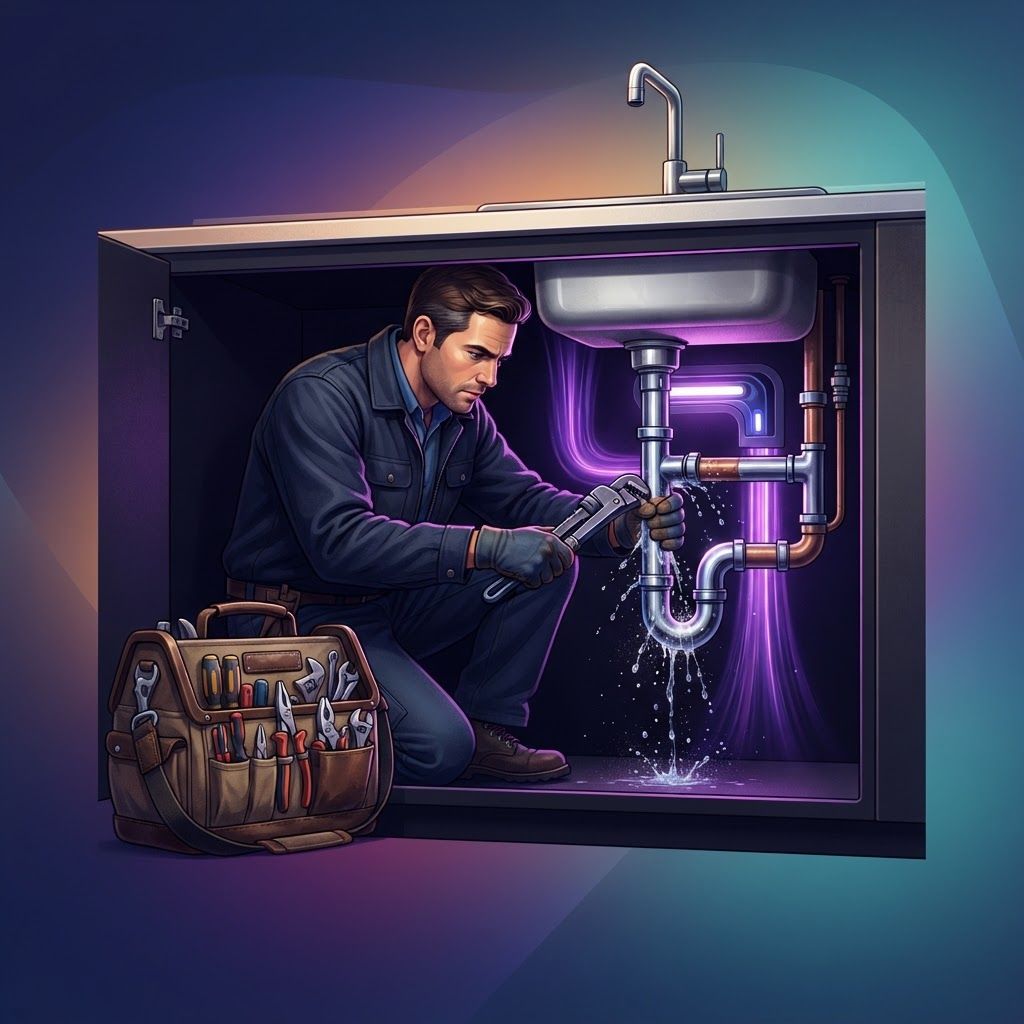
Calling a Plumber Under Pressure
Most plumbing decisions are made badly because they are made urgently. Water is spreading across a floor, a sewer line is backing up into a shower, or a water heater has failed the morning of a family visit. In that state, homeowners accept the first available price and the first proposed solution. Understanding the landscape in advance is the only reliable protection against that dynamic.
San Bernardino's plumbing problems cluster into predictable categories. Hard water drives scale accumulation that shortens water heater life, restricts flow, and ruins valves and fixtures. Older neighborhoods still carry galvanized steel supply lines that corrode internally and cast iron drains that scale, crack, and admit roots. Tree roots are a persistent cause of lateral sewer blockages, particularly with mature landscaping. Slab-on-grade construction makes under-slab leaks expensive and hard to detect. And peak summer irrigation stresses supply lines, hose bibs, pressure regulators, and backflow devices.
Plumbers Serving the City
Emergency-oriented national and regional brands including Roto-Rooter and Mr. Rooter Plumbing maintain round-the-clock dispatch, drain machines, and sewer cameras, which makes them practical for active backups at odd hours. ASAP Drain Cleaning and Plumbing and Rapid Response Plumbing style operators compete directly on arrival time.
Full-service companies resembling Ace Plumbing and Rooter, Inland Empire Plumbing, and All Star Plumbing and Restoration handle repiping, water heater and tankless installation, gas lines, fixture replacement, and slab leak repair, and some pair plumbing with water damage mitigation, which shortens the chain of contractors after a significant leak.
Established local independents along the lines of Highland Plumbing, Del Sol Plumbing, and Precision Plumbing often provide the best value on non-emergency work, with lower overhead, direct communication with the owner, and reputations built on neighborhood referral. Trenchless specialists handle pipe bursting and cured-in-place lining for sewer laterals, which avoids tearing up driveways and mature landscaping. Commercial plumbing contractors serve warehouses, restaurants, and institutional buildings, where grease interceptors, backflow certification, and code inspection dominate the work.
The Repairs That Matter Most
Water heater failure is the most common large-ticket call. Traditional tank units in this water typically last eight to twelve years, sometimes less without maintenance. Annual flushing to remove sediment and periodic anode rod replacement meaningfully extend service life. Tankless units offer efficiency and endless hot water but require descaling on a regular schedule in hard water, and skipping that maintenance voids much of the value and often the warranty.
Sewer lateral problems are the most commonly misdiagnosed. Repeated backups usually indicate a structural issue, not a one-time clog. A camera inspection should precede any major recommendation, and the homeowner should watch the footage. Snaking clears roots temporarily; lining or replacement addresses the cause. Be cautious of full replacement recommendations made without video evidence.
Slab leaks announce themselves through warm spots on floors, unexplained high water bills, the sound of running water with fixtures off, or moisture at the base of walls. Diagnosis uses pressure testing and acoustic or thermal location. Repair options include spot repair through the slab, rerouting the line overhead, or full repipe, and the right choice depends on pipe age and how many failures have already occurred. A single failure in a fifty-year-old copper system often signals more to come, which changes the math in favor of repiping.
Preventing the Expensive Failures
A handful of inexpensive measures prevent most catastrophic losses. Know where the main shutoff is and confirm it actually turns. Replace rubber washing machine hoses with braided stainless steel every five years. Check that the pressure regulator holds household pressure in the range of roughly fifty to eighty psi, since excessive pressure destroys fixtures and appliances quietly. Install drip pans with drains under water heaters, and consider a leak detection shutoff device if the home has a history of failures or sits over a slab.
Water softening or conditioning deserves serious consideration in this region. It reduces scale in the water heater, protects fixtures and appliances, and lowers long-term repair frequency. Weigh salt-based softeners against template-assisted crystallization systems, and account for local discharge rules and maintenance requirements.
Hiring Without Getting Taken
Verify an active California contractors license with the C-36 plumbing classification, plus liability insurance and workers compensation. Ask how pricing works before dispatch: whether there is a diagnostic or trip fee, whether it applies toward the repair, and whether pricing is flat rate per task or time and materials. Flat rate offers certainty; time and materials can be cheaper on simple work but should come with an estimate cap.
Insist on a written estimate before work begins on anything beyond a minor repair, and require video evidence before agreeing to sewer replacement or full repiping. For significant work, permits are required in California, and a contractor who proposes skipping them is transferring risk to you. Get a second opinion on any recommendation above a few thousand dollars if the situation is not actively causing damage.
Finally, do the vetting before the emergency. Identify two acceptable plumbers now, one emergency-capable and one value-oriented independent, and store both numbers. The homeowner who has already chosen is the one who pays a fair price at two in the morning.