
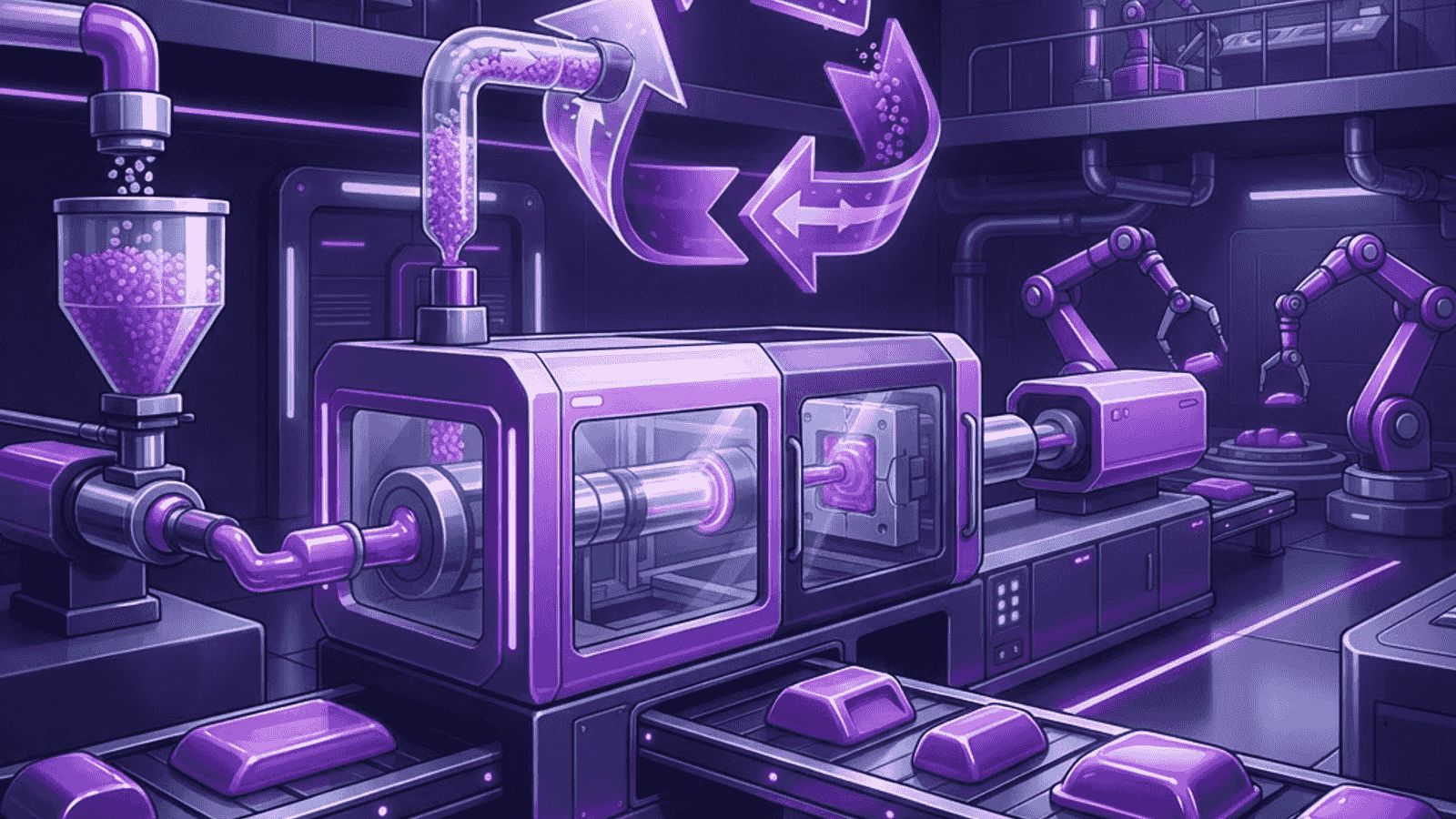
Plastics Manufacturing in North Texas
Plastics are the quiet foundation of nearly every product category, from medical devices and electronics enclosures to packaging, signage, and automotive components. Texas has a structural advantage in the sector because Gulf Coast petrochemical plants produce the resins that molders convert into parts. That means shorter material supply chains and better pricing than most regions can access.
Plano and its surrounding industrial corridors host injection molders, extruders, thermoformers, plastic fabricators, and distributors. For product companies in the city, this proximity means faster tooling iteration, easier quality oversight, and the ability to run pilot volumes without committing to offshore minimums.
How We Evaluated Plastic Manufacturers
Companies were assessed on process capability, tooling expertise, quality systems and certifications, material knowledge, secondary operations, and their ability to support both prototype and production volumes. Regulatory capability mattered for medical and food-contact applications, where documentation is as important as the part itself.
The Top 10 Plastics Manufacturing Partners Serving Plano
1. Custom Injection Molders
The dominant process for high-volume precision parts. Regional molders run presses across a wide tonnage range, offer in-house or partnered tooling, and provide scientific molding process documentation that keeps parts dimensionally consistent across production runs.
2. Plastic Injection Mold Toolmakers
Tool and die shops that design and build molds are the highest-leverage partner in plastics. Good tooling reduces cycle time, scrap, and maintenance for the life of the product, and local toolmakers allow fast repairs and engineering changes.
3. Thermoforming and Vacuum Forming Companies
Thermoformers produce large, relatively thin parts such as equipment housings, trays, and packaging inserts with much lower tooling investment than injection molding, making them ideal for moderate volumes.
4. Plastic Extrusion Manufacturers
Extruders produce profiles, tubing, sheet, and film continuously. Applications range from construction trim to medical tubing, and custom profile dies allow highly specific cross-sections.
5. Plastic Fabrication and Machining Shops
Fabricators cut, bend, bond, and machine acrylic, polycarbonate, PVC, and engineering plastics into displays, guards, tanks, and enclosures. This is the right route for one-off and low-volume needs with no tooling cost.
6. Blow Molding Manufacturers
Blow molders produce hollow parts including bottles, containers, and tanks serving consumer products, chemical packaging, and industrial fluid handling markets across Texas.
7. Rotational Molding Companies
Rotomolders build large, seamless, stress-free hollow products such as tanks, bins, and playground equipment, with tooling costs far below injection molding for large geometries.
8. Medical Device Plastics Manufacturers
Molders operating cleanroom capability with validated processes and full lot traceability serve the region's medical device companies, where process validation and documentation drive supplier selection.
9. Plastic Resin Distributors and Compounders
Distributors supplying commodity and engineering resins, along with compounders producing custom color and additive packages, give smaller Plano manufacturers access to materials without rail-car minimums.
10. Plastics Recycling and Reprocessing Firms
Recyclers grinding, washing, and pelletizing post-industrial scrap into usable regrind help manufacturers reduce material cost and meet recycled content commitments increasingly written into customer specifications.
Trends in the Plastics Industry
Recycled content requirements are expanding rapidly, driven by brand commitments and packaging regulation, which raises demand for reliable reprocessed material. Lightweighting continues in automotive and packaging as a cost and emissions strategy. Process monitoring and cavity pressure sensing are improving first-pass yield. Bio-based and compostable polymers remain niche but are advancing in food service applications. Meanwhile, scrutiny of certain additives and fluorinated substances is pushing reformulation across multiple end markets.
How to Choose a Plastics Manufacturing Partner
Select the process before the vendor, since injection molding, thermoforming, and fabrication have wildly different tooling economics at different volumes. Ask for a design for manufacturability review, because draft angles, wall thickness, and gate location decisions made early prevent expensive tool modifications later. Clarify tool ownership in writing, including who holds the mold and what happens if you change suppliers. Request capability studies on critical dimensions rather than a single first-article inspection. Confirm resin sourcing and whether the quoted price assumes a specific material grade. Finally, discuss secondary operations such as pad printing, ultrasonic welding, and assembly up front, since consolidating them saves handling cost.
Choosing the Right Resin for the Application
Material selection drives more product failures than process selection does. Polypropylene offers chemical resistance and living hinge capability at low cost. ABS provides good stiffness and finish for enclosures. Polycarbonate delivers impact strength and clarity but requires careful design around stress concentration. Nylon and acetal serve wear applications, while glass-filled grades add stiffness at the cost of surface finish and tool wear.
Environmental exposure often decides the answer. Texas sun degrades many polymers without ultraviolet stabilization, which matters for anything used outdoors, from irrigation components to equipment housings. Temperature cycling in unconditioned spaces such as attics and vehicle interiors can exceed the deflection temperature of common resins. Chemical contact, including routine cleaning products, causes stress cracking in materials that otherwise perform well. Specifying the actual service environment before selecting a resin prevents the most common and most expensive category of plastics failure.
Final Thoughts
Plastics decisions are made at the design stage and paid for over the entire product life. Plano companies benefit from resin proximity and a deep regional molder base, but only if they engage manufacturing partners early enough to influence the part design.