
Paper and Tacoma Share a Long History
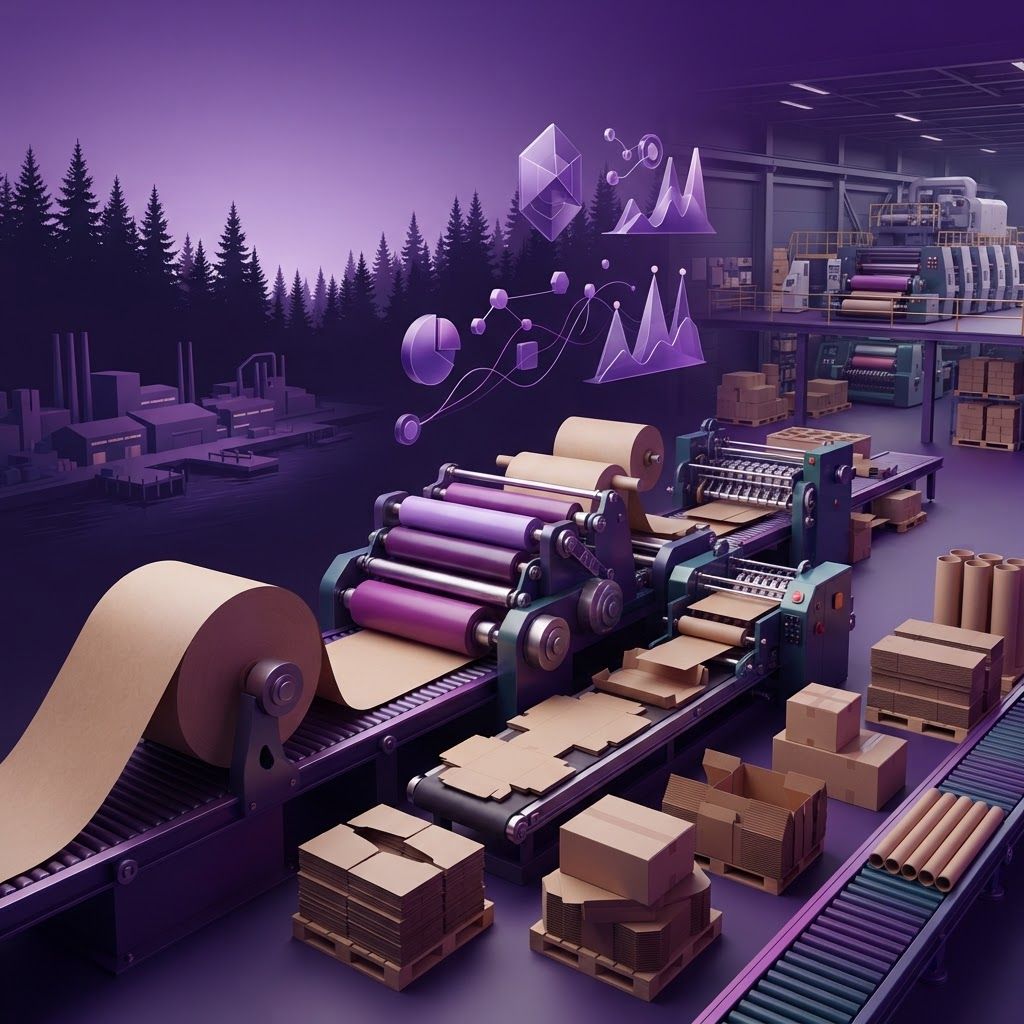
Few industries are as woven into Tacoma's identity as pulp and paper. For generations, mills along the waterway converted Northwest timber into pulp, paperboard, and tissue, shaping the city's employment, rail traffic, and even its air. The industry has changed profoundly since then. Large integrated pulping operations have contracted, environmental controls have transformed operations, and demand has shifted away from printing and writing grades toward packaging and hygiene products. What remains is a leaner but still substantial network of converters, printers, and packaging manufacturers.
That shift mirrors the national picture. As commercial print volumes declined with digital media, e-commerce drove sustained growth in corrugated shipping containers and protective packaging. Tacoma's location, with deepwater port access, rail connections, and proximity to both regional fiber supply and Puget Sound consumer markets, made it a logical place for that converting capacity to concentrate.
The Major Segments
Corrugated packaging is the largest category by volume. Sheet plants and full corrugators produce regular slotted containers, die-cut boxes, partitions, and displays for food producers, breweries, manufacturers, and distribution centers throughout the South Sound. Folding carton and paperboard manufacturers serve retail-facing packaging where print quality and structural design matter, common in food, beverage, cannabis, and consumer products. Commercial and digital printing covers marketing materials, packaging inserts, books, forms, and signage. Label and flexible packaging converters produce pressure-sensitive labels, shrink sleeves, and pouches, a segment that has grown alongside the region's craft beverage and specialty food producers. Tissue and hygiene converting turns parent rolls into retail and away-from-home products. Specialty and industrial paper goods include protective packaging, void fill, cores, tubes, and molded fiber.
Each segment has different economics. Corrugated is freight-sensitive and therefore intensely regional, since shipping empty boxes long distances destroys margin. Labels and cartons travel more easily and compete across a wider geography.
What Capable Manufacturers Bring to the Table
The strongest paper goods manufacturers in the Tacoma area distinguish themselves through structural design capability. A good packaging engineer reduces material use, improves pallet cube efficiency, and increases protection simultaneously. Shops with in-house design departments, sample tables, and CAD-driven prototyping can iterate a box design in a day, which matters when a customer is launching a product on a deadline.
Testing capability is another differentiator. Facilities with laboratories that measure edge crush, burst strength, moisture content, and compression performance can certify that a container will survive a specific supply chain. For products shipping through parcel networks, ISTA transit testing is often the deciding factor between a package that arrives intact and one that generates returns.
Print quality separates carton and label suppliers. Look for color management systems, spectrophotometer verification, standardized proofing, and operators who can hold color across a long run. For brand-critical packaging, the ability to match a specific brand color consistently across multiple print runs is worth paying for.
Finally, inventory and fulfillment programs matter more than buyers expect. Manufacturers that will run an economical quantity, warehouse it, and release stock on demand solve a real cash flow and storage problem for small and mid-sized customers.
Sustainability Is Central, Not Optional
Paper enjoys a genuine advantage in the current sustainability conversation because it is widely recycled and derived from a renewable resource, and Northwest manufacturers have leaned into that. Recycled content is standard in most corrugated production, with recovered fiber forming the bulk of medium and much of the liner used regionally. Chain of custody certifications such as FSC and SFI allow customers to document responsible sourcing on retail packaging.
Beyond fiber sourcing, the meaningful improvements are less visible. Water use and effluent treatment have improved dramatically at regional mills relative to historical practice. Converters have shifted toward water-based and UV-curable inks with lower solvent emissions. Many have eliminated plastic laminations and specified recyclable or repulpable barrier coatings so that finished packaging can enter curbside recycling streams rather than landfill.
Design-side sustainability may matter most. Right-sizing a box eliminates void fill, reduces dimensional weight charges, and cuts trucks on the road. Manufacturers that proactively propose lighter board grades or better nesting are delivering environmental and financial value at once. Buyers should ask for recycled content percentages, certification documentation, recyclability guidance for the finished package, and whether the supplier can quantify material reduction from a redesign.
How to Choose a Supplier
Begin with a clear specification: quantity, dimensions, board grade or paper stock, print requirements, finishing, and delivery cadence. Vague requests produce quotes that cannot be compared. Ask about minimum order quantities, because they vary enormously between a digital printer and a full corrugator.
Tour the plant. Look at roll and sheet storage conditions, since paper is sensitive to humidity and damaged stock produces defects. Observe whether finished goods are handled carefully and whether quality checks happen in line. Ask how the plant handles a run that goes off color or off dimension midway, and who absorbs that cost.
Evaluate redundancy. A single-press shop is vulnerable to breakdown; a plant with multiple comparable presses can recover a schedule. For time-sensitive packaging, ask directly what happens if equipment fails during a run.
Discuss freight explicitly. In corrugated especially, delivered cost matters more than unit price, and a slightly higher price from a closer plant frequently wins on total cost. Confirm truck scheduling, whether the supplier delivers on its own fleet, and how rush orders are accommodated.
Where the Industry Is Heading
Three trends will shape Tacoma's paper goods sector. Digital printing continues to move upmarket, making short-run, versioned, and personalized packaging economical in ways that were impossible a decade ago. Plastic substitution is accelerating as regulation and consumer preference push brands toward fiber-based alternatives, creating demand for molded fiber and barrier-coated paper. And automation in converting plants is improving consistency while addressing persistent skilled labor shortages.
For buyers in the South Sound, the encouraging conclusion is that local capability remains strong across nearly every category. The suppliers worth building relationships with are those that treat packaging as an engineering problem rather than a commodity purchase, and that can prove their claims with test data, certifications, and a plant floor that looks the way a well-run plant should look.