
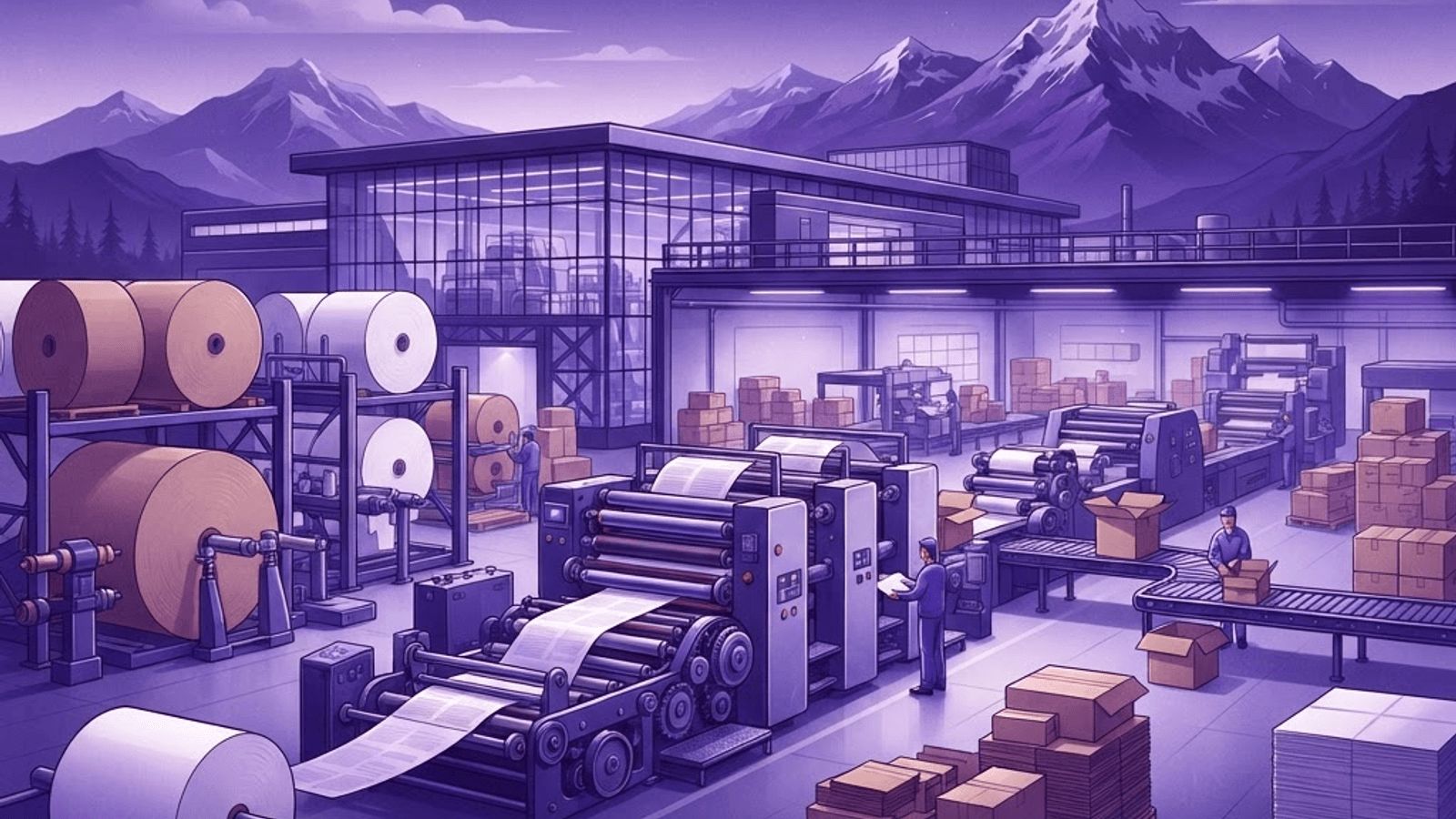
Paper Goods and the Utah Economy
Paper remains one of the most versatile industrial materials in existence, and Salt Lake City has built a substantial paper goods sector around packaging, printing and converting. The driver is straightforward: Utah has become a major distribution and e commerce fulfillment hub, and every product that ships requires a box, a label, void fill and often printed inserts.
Beyond packaging, the local industry serves offices with business papers and forms, restaurants and hospitality with disposable products, healthcare with sterile packaging, and consumer brands with retail ready presentation. The sector combines large scale converting plants with nimble print shops able to turn small custom jobs around in days.
Ten Paper Goods Manufacturers Serving Salt Lake City
1. Packsize International
Headquartered in Salt Lake City, Packsize pioneered on demand packaging systems that produce right sized corrugated boxes at the point of packing. The approach reduces corrugated consumption, void fill and shipping volume simultaneously. It is one of the most influential packaging technology companies to emerge from Utah and reflects a broader industry move toward material efficiency.
2. Wasatch Corrugated Container
Corrugated box plants in the valley produce regular slotted containers, die cut boxes, displays and protective inserts. Their strength lies in structural design, board grade selection and short lead times for fulfillment operations that cannot afford packaging shortages during peak season.
3. Salt Lake Commercial Printing Group
Commercial printers serve businesses with brochures, catalogs, manuals, presentation folders and marketing collateral. Modern shops combine offset presses for long runs with digital presses for variable data and short runs, enabling personalized print at manageable cost.
4. Intermountain Label and Tag
Label converters manufacture pressure sensitive labels, shrink sleeves, tags and specialty adhesives for food, supplement, beverage and industrial clients. Utah large nutritional supplement industry makes label expertise particularly valuable here, especially regarding regulatory panel requirements and durability.
5. Bonneville Tissue and Hygiene Products
Tissue converters produce paper towels, napkins, facial tissue and away from home hygiene products for janitorial distributors, hospitality operators and healthcare facilities. Volume, consistency and reliable freight scheduling define competitiveness in this segment.
6. Great Basin Custom Paper Converting
Converters take parent rolls and transform them into sheets, rolls, pads, envelopes and specialty formats. Slitting, rewinding, sheeting, laminating and die cutting are core capabilities, allowing customers to obtain highly specific dimensions and finishes not available as standard stock.
7. Alta Folding Carton Company
Folding carton manufacturers produce retail packaging for cosmetics, supplements, food and consumer goods. Print quality, coatings, foil stamping and embossing matter enormously because the carton is often the primary brand touchpoint on a retail shelf.
8. Canyon Stationery and Business Forms
Business forms manufacturers supply invoices, work orders, carbonless sets, letterhead and branded stationery. Despite digital transformation, regulated industries and field service operations continue to rely on printed documentation, keeping this niche steady.
9. Utah Sustainable Paper Solutions
Environmentally focused producers emphasize recycled content, responsible forestry certification, compostable coatings and plastic free packaging alternatives. As brands eliminate plastic from their shipping materials, demand for paper based void fill, mailers and tape has increased substantially.
10. Silicon Slopes Print and Fulfillment
Integrated print and fulfillment providers combine printing, kitting, assembly and shipping. E commerce brands use them to produce inserts, thank you cards and branded packaging while outsourcing the entire pack and ship process, simplifying operations considerably.
Trends in the Paper Goods Industry
The plastic to paper substitution movement is the strongest current trend. Paper based mailers, molded fiber protective inserts, paper tape and fiber based cushioning have replaced plastic alternatives across many shippers, driven by both consumer expectation and retailer packaging requirements.
Digital printing continues to expand its share, enabling short runs, versioning and personalization that offset simply cannot match economically. This has changed how brands approach seasonal packaging and regional campaigns.
Material efficiency has become a measurable discipline. Right sized packaging, board grade optimization and structural redesign reduce cost and emissions at once, which is rare in industrial decision making. Meanwhile automation in converting and packing lines addresses persistent labor constraints across Utah distribution centers.
How to Choose a Paper Goods Manufacturer
Begin with structural and print requirements. Protective packaging demands engineering analysis of board strength, stacking load and drop performance. Retail packaging demands color accuracy, coating quality and finishing options. Few suppliers lead in both, so identify which matters more.
Ask about design support. Strong suppliers provide computer aided structural design, prototype samples and drop testing before production. For printed goods, request physical proofs on the actual substrate rather than approving from a screen.
Consider inventory strategy. Many converters offer warehousing with scheduled releases, which protects against price increases and paper availability swings without forcing you to store months of stock. Confirm sustainability credentials if your brand makes environmental claims, including chain of custody certification and recycled content verification.
Finally, evaluate responsiveness. Packaging shortages halt shipping entirely, so a supplier with local production, honest lead times and clear communication is worth more than a marginally cheaper distant alternative.
Final Thoughts
Paper goods manufacturing in Salt Lake City has evolved well beyond commodity box production. Packaging technology innovation, sophisticated label converting, sustainable material alternatives and integrated fulfillment services make the region a strong sourcing base for any business that ships or presents a physical product. Choose partners who bring design expertise and dependable supply, and packaging becomes a competitive advantage rather than a cost line.