
Paper Goods and the Inland Empire Distribution Engine
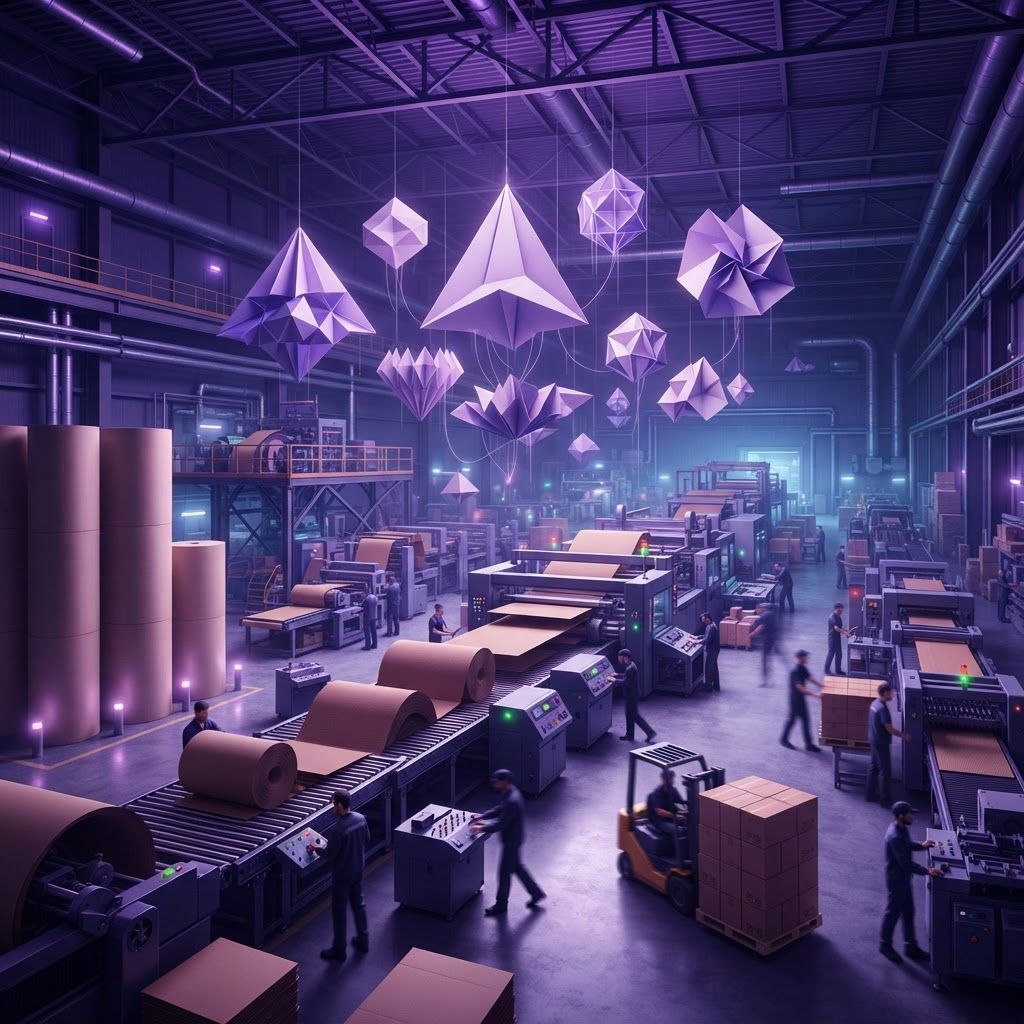
Few places on earth consume as much corrugated packaging as the Inland Empire. Hundreds of millions of square feet of warehouse space sit within a short drive of Fontana, and virtually every item passing through that network is boxed, labeled, cushioned or palletized. That reality has made Fontana a natural home for paper goods manufacturing, where being close to the customer determines whether a business is viable at all. Corrugated boxes are mostly air by volume, so shipping them far is economically painful. Local production is not a preference but a structural requirement.
The sector spans more than boxes. Folding cartons for retail products, labels and tags, tissue and away-from-home paper products, moulded pulp protective packaging and specialty printed materials all have local production capacity. For buyers, that breadth means a single region can supply an entire packaging program rather than forcing you to assemble suppliers from across the country.
Understanding the Paper Goods Categories
Corrugated converters turn sheet board into shipping cases, displays and protective inserts. Sheet plants purchase board and convert it, while integrated plants also produce the board itself. Folding carton producers print and die-cut lighter paperboard for retail packaging. Label manufacturers print pressure-sensitive and wet-glue labels. Tissue converters produce towels, napkins and dispenser products. Protective packaging specialists design cushioning systems, often combining paper with other materials. Each requires different equipment and expertise.
The Top 10 Paper Goods Manufacturers Serving Fontana
1. Inland Corrugated Container
A full-service corrugated converter producing regular slotted cases, die-cut boxes and interior packaging. Its structural design capability stands out, with packaging engineers who test drop performance and compression strength rather than guessing at board grade. That testing routinely reduces both damage rates and material cost.
2. Fontana Box and Display
Combining corrugated converting with high-graphic printing, this manufacturer produces retail-ready packaging and point-of-purchase displays. Colour consistency across production runs and the ability to build shelf-ready units make it valuable to consumer brands selling through major retailers.
3. Sierra Folding Carton Group
Retail cartons for food, cosmetics, cannabis and consumer goods are printed and converted here, with offset printing, foil, embossing and specialty coating options. Attention to structural integrity alongside decoration means cartons look premium and still survive distribution intact.
4. Valley Label and Tag Manufacturing
Pressure-sensitive labels, shipping tags and variable data printing serve logistics, food and industrial customers. Adhesive selection expertise is genuinely important, because a label that fails in cold storage or on a textured surface creates traceability problems throughout a supply chain.
5. Cypress Tissue and Paper Converting
Away-from-home paper products including towels, napkins and dispenser tissue supply facilities, food service and industrial customers. Recycled content programs and dispenser compatibility are the practical considerations, and this converter addresses both.
6. Fontana Protective Packaging Works
Specializing in cushioning and protective systems, this manufacturer produces paper-based void fill, wrapping products and custom moulded protection. As brands move away from expanded plastic foams, paper-based protection has become a fast-growing category, and this company sits at the centre of that shift.
7. Foothill Moulded Pulp Products
Trays, end caps and clamshells formed from recycled pulp serve produce, electronics and consumer goods customers. The material is fully recyclable and compostable, which increasingly satisfies both regulatory requirements and retailer packaging mandates.
8. Arrow Ridge Paper Bag Manufacturing
Retail bags, grocery sacks and specialty handled bags are produced with custom printing. With plastic bag restrictions widespread across California, paper bag manufacturing has become a stable and growing local business rather than a declining one.
9. Metro West Business Forms and Print
Business forms, continuous stationery, carbonless sets and commercial printing serve administrative and operational needs across logistics and manufacturing. Warehouse-friendly documentation, including multi-part forms and durable labels, remains genuinely necessary in operations despite digitization.
10. Rialto Fontana Custom Packaging Design
This operation focuses on packaging design and prototyping, producing sample structures and short-run custom packaging before committing to production tooling. For product launches and subscription brands, being able to hold a physical prototype in a week is enormously useful.
Cost Drivers Buyers Often Miss
Packaging cost is not just price per box. Board grade selection is the largest lever, and over-specifying strength wastes money on every unit shipped. Dimensional efficiency matters equally, since a box sized to fit pallet dimensions cleanly reduces freight cost far more than a small unit price reduction. Minimum order quantities, die charges and printing plate costs affect total spend on smaller programs. Storage is another factor. Ordering large quantities lowers unit price but consumes warehouse space that has real value in this region. Finally, damage rates deserve attention, because a slightly stronger box that eliminates returns is cheaper than a weak one that does not.
Sustainability and Regulation
California's extended producer responsibility framework and broad corporate sustainability commitments are actively reshaping packaging specification. Recyclability, recycled content percentage and elimination of problematic materials are now standard requirements in requests for quotation. Paper goods manufacturers are responding with curbside-recyclable alternatives to plastic packaging, water-based inks and coatings that do not compromise recyclability, and lightweighted structures that reduce fibre use. Buyers should ask for documentation supporting recyclability claims rather than accepting general statements.
How to Evaluate a Packaging Partner
Ask whether structural design and testing are available in-house. Request references from customers with comparable volumes and product types. Clarify lead times for both repeat and new items, and ask how the manufacturer handles demand spikes, which are frequent in distribution-heavy businesses. Discuss inventory programs, since many converters will hold stock and release it against forecasts. Confirm printing capability matches your brand requirements, and always order a physical sample before approving a production run.
Final Thoughts
Fontana's paper goods manufacturers are woven directly into the region's logistics economy, and that proximity delivers speed and cost advantages that distant suppliers cannot match. The strongest partners combine converting capability with real packaging engineering, helping you reduce material, freight and damage simultaneously. Treat packaging as an engineered component of your product rather than a commodity purchase, and choose a manufacturer willing to engage at that level.