
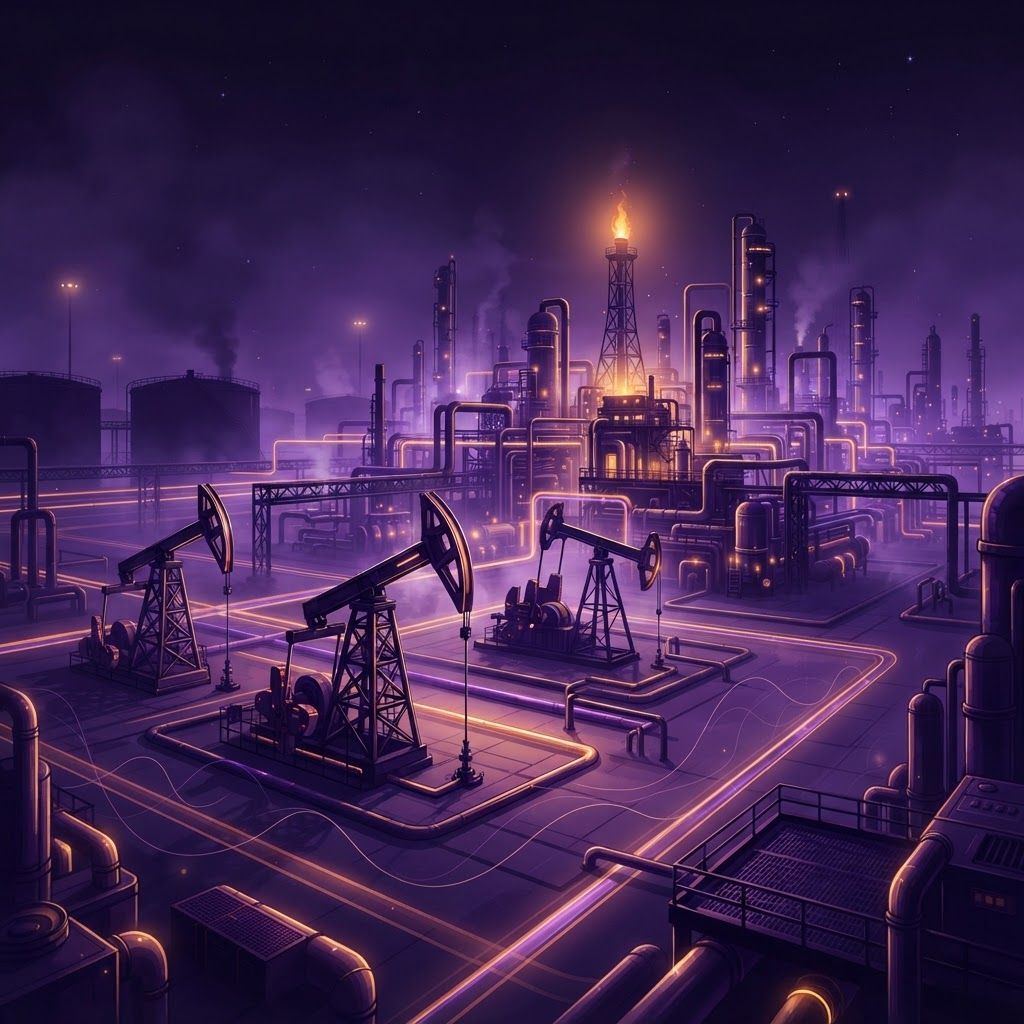
The Oil and Gas Sector in Alabama
Alabama has a genuine but modest hydrocarbon production history. Oil and natural gas production has occurred primarily in the southwestern portion of the state, with coalbed methane development concentrated in the Black Warrior Basin in the north. Offshore natural gas production in state waters off the Gulf coast has contributed as well. Compared to Texas, Louisiana or Oklahoma, Alabama's production volumes are small, but the supporting infrastructure and downstream activity are substantial.
For Montgomery specifically, the sector's presence is less about extraction and more about everything downstream and adjacent. The capital region hosts regulatory bodies, fuel distribution and wholesale operations, pipeline infrastructure, natural gas utility service, propane distribution serving rural areas, industrial gas supply, transportation and logistics, and the legal, engineering and environmental professionals who serve energy companies statewide. Understanding that structure clarifies where the actual business activity sits.
How the Industry Is Segmented
Upstream covers exploration and production, concentrated away from Montgomery but governed by regulators and supported by professionals based in the capital. Midstream covers gathering, processing, pipeline transportation and storage, with transmission infrastructure crossing the state. Downstream covers refining, fuel distribution, retail sales and end-use delivery, which is where most Montgomery-area employment in the sector resides.
Alongside these, the service and supply segment includes equipment providers, environmental and safety consultants, engineering firms, transportation operators and specialized contractors. Regulatory and professional services form another layer, particularly significant in Montgomery given the location of state agencies and the courts.
Leading Oil, Gas and Energy Companies Relevant to Montgomery
1. Spire Alabama
Spire Alabama is a major natural gas distribution utility serving customers across the state, delivering natural gas to residential, commercial and industrial users. For businesses evaluating energy costs or planning facility expansion, the availability and terms of natural gas service are often a decisive factor.
2. Alagasco and Regional Gas Distribution Operations
Natural gas distribution operations serving central Alabama maintain the distribution networks that deliver gas to homes and businesses, handle new service connections, and support industrial customers with specialized supply arrangements. Infrastructure availability influences industrial site selection throughout the region.
3. Colonial Pipeline and Regional Pipeline Operators
Major refined products pipelines traverse Alabama, moving gasoline, diesel and jet fuel from Gulf Coast refineries toward eastern markets. These systems are critical infrastructure for regional fuel supply, and disruptions have immediate and visible effects on availability and pricing throughout the Southeast.
4. Fuel Distribution and Wholesale Suppliers
Wholesale fuel distributors serving the Montgomery region supply gasoline and diesel to retail stations, commercial fleets, construction operations, agricultural users and municipalities. This is a substantial local business segment with significant logistics and storage components.
5. Propane Distributors Serving Central Alabama
Propane serves rural residences, agricultural operations, poultry houses, restaurants and commercial users outside natural gas service areas. Distributors handle tank installation, delivery scheduling, safety inspection and supply contracting, and demand is seasonally driven by heating load and agricultural cycles.
6. Commercial Fuel and Fleet Fueling Services
Providers offering on-site fueling, mobile refueling, fuel management systems and bulk supply serve trucking companies, distribution centers, government fleets and construction contractors across the region. Fuel represents a major operating cost for these organizations, so supply reliability and pricing structure matter considerably.
7. Oil and Gas Legal and Regulatory Counsel
Montgomery's concentration of state agencies and appellate courts supports attorneys practicing in energy regulation, mineral rights, royalty disputes, environmental compliance, permitting and utility rate proceedings. This is a specialized field requiring knowledge of both energy operations and administrative law.
8. Environmental and Safety Consulting Firms
Consultants providing environmental site assessment, remediation, spill response planning, air permitting, tank compliance and safety program development serve energy operators, fuel distributors and industrial facilities. Underground storage tank compliance alone is a significant ongoing service area given the number of fueling facilities across the region.
9. Industrial Gas and Equipment Suppliers
Suppliers of industrial gases, tanks, pumps, meters, valves and related equipment support manufacturers, fuel facilities and energy operations. Their service and maintenance capabilities matter as much as product availability for operations that cannot tolerate downtime.
10. Energy Transportation and Logistics Operators
Tank truck carriers, terminal operators and logistics providers move fuel and petroleum products throughout central Alabama. This segment requires specialized equipment, hazardous materials compliance, driver certification and rigorous safety management.
Regulatory and Compliance Considerations
Energy operations in Alabama sit under multiple regulatory frameworks. The State Oil and Gas Board regulates production activity. Environmental regulation covers air emissions, water discharge, waste handling and storage tank management. Transportation of petroleum products is governed by federal hazardous materials rules and driver qualification requirements. Utility service and rates fall under state commission oversight, with proceedings conducted in Montgomery.
For businesses in the sector, compliance is a continuous operational function rather than a periodic filing exercise. Tank testing, leak detection, spill prevention planning, driver training, equipment inspection and recordkeeping all require sustained attention, and enforcement penalties for lapses can be substantial.
Market Dynamics Affecting the Region
Fuel demand in central Alabama tracks regional economic activity, particularly manufacturing output, construction volume, agricultural cycles and highway freight movement. Natural gas demand is driven by industrial process load, power generation and seasonal heating. Price volatility in global energy markets transmits quickly to local fuel costs, affecting transportation-dependent businesses immediately.
Longer term, several shifts are influencing the sector. Natural gas has displaced coal significantly in regional power generation. Vehicle electrification is beginning to affect long-range fuel demand projections, though heavy freight remains diesel dependent. Industrial users are evaluating efficiency and alternative energy alongside conventional supply. And infrastructure investment in pipelines, storage and terminals continues as networks are modernized.
Workforce and Economic Contribution
The sector supports skilled employment across the region in operations, maintenance, transportation, engineering, safety, environmental compliance and administration. Community college programs in Alabama produce technicians for process operations, instrumentation and commercial driving, feeding directly into these roles. Wages in the sector are generally competitive relative to regional averages, making it a meaningful component of the central Alabama economy.
Final Thoughts
Oil and gas activity relevant to Montgomery is concentrated in distribution, infrastructure, logistics, compliance and professional services rather than extraction. Businesses that depend on fuel or natural gas should understand their supply chain, evaluate contracting options to manage price exposure, maintain rigorous compliance programs and build relationships with reliable regional suppliers. The sector remains fundamental to the region's industrial and transportation economy even as the broader energy mix continues to evolve.