
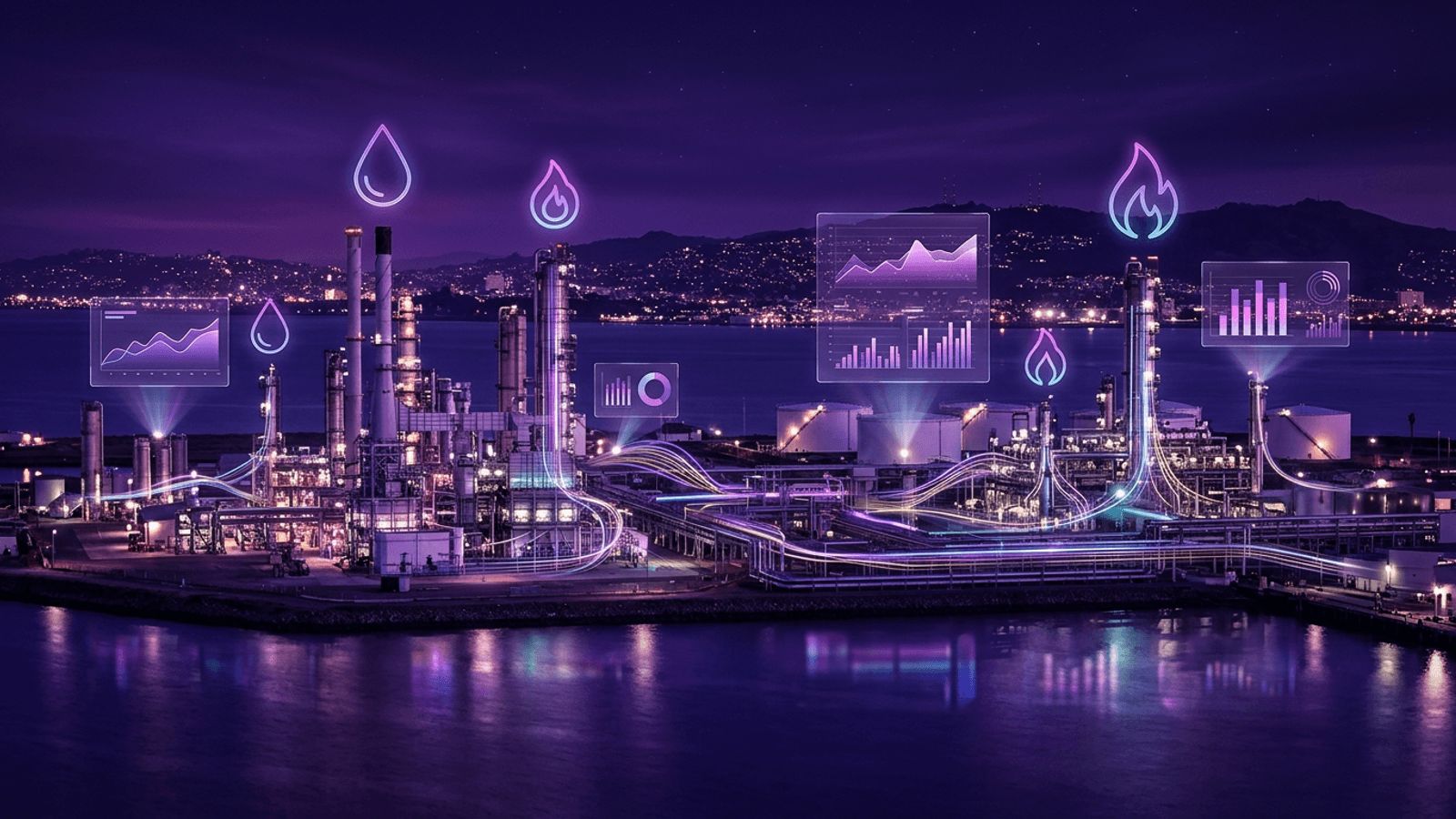
Oil and Gas in the Bay Area
Berkeley is widely recognized for climate leadership, but the East Bay has a long history as a center of the oil refining industry. Refineries along the northern shoreline of San Francisco Bay, in cities like Richmond, Martinez, Rodeo, and Benicia, have supplied fuel to Northern California for more than a century. Natural gas pipelines and utilities also serve homes and businesses across the region.
Today, the industry is changing fast. Several Bay Area refineries have converted to renewable fuels production, while others face closures or transitions as California pursues aggressive climate goals. Understanding these companies helps explain the region's energy supply, economy, and transition to a cleaner future.
The Changing Energy Landscape
California has set goals to dramatically reduce fossil fuel use, including phasing out sales of new gasoline-powered cars. As a result, oil and gas companies in the region are investing in renewable diesel, sustainable aviation fuel, hydrogen, and carbon capture. At the same time, they continue to supply the gasoline, jet fuel, and natural gas that the economy still relies on.
These companies are also major employers and taxpayers, so their transitions have important economic implications for East Bay communities.
The Top 10 Oil and Gas Companies Serving the Berkeley Area
1. Chevron
Chevron has deep roots in the Bay Area, and its Richmond Refinery, just north of Berkeley, is one of the largest refineries on the West Coast. Although the company has moved its headquarters to Houston, it maintains significant California operations and research facilities, including technology centers focused on lower-carbon energy.
2. PBF Energy
PBF Energy owns the Martinez Refinery, which produces gasoline, diesel, and jet fuel for Northern California. The company plays an important role in regional fuel supply and has invested in facility upgrades and compliance improvements.
3. Marathon Petroleum
Marathon Petroleum converted its Martinez refinery into a renewable fuels facility through a joint venture. The plant now produces renewable diesel from feedstocks like vegetable oils and fats, illustrating the industry's shift toward lower-carbon products.
4. Phillips 66
Phillips 66 transformed its Rodeo facility into one of the largest renewable fuels plants in the world. The Rodeo Renewed project produces renewable diesel and sustainable aviation fuel, marking a major transition for a refinery that operated for over a century.
5. Valero
Valero has operated the Benicia Refinery, a significant supplier of gasoline and other fuels for Northern California. The company has announced plans to wind down operations at the facility, reflecting broader changes in California's fuel market.
6. PG&E
Pacific Gas and Electric Company operates the natural gas distribution network serving Berkeley and much of Northern California. It is investing in pipeline safety, gas system modernization, and programs supporting building electrification as the state moves away from fossil fuels.
7. Kinder Morgan
Kinder Morgan operates fuel pipelines and terminals that transport gasoline, diesel, and jet fuel across California. Its infrastructure connects Bay Area refineries to distribution points throughout the region and beyond.
8. California Resources Corporation
California Resources Corporation is one of the state's largest oil and natural gas producers. It is also developing carbon capture and storage projects designed to reduce emissions and support California's climate goals.
9. Calpine
Calpine is one of the largest operators of natural gas-fired and geothermal power plants in the United States, including the Geysers geothermal complex in Northern California. Its gas plants provide reliable power that complements intermittent renewable energy.
10. Shell Energy North America
Shell Energy North America supplies natural gas and electricity to commercial and industrial customers in California. It also offers renewable energy and carbon management solutions as businesses pursue sustainability targets.
Industry Trends and the Energy Transition
Refinery conversions to renewable fuels, carbon capture projects, and hydrogen production are reshaping the Bay Area energy industry. Fuel supply and price stability are becoming important policy concerns as traditional refining capacity declines. Local communities near refineries are also pushing for stronger air quality protections and a fair transition for workers.
What This Means for Berkeley Residents and Businesses
For Berkeley residents, these changes affect gasoline prices, air quality, and the pace of the clean energy transition. Many homeowners are switching from gas appliances to electric heat pumps and induction stoves, encouraged by city electrification policies. Businesses are evaluating fleet electrification and renewable fuel options to cut emissions. Staying informed about regional energy developments helps households and organizations plan for changing costs and take advantage of incentives that support cleaner alternatives.
Environmental and Community Considerations
Communities near Bay Area refineries, particularly in Richmond, have long raised concerns about air quality, flaring incidents, and health impacts. Regional air quality regulators have adopted stricter rules on refinery emissions, and companies have invested in monitoring systems and equipment upgrades. Community advocacy groups continue to push for transparency and accountability.
These issues shape how oil and gas companies operate in the region and influence their investments in cleaner technologies. Balancing reliable fuel supply, economic opportunity, and public health remains one of the central challenges of the Bay Area's energy transition.
Final Thoughts
The oil and gas companies operating near Berkeley are in the middle of a historic transition. While they continue to supply essential fuels, many are investing in renewable fuels, carbon capture, and cleaner technologies. Understanding their role helps explain how the Bay Area is balancing energy reliability with its climate commitments.