
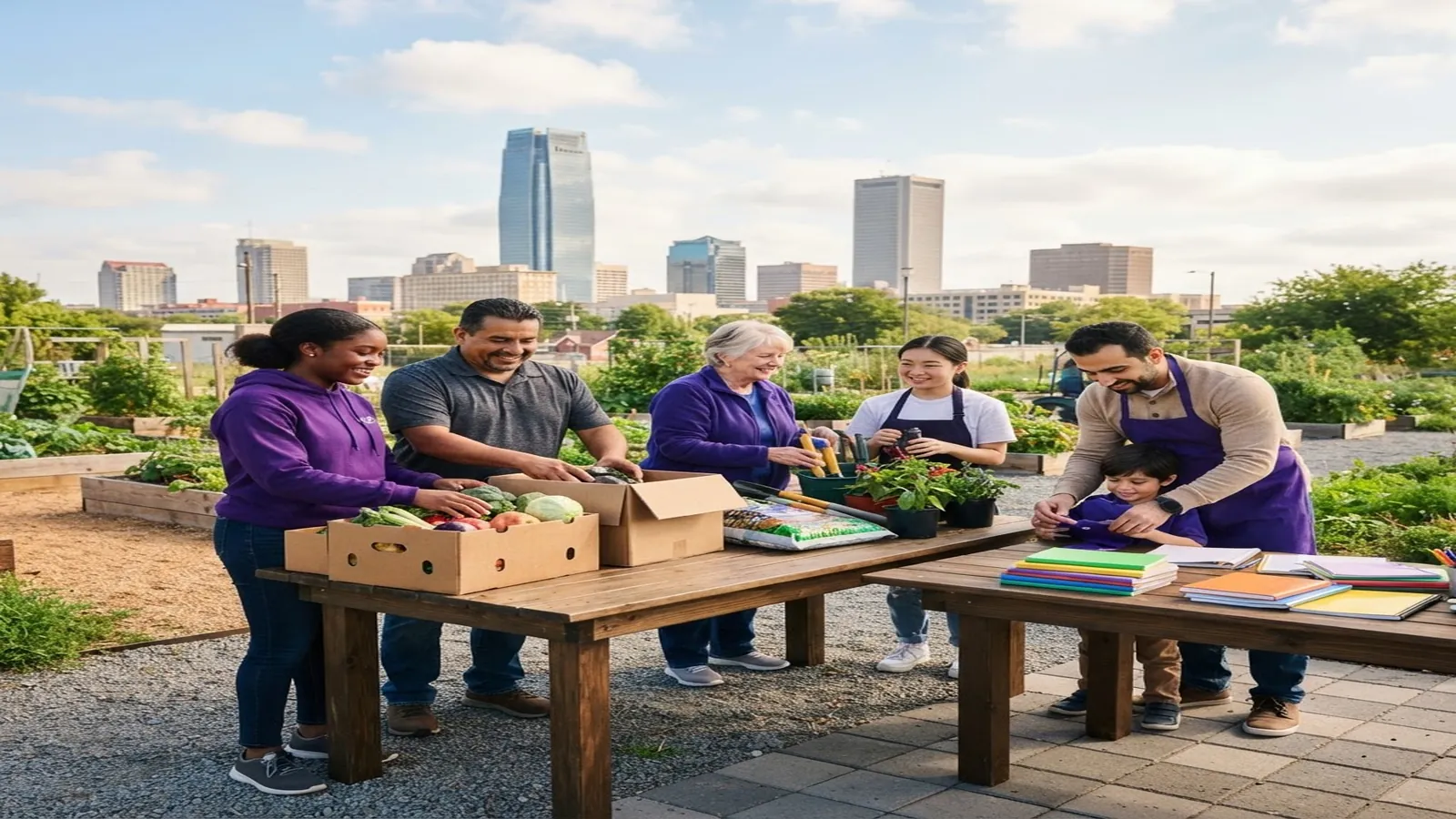
Organizations Strengthening Oklahoma City
Oklahoma City's nonprofit sector responds to immediate needs while investing in long-term opportunity. Effective organizations combine clear missions, responsible governance, measurable programs, community partnerships, and respect for the people they serve. The nonprofits below work across different causes, so they should not be compared solely by size. Each offers a distinct way for residents and businesses to contribute.
1. Regional Food Bank of Oklahoma
The Regional Food Bank of Oklahoma works with partner agencies to address hunger across a broad service area. It distributes food, supports child and senior nutrition programs, and mobilizes volunteers. Its scale and logistics expertise allow donated dollars and products to move efficiently, while partnerships help assistance reach communities through trusted local organizations.
2. City Rescue Mission
City Rescue Mission supports people experiencing homelessness through shelter, meals, recovery resources, and programs intended to build stability. Its work reflects the reality that homelessness often involves housing costs, health, employment, trauma, and addiction. Volunteers and donors can support both urgent care and pathways toward independence.
3. Positive Tomorrows
Positive Tomorrows is a school and social-service organization serving children and families experiencing homelessness. By combining education with transportation, meals, family support, and trauma-informed services, it reduces barriers that can disrupt learning. The model recognizes that academic progress is closely connected to safety and family stability.
4. Infant Crisis Services
Infant Crisis Services provides formula, food, diapers, and other essentials to babies and toddlers in need. Early intervention can protect health and relieve intense pressure on families facing a short-term crisis. Its focused mission gives donors a tangible way to support young children during a critical developmental stage.
5. Sunbeam Family Services
Sunbeam Family Services has a long Oklahoma City history and provides early childhood education, foster-care support, counseling, and services for caregivers and older adults. Its multigenerational perspective is a differentiator. Programs address both immediate family needs and the relationships that help households remain resilient.
6. ReMerge
ReMerge supports pregnant women and mothers facing nonviolent felony charges through a comprehensive diversion program. Services may address treatment, housing, education, employment, parenting, and family reunification. The approach seeks to improve outcomes for mothers and children while reducing incarceration-related costs and disruption.
7. Pivot
Pivot serves young people facing homelessness, housing instability, or other serious challenges. It provides shelter, counseling, education and employment support, and resources that help youth move toward independence. Its youth-centered approach is important because early support can prevent long-term cycles of homelessness.
8. Allied Arts
Allied Arts strengthens central Oklahoma's cultural sector through fundraising, grants, advocacy, and community programs. A healthy arts ecosystem supports education, quality of life, tourism, and economic development. The organization gives donors and employers a coordinated way to invest in multiple arts groups.
9. Oklahoma Humane Society
The Oklahoma Humane Society advances animal welfare through adoption, spay and neuter initiatives, foster care, and community support. Partnerships and foster-based capacity can help more animals receive appropriate care. Supporters can contribute through adoption, fostering, volunteering, supplies, or financial gifts.
10. RestoreOKC
RestoreOKC works in northeast Oklahoma City on community development initiatives connected to housing, food access, youth opportunity, and neighborhood restoration. Its place-based model emphasizes relationships and resident participation. Long-term neighborhood work benefits from consistent engagement rather than short campaigns.
How to Choose Where to Give
Start with the issue you care about, then review an organization's mission, leadership, financial reporting, outcomes, and safeguarding practices. Good nonprofits explain what they do, whom they serve, and how they evaluate progress. Donors should avoid judging impact by overhead alone; capable staff, secure systems, training, and evaluation are necessary for responsible service.
Making Support More Useful
Unrestricted financial gifts often give nonprofits flexibility to meet changing needs, while recurring donations improve planning. Volunteers should choose roles they can perform reliably and complete required training. Businesses can contribute employee skills, sponsorship, products requested by the organization, and long-term partnerships. Oklahoma City's strongest civic outcomes emerge when nonprofits, residents, companies, faith communities, and public agencies coordinate their strengths while listening closely to those directly affected.