
The Role of Nonprofits in Lubbock and the South Plains
Lubbock serves as the hub for a region far larger than the city itself. Residents from dozens of surrounding communities come here for medical care, legal aid, food assistance and specialised services that smaller towns cannot support. That regional role means local nonprofits carry a service load disproportionate to the city's population, and it makes their coordination with one another unusually important.
The sector here has particular strengths in food security, healthcare navigation, youth services and the arts, reflecting both genuine local need and a strong culture of community giving. The presence of a large university also supplies a steady stream of volunteers, interns and research partnerships that smaller markets rarely enjoy.
How to Evaluate a Nonprofit
Before donating or volunteering, look for clearly reported outcomes rather than only activity counts, reasonable administrative and fundraising ratios understood in context, transparent governance and financial reporting, and evidence of collaboration rather than duplication. A programme that reports how many people achieved stable housing is more informative than one reporting only how many meals or nights were provided.
Ten Nonprofits Making a Difference in Lubbock
1. South Plains Food Bank Network
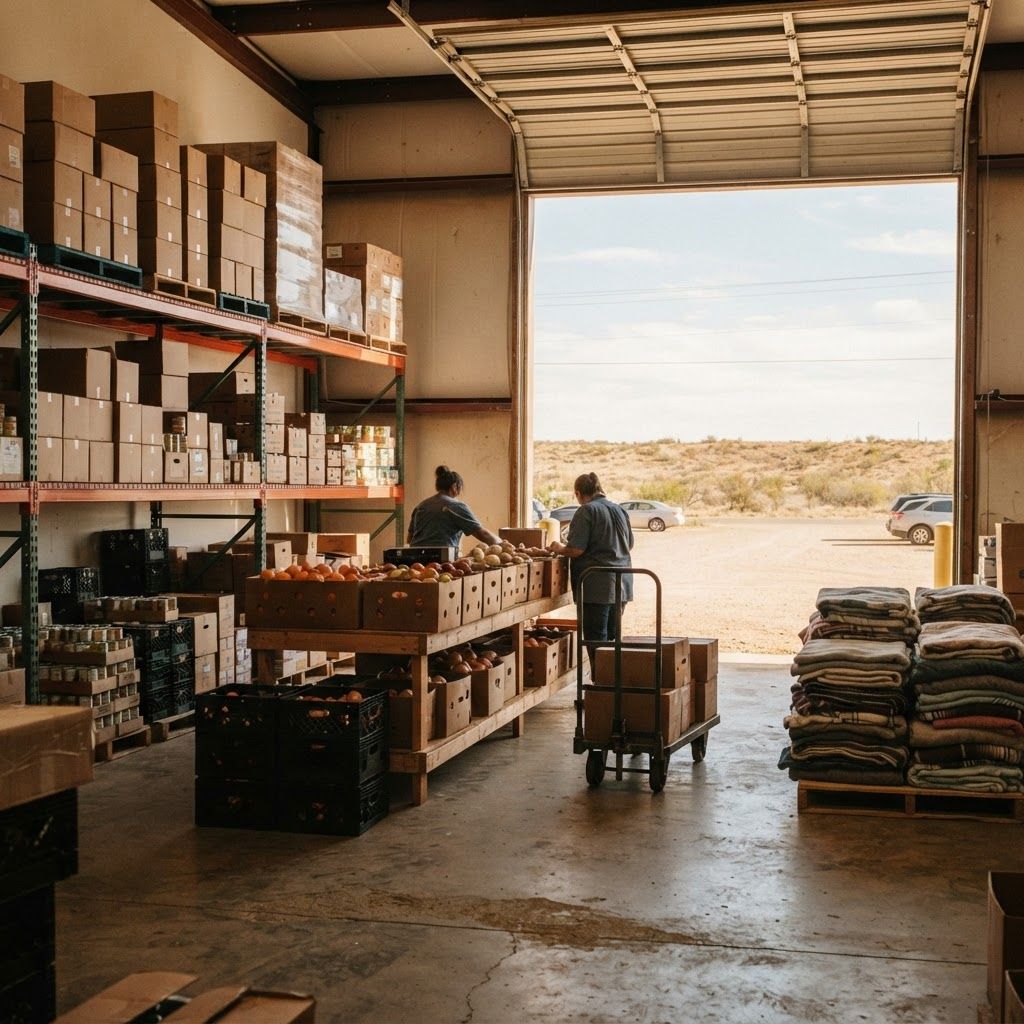
Food insecurity is the region's most persistent challenge, and this organisation operates as the backbone of the response, distributing to pantries, schools and rural partner agencies across many counties. Beyond distribution it runs nutrition education and garden programmes that address root causes, and its logistics capability allows it to respond quickly during weather emergencies.
2. Caprock Community Housing Coalition
Working on affordable housing development, homelessness prevention and rapid rehousing, this coalition combines direct assistance with longer-term housing supply work. Its case management model pairs financial help with employment and budgeting support, which is what turns short-term stabilisation into durable housing outcomes.
3. Lubbock Youth Mentoring Alliance
Focused on structured mentoring, after-school programming and college readiness, this organisation serves students from underresourced schools across the city. Its emphasis on sustained relationships rather than one-off events reflects the research on what actually improves outcomes, and its university volunteer pipeline gives it consistent mentor capacity.
4. West Texas Family Health Access
Healthcare navigation is a real barrier in a region where many residents travel long distances for care. This nonprofit provides free and low-cost clinical services, insurance enrolment assistance, chronic disease management support and transport coordination. Its bilingual staffing meaningfully expands access for Spanish-speaking families across the South Plains.
5. Llano Estacado Arts Foundation
Supporting galleries, performance programming, public art and arts education in schools, this foundation strengthens the cultural infrastructure that makes Lubbock attractive to residents and employers alike. Its school residency programmes bring working artists into classrooms where arts funding has been reduced, and its grants support emerging regional artists.
6. Hub City Literacy Council
Adult literacy, English language instruction and high school equivalency preparation are this organisation's core work. Its volunteer tutor model scales inexpensively, and its workplace literacy partnerships with local employers connect instruction directly to job advancement, which improves both retention and outcomes.
7. Panhandle Veterans Support Services
Serving veterans and military families across a wide rural area, this organisation assists with benefits claims, employment transition, mental health referrals and emergency financial support. Its peer-based approach, where veterans support veterans, is a significant factor in reaching individuals who are reluctant to engage with institutional services.
8. Redbud Animal Welfare Society
Operating adoption programmes, low-cost spay and neuter clinics and community education, this society addresses animal overpopulation with a prevention-first strategy. Its clinic capacity has a measurable effect on intake numbers over time, which is a more sustainable approach than shelter expansion alone.
9. Texas Plains Senior Services
With an ageing rural population across the region, this nonprofit provides home-delivered meals, transport to medical appointments, benefits counselling and social programming for older adults. Its volunteer driver network is particularly valuable in outlying communities where public transport does not exist and isolation compounds health problems.
10. Cotton Country Disaster Relief Fund
The High Plains experiences severe storms, hail, tornadoes and wildfires, and this organisation coordinates emergency response, temporary housing assistance and long-term recovery case management. Its pre-positioned supply agreements and volunteer rosters allow it to mobilise within hours, and its recovery work continues long after media attention fades.
Trends in the Regional Nonprofit Sector
Several shifts are visible. Collaborative service models are replacing siloed programmes, with shared intake and referral systems reducing the burden on people navigating multiple agencies. Data and outcome measurement have become funding prerequisites, pushing organisations to invest in evaluation capacity. Rural service delivery is receiving more attention, including mobile clinics and telehealth to reach counties without local providers.
Volunteer engagement patterns have also changed, with shorter, more flexible commitments becoming the norm, requiring organisations to redesign roles around episodic participation without losing programme continuity.
How to Get Involved Effectively
Recurring monthly donations, even modest ones, are more valuable to most organisations than larger one-off gifts because they support planning. Unrestricted funding lets organisations address actual needs rather than only what grants allow. For volunteering, choose a commitment you can genuinely sustain, and consider skills-based contributions in accounting, legal work, technology or marketing, which are chronically scarce in the sector.
Final Thoughts
Lubbock's nonprofit community reflects a city that takes its regional responsibilities seriously. The ten organisations above address food, housing, health, education, culture and disaster recovery with programmes built on sustained relationships rather than short-term visibility. For anyone looking to contribute time or money in the South Plains, these represent a well-run and genuinely accountable starting point.