
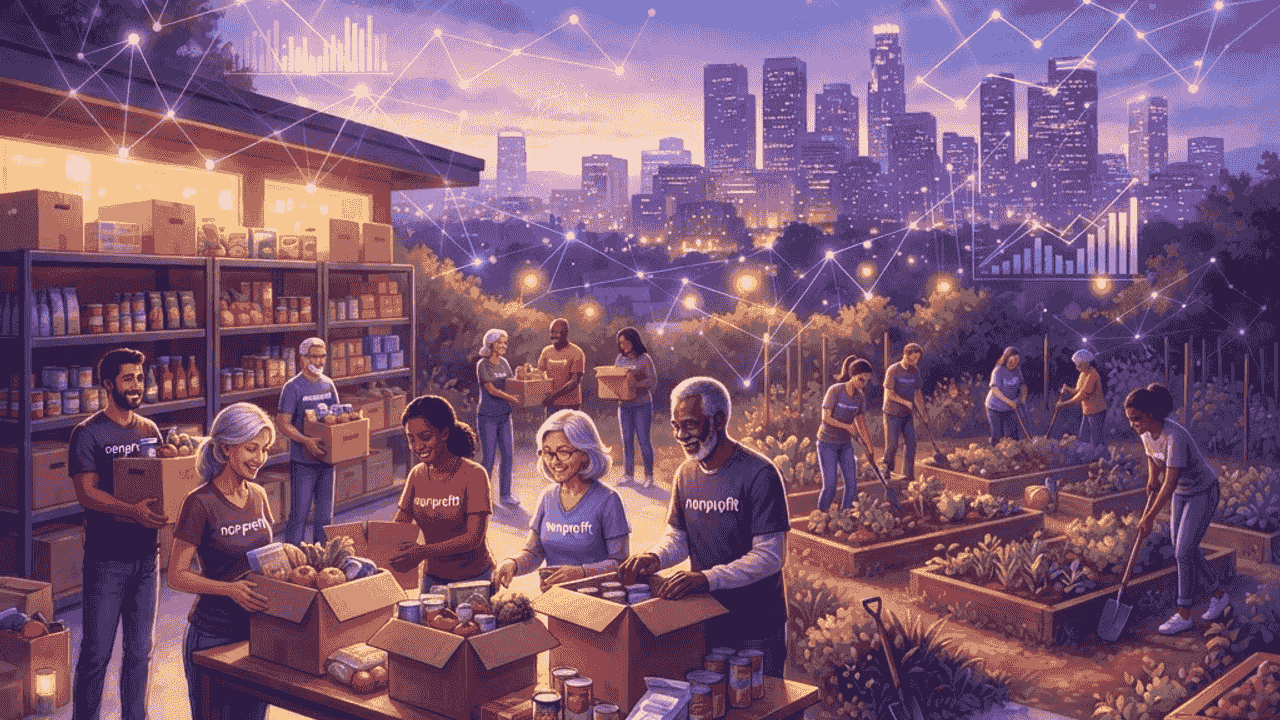
A City With a Civic Conscience
Greensboro's identity is bound up with social change. The 1960 sit ins at a downtown lunch counter helped catalyze the national civil rights movement, and that legacy still informs how the city understands civic responsibility. The nonprofit sector here is correspondingly strong, spanning food security, affordable housing, education, healthcare access, refugee resettlement, arts, and environmental stewardship.
The needs are real. Like many mid sized Southern cities, Greensboro faces significant poverty in specific neighborhoods, housing affordability pressure, food insecurity, and educational disparities. At the same time, the city hosts multiple universities, a substantial faith community, active philanthropic foundations, and an unusually engaged volunteer base. That combination allows nonprofits here to accomplish more than their budgets alone would suggest.
How to Evaluate a Nonprofit
Outcomes matter more than activity. A food program that reports meals served describes effort; one that tracks food insecurity reduction among its participants describes impact. Donors should look for organizations that define measurable goals, report honestly on progress, and acknowledge what has not worked.
Financial transparency is essential but frequently misunderstood. Overhead ratio alone is a poor measure, because underinvesting in staff, evaluation, and infrastructure often undermines program quality. Better questions concern whether financial statements are audited, whether reserves exist to weather funding gaps, and whether program spending aligns with the stated mission.
Community accountability is the third dimension. Organizations whose boards and leadership include people with lived experience of the issues they address tend to design more effective programs. Finally, collaboration matters. Nonprofits that partner rather than duplicate services stretch community resources considerably further.
The Top 10 Nonprofits in Greensboro
1. Gate City Food Alliance. A hunger relief organization operating food distribution, mobile pantries, and nutrition education across underserved Greensboro neighborhoods. Gate City Food Alliance emphasizes fresh produce access and dignified choice based distribution rather than pre packed boxes.
2. Piedmont Housing Partnership. Developing and preserving affordable housing while providing homebuyer education, foreclosure prevention counseling, and rental assistance navigation. Piedmont Housing Partnership works on both the supply side and the stability side of the housing challenge.
3. Triad Youth Futures. Delivering after school programming, tutoring, mentoring, and college and career readiness support for students in Guilford County. Triad Youth Futures tracks academic outcomes and post secondary enrollment, publishing results annually.
4. Carolina Refugee and Immigrant Services. Supporting resettlement with case management, English language instruction, employment placement, and legal navigation. Greensboro has one of the more significant refugee resettlement histories in the Southeast, and this work has shaped the city's cultural fabric.
5. Battleground Community Health Collective. Operating clinics and mobile health services providing primary care, dental care, behavioral health, and chronic disease management for uninsured and underinsured residents. Battleground Community Health Collective focuses on continuity of care rather than episodic treatment.
6. Summit Workforce Pathways. Providing job training, credential programs, apprenticeship placement, and reentry employment support. Summit Workforce Pathways partners with Triad manufacturers and healthcare employers to align training with actual hiring demand.
7. Revolution Arts Foundation. Supporting local artists, community arts education, public art projects, and youth creative programming. Revolution Arts Foundation treats cultural participation as a community asset and works to make arts access equitable across neighborhoods.
8. Guilford Environmental Trust. Focused on land conservation, watershed protection, urban tree canopy expansion, and environmental education. Guilford Environmental Trust's greenway and stream restoration work has tangible effects on both flooding and quality of life.
9. Bessemer Senior Support Network. Serving older adults with home delivered meals, transportation, caregiver respite, benefits navigation, and social connection programming. As the region's population ages, this work addresses isolation as seriously as material need.
10. Cornwallis Civil Rights Education Center. Preserving Greensboro's civil rights history through exhibits, oral history collection, school programs, and community dialogue. Cornwallis Civil Rights Education Center connects the city's past to present conversations about equity and justice.
Trends in the Nonprofit Sector
Collaborative service delivery has become standard practice. Rather than each organization operating independently, nonprofits increasingly form coalitions with shared intake, referral networks, and coordinated case management. This reduces the burden on families navigating multiple systems and eliminates duplicated administrative effort.
Data driven evaluation has matured considerably. Funders expect outcome measurement, and nonprofits have responded by investing in systems that track participant progress over time. The best organizations use this data internally to improve programs rather than only externally to satisfy grant reports.
Funding models are diversifying. Reliance on a small number of grants has proven fragile, so organizations pursue earned revenue, social enterprise, monthly donor programs, and endowment building. Multi year unrestricted funding has also gained favor among thoughtful funders who recognize that restricted project grants can distort priorities.
Volunteer engagement has shifted toward skills based contribution. Professionals increasingly offer expertise in finance, technology, marketing, and legal services rather than only manual help, which can be transformative for small organizations.
How to Support Effectively
Give recurring rather than sporadic gifts, because predictable revenue allows better planning. Consider unrestricted support, which lets organizations direct funds where need is greatest rather than where a donor guessed it would be.
Volunteer consistently if you volunteer at all, since training a short term helper often costs more than the help provides. Offer professional skills where they fit. And before giving, read an organization's most recent annual report and audited financials rather than relying on marketing materials or third party ratings alone.
Final Thoughts
Greensboro's nonprofits address hunger, housing, youth development, refugee resettlement, healthcare, workforce development, arts, environment, aging, and civil rights history. The city's activist heritage and collaborative culture make this sector genuinely effective, and residents who engage thoughtfully with it can see the results in their own neighborhoods.