
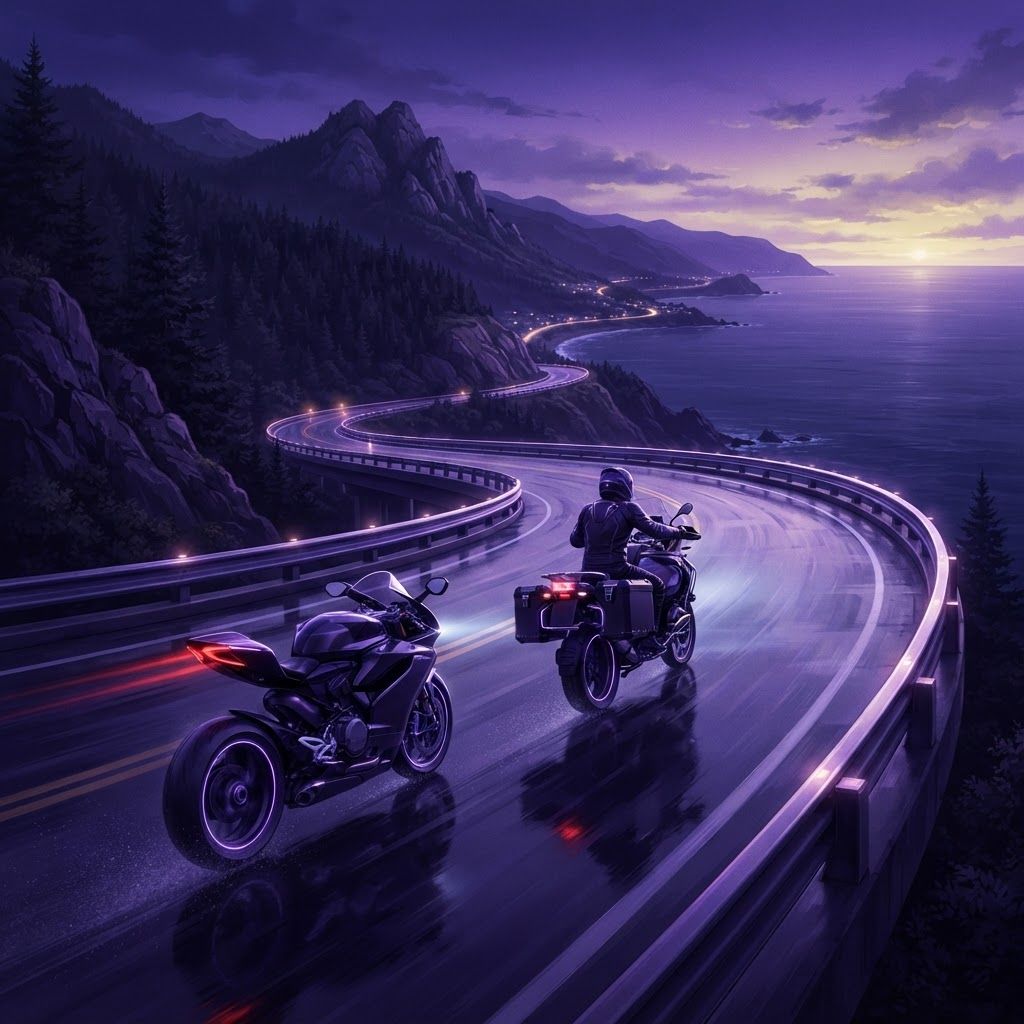
Riding in a Demanding but Rewarding Region
Vancouver offers some of the finest motorcycling in North America and some of the most challenging conditions. The Sea to Sky Highway north toward Whistler, the Duffey Lake Road, the interior mountain passes, and the winding coastal routes on Vancouver Island are genuinely world-class riding. Yet the same region delivers persistent rain across much of the year, cold damp mornings, painted surfaces that turn slippery, and mountain temperature swings that can drop twenty degrees in an hour of riding.
These conditions shape what works. Riders here place unusually high value on rain-appropriate tyres, traction control and cornering ABS, heated grips and seats, effective weather protection, and reliability in humid conditions. Adventure and sport touring machines dominate the market precisely because they handle varied conditions and long distances comfortably, while pure sportbikes see comparatively limited seasonal use.
The Best Motorcycle Brands for the Region
Honda is arguably the most sensible choice for the regional climate. Its reputation for mechanical reliability under adverse conditions is well earned, and its range spans learner-appropriate small displacement machines through capable adventure tourers and highly refined touring platforms. Dealer support across the region is extensive, and parts availability is excellent, which matters for riders who use their bikes year-round.
Yamaha offers an appealing balance of engineering quality and character, with a lineup that includes exceptionally well-regarded middleweight naked bikes, capable adventure machines, and touring options. Its crossplane engine designs have earned a loyal following for their tractable power delivery, which is genuinely useful on wet mountain roads.
Kawasaki covers a broad spectrum from accessible entry-level machines to supercharged flagship models, and its sport touring platforms have a strong following among riders covering long distances through varied terrain. Value for specification is typically strong across the range.
Suzuki has a long-standing reputation for durable, straightforward engineering, and its adventure and sport touring models are frequently chosen by high-mileage riders who prioritise dependability and reasonable running costs over the latest electronics.
BMW Motorrad is exceptionally well suited to the region. Its adventure touring machines effectively defined the category and remain the benchmark for long-distance capability in poor weather, with comprehensive electronic rider aids, excellent weather protection, and shaft drive options that reduce maintenance in wet conditions.
Triumph combines distinctive British character with genuinely modern engineering. Its modern classics appeal to riders who want style without sacrificing reliability, while its adventure range competes credibly with the established leaders and its middleweight triples are widely praised for engine character.
Ducati occupies the premium performance and adventure space, with machines that deliver exceptional dynamic ability and sophisticated electronics. Its multi-purpose models have broadened the brand's appeal well beyond track-focused riders, and the ownership experience is a substantial part of the attraction.
KTM brings a strongly performance-oriented approach with excellent suspension quality and lightweight construction. Its adventure models are particularly capable when riding extends onto forest service roads and unpaved mountain access routes, which is common in British Columbia.
Harley-Davidson retains a devoted following, and its touring models are genuinely comfortable over long distances. The brand's community and event culture is strong in the region, and its recent expansion into adventure touring has broadened its relevance to local conditions.
Royal Enfield has grown substantially in appeal by offering characterful, accessible motorcycles at modest prices. For new riders, urban commuters, and those wanting a simple machine without extensive electronics, its models represent genuine value and a distinctive alternative to mainstream offerings.
Choosing the Right Motorcycle Category
Adventure and dual sport machines are the most versatile choice for the region, offering upright ergonomics, long suspension travel for rough pavement, weather protection, and luggage capacity. They handle commuting, touring, and light unpaved riding equally well.
Sport touring bikes suit riders focused on covering distance on pavement with enthusiasm, combining performance with wind protection and comfort over multi-hour rides.
Naked and standard bikes work well for urban riding and shorter recreational rides, offering good visibility, manageable weight, and lower purchase and insurance costs.
Cruisers and touring machines appeal to riders prioritising relaxed ergonomics and long-haul comfort, particularly for highway-focused trips.
Small displacement machines deserve serious consideration for new riders. Learning on a lighter, less powerful motorcycle builds skill faster and more safely, and the regional graduated licensing structure makes this a natural progression.
Practical Considerations for Local Riders
Tyre choice matters more here than almost anywhere. Compounds and tread patterns designed for wet performance transform confidence on rain-soaked roads, and riders who fit tyres optimised for dry grip often find their machines unsettling for much of the year.
Electronic rider aids are genuinely valuable rather than marketing additions. Cornering ABS, lean-sensitive traction control, and multiple riding modes provide real safety margin on unpredictable surfaces.
Heated equipment extends the riding season considerably. Heated grips, seats, and gear turn marginal early spring and late autumn days into comfortable riding, effectively adding months of usability.
Corrosion protection deserves attention. Salt on winter roads and constant moisture attack fasteners, electrical connections, and finishes. Regular washing, protective treatments, and covered storage substantially extend a motorcycle's condition and resale value.
Licensing follows a graduated structure in British Columbia, with staged testing and restrictions for new riders. Completing a recognised training course improves skill meaningfully and often reduces insurance costs.
Final Thoughts
The best motorcycle brand in Vancouver is the one matched to how and when you actually ride. Riders covering long distances year-round in variable weather gravitate toward adventure and sport touring machines from manufacturers with strong electronics and weather protection. Urban and fair-weather riders have far wider latitude. Whichever brand appeals, prioritising wet-weather capability, appropriate rider aids, and accessible local service support will produce a far better ownership experience in this particular corner of the world.