
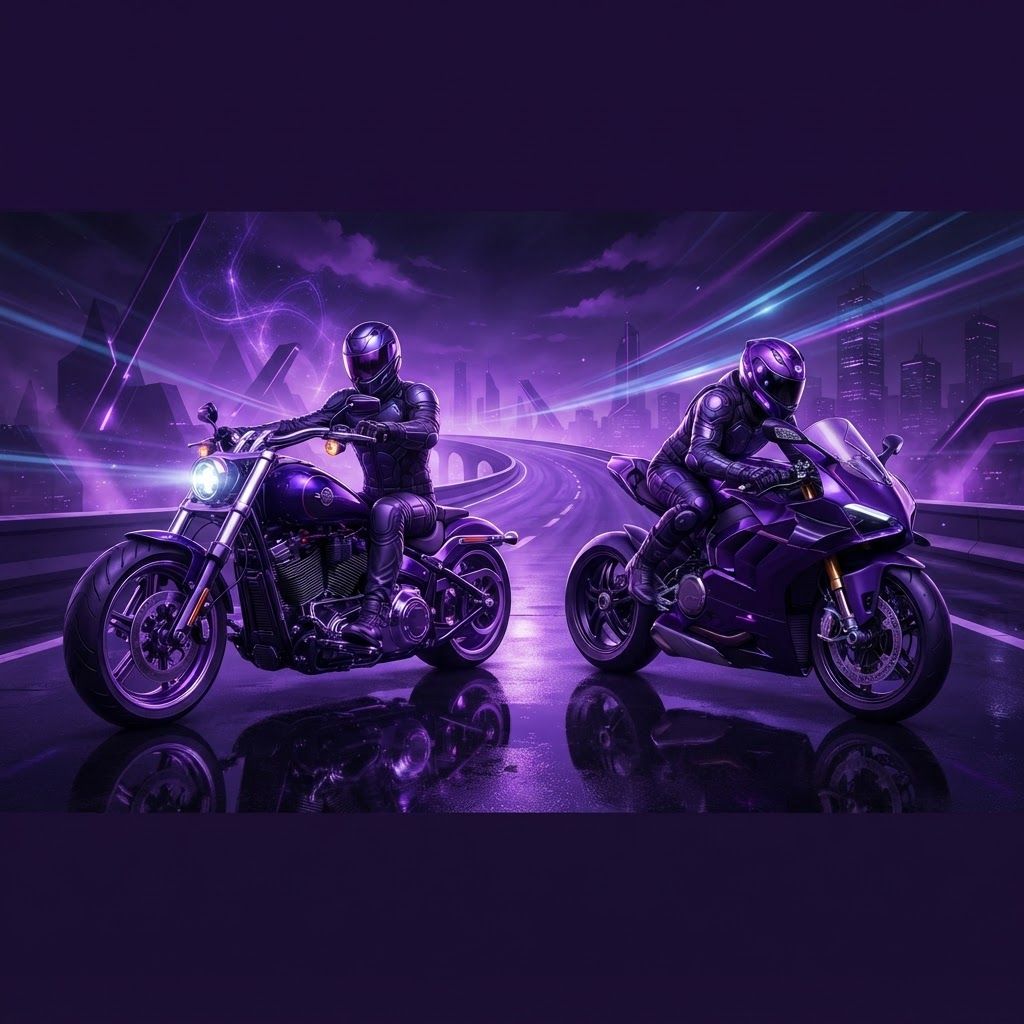
Motorcycling in the Fayetteville Region
Fayetteville offers close to year-round riding weather, with only a handful of genuinely uncomfortable weeks. More importantly, the surrounding geography delivers variety: flat rural highways through farmland to the east, sandy pine backroads through the Sandhills, and access within a few hours to the Blue Ridge foothills where the region's best twisting roads begin. That range means riders here can justify almost any category of machine.
The local riding culture is strong and visible, sustained partly by a military community with a long association with motorcycling and partly by an established network of clubs, group rides, and charity events. Dealer support is correspondingly good, with representation across most major manufacturers and a healthy independent service and parts sector.
Choosing a Category Before Choosing a Brand
Motorcycle selection goes wrong most often when riders pick a brand or an appearance before identifying what they will actually do. Cruisers offer relaxed ergonomics, low seat heights, and abundant torque, ideal for straight-road touring and around-town riding. Sport bikes prioritize cornering performance and power at the expense of comfort, best suited to spirited riding on good roads. Adventure and dual-sport machines handle both pavement and unpaved surfaces with upright seating and long suspension travel.
Touring motorcycles add weather protection, luggage, and comfort for long distances. Standard or naked bikes provide neutral ergonomics and versatility, widely considered the best starting point for new riders. Scooters and small-displacement machines excel at urban commuting with minimal cost.
Ten Leading Motorcycle Brands for Fayetteville Riders
1. Harley-Davidson. The defining American motorcycle brand carries cultural weight that no competitor matches, and its cruisers and touring machines are built around relaxed, torque-rich riding. The extensive accessory catalog allows deep personalization, dealer service networks are widespread, and resale values hold well. For riders drawn to long straight-road touring and to the brand's community, it remains the natural choice.
2. Honda. Honda's reputation for engineering quality and reliability spans the widest lineup in motorcycling, from small-displacement commuters through sport bikes, adventure machines, and full touring platforms. Its smaller models are among the most recommended beginner motorcycles because they combine forgiving power delivery with genuine build quality, and parts availability is excellent.
3. Yamaha. Yamaha balances performance and everyday usability across sport, naked, adventure, and cruiser categories. Its middleweight triples and twins are frequently praised for engine character, and the brand's dual-sport and off-road machines are well suited to the sandy trails and forest roads found around the Sandhills.
4. Kawasaki. Known for strong performance at competitive prices, Kawasaki offers everything from approachable beginner-friendly twins to supercharged flagship machines. Its middleweight sport bikes have long served as an entry point for riders wanting sport ergonomics without intimidating power, and its naked models offer aggressive styling with practical riding positions.
5. Suzuki. Suzuki's lineup emphasizes durability and value, with a long history in both sport riding and adventure touring. Its mid-size adventure machines and versatile standards appeal to riders who prioritize dependable mechanicals and reasonable maintenance costs over cutting-edge electronics.
6. BMW Motorrad. BMW's adventure touring machines effectively created the modern category and remain benchmarks for long-distance capability, with sophisticated electronics, adjustable suspension, and comprehensive luggage systems. Its sport and roadster models are similarly well engineered. Higher purchase and service costs are offset by comfort and capability on genuinely long journeys.
7. Triumph. The British manufacturer combines distinctive design with strong engineering, particularly in its modern classic range, which delivers vintage styling with contemporary brakes, suspension, and fuel injection. Its adventure and roadster triples are praised for engine character, offering a middle path between inline four smoothness and twin-cylinder torque.
8. Ducati. Ducati builds performance-focused machines with unmistakable design and engineering ambition, spanning superbikes, naked roadsters, and adventure models. Ownership demands attention to maintenance schedules, but for riders who value handling precision and character, few alternatives compare.
9. Indian Motorcycle. As the other historic American brand, Indian offers cruisers and baggers with strong power delivery, refined finish, and modern electronics including ride modes and infotainment on touring models. Riders drawn to American styling who want contemporary technology frequently choose it over the alternative.
10. Royal Enfield. Rounding out the list, Royal Enfield has grown rapidly by offering simple, characterful, affordable motorcycles in the middleweight and small-displacement classes. Its machines appeal to new riders and to experienced riders wanting an uncomplicated bike with genuine mechanical charm and low running costs.
Trends in Motorcycling
Rider aids have moved downmarket significantly. Antilock braking, traction control, and ride modes now appear on mid-priced machines rather than only flagships, and evidence for antilock braking reducing crash severity is strong enough that it should be considered essential rather than optional.
The middleweight resurgence continues. Manufacturers have recognized that machines between roughly four hundred and eight hundred cubic centimeters offer the best balance of usable performance, weight, and cost for most riders, and this segment now contains the most interesting new models.
Electric motorcycles are advancing steadily, with instant torque and near-silent operation offering a genuinely different experience. Range and charging remain limiting for touring, but for commuting the proposition is increasingly practical.
How to Choose Well
Complete a certified rider training course before purchasing, regardless of prior experience. Training teaches emergency braking, swerving, and cornering technique that self-teaching rarely develops, and completion often reduces insurance costs and may satisfy licensing requirements.
Buy less power than you think you want for a first motorcycle. Riders consistently report that skills develop faster and enjoyment is higher on machines they can use fully, and a moderate middleweight will outpace an overpowered bike ridden tentatively.
Sit on every candidate. Seat height, reach to the bars, and footpeg position determine whether you will actually ride the motorcycle, and specifications on paper cannot convey fit. Confirm you can flat-foot at stops comfortably.
Budget for gear separately and generously. A quality helmet, armored jacket, gloves, boots, and pants represent a meaningful expense but constitute your only protection. Also account for insurance, maintenance, and tires, which wear considerably faster than car tires.
Final Thoughts
Fayetteville riders have access to American cruiser heritage, Japanese reliability and value, European engineering and adventure capability, and accessible modern classics. The best brand is determined by the riding you will genuinely do rather than by the machine you find most striking, and riders who train properly, choose appropriate displacement, and invest in gear enjoy motorcycling far longer.