
Metal Fabrication Is Foundational to Tacoma's Economy
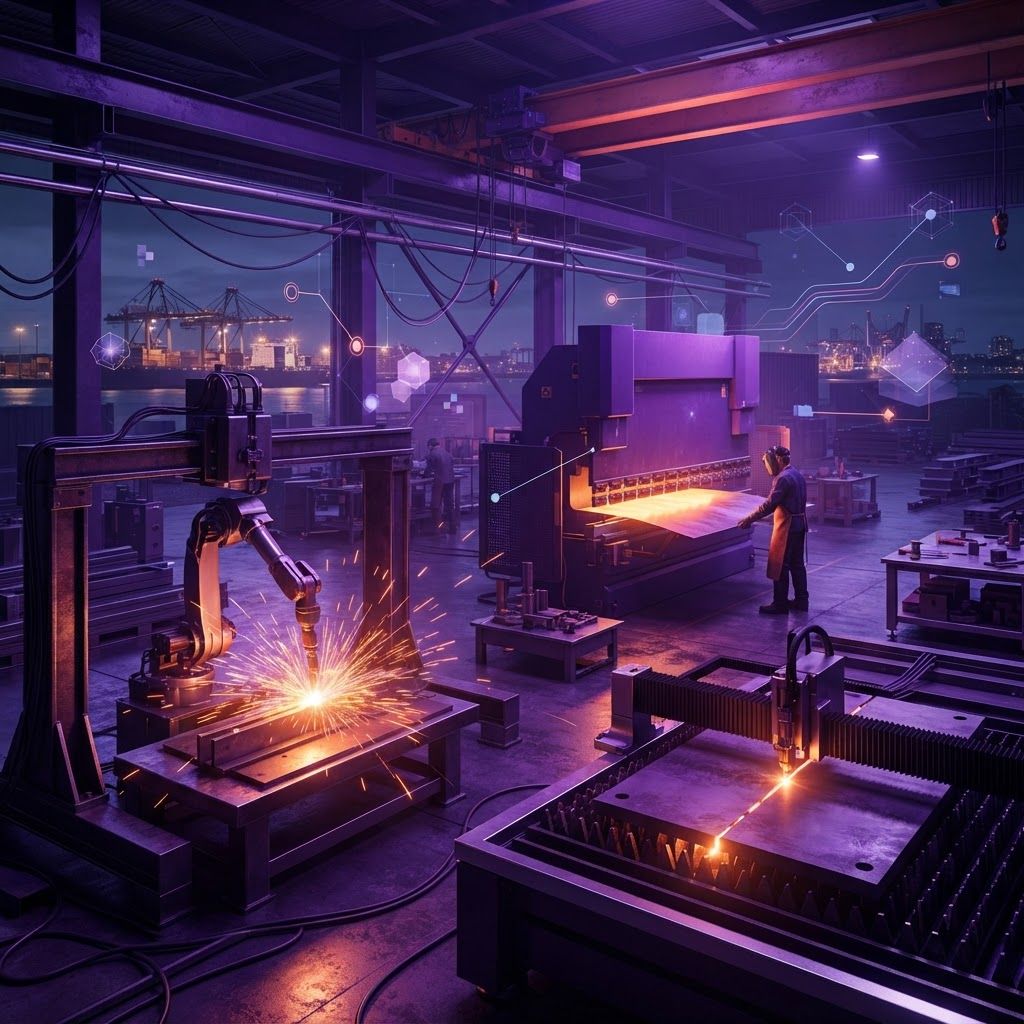
Walk through Tacoma's industrial districts and the sound of metalwork is constant. Plasma tables cutting plate, press brakes forming sheet, welders joining structural members, machinists holding tolerances measured in thousandths. Metal fabrication is one of the most durable industries in the city, and for good reason: it serves customers who cannot easily offshore their needs.
The Port of Tacoma requires ongoing fabrication and repair of cranes, conveyors, ramps, guards, and marine structures. The regional aerospace supply chain needs precision machined components and assemblies. Commercial construction consumes structural steel, miscellaneous metals, stairs, railings, and architectural features. Boat builders and commercial fishing operations need custom aluminum and stainless work. Food processors need sanitary stainless equipment. Breweries need tanks and piping. Each of these customers values proximity, responsiveness, and the ability to solve a problem in person.
Capabilities That Define the Sector
Cutting ranges from plasma and oxy-fuel for heavy plate to laser and waterjet for precision and heat-sensitive materials. Fiber laser adoption has accelerated locally, delivering faster cuts and cleaner edges on sheet and thin plate. Forming uses press brakes and rolls to bend, roll, and shape material, where operator skill and tooling libraries determine what geometry is achievable. Welding spans MIG, TIG, stick, and flux-core across carbon steel, stainless, and aluminum, and this is where certification matters most. Machining covers CNC milling and turning for components requiring tight tolerance and fine finish. Structural fabrication produces beams, columns, connections, and assemblies for buildings and industrial equipment. Finishing includes blasting, powder coating, hot-dip galvanizing, passivation, anodizing, and polishing, all critical in a marine climate.
Some shops are vertically integrated across most of this list; others specialize narrowly and subcontract the rest. Neither model is inherently better, but knowing which one a shop follows helps predict lead time and accountability when something goes wrong.
Certifications and Codes Worth Verifying
Metalworks is a field where credentials genuinely predict quality. AWS-certified welders and documented welding procedure specifications indicate that joints will meet defined standards rather than depending on individual habit. AISC certification signals a structural steel fabricator whose quality systems have been audited, which is frequently required on public and institutional projects. ISO 9001 demonstrates a general quality management system, while AS9100 is expected for aerospace work.
For pressure-containing work, ASME code stamps apply. For sanitary stainless fabrication serving food, beverage, and pharmaceutical customers, look for shops experienced with 3-A sanitary standards, orbital welding, and proper passivation, because inadequate surface finish creates contamination risk.
Buyers should ask to see welder qualification records, inspection procedures, and whether the shop performs or subcontracts nondestructive testing such as dye penetrant, magnetic particle, ultrasonic, or radiographic examination. A shop that produces this documentation without friction is a shop that maintains it.
Engineering and Design Support
The most valuable fabricators do more than cut to print. They review drawings for manufacturability, flagging bend radii that the material cannot survive, tolerances that are unnecessarily expensive, weld access problems, and geometry that will distort under heat. Shops with in-house detailing, 3D modeling, and licensed engineering relationships can take a concept sketch and deliver a stamped, buildable design.
That capability matters especially for architectural metalwork, an area where Tacoma has notable strength. Stairs, canopies, perforated screens, handrails, and feature elements demand both aesthetic sensitivity and structural compliance. Fabricators who collaborate well with architects and can produce mockups before committing to full production consistently deliver better outcomes.
Materials and the Marine Environment
Corrosion is the defining engineering challenge in the South Sound. Salt air, persistent moisture, and freeze-thaw cycling attack unprotected steel quickly. Experienced local fabricators default to appropriate protection: hot-dip galvanizing for exterior structural steel, marine-grade aluminum alloys for waterfront applications, 316 stainless rather than 304 where chloride exposure is significant, and properly specified coating systems with correct surface preparation.
Material traceability also matters. For structural and aerospace work, mill test reports tie each piece of material to a heat lot with verified chemistry and mechanical properties. Shops that maintain organized material control and segregate stainless from carbon steel to prevent cross-contamination produce more reliable results, and the discipline is visible on the shop floor.
How to Evaluate a Fabrication Shop
Tour the facility. Look at crane capacity and bay height, since these determine the maximum assembly size the shop can handle. Check whether welding stations have adequate fume extraction and whether weld quality on work in progress looks consistent. Note whether the shop is organized or chaotic, because in fabrication disorganization translates directly into errors and rework.
Ask about capacity and scheduling honestly. Many shops are booked well out, and a supplier who promises an implausible lead time is likely to miss it. Ask what portion of work is subcontracted, particularly finishing, since galvanizing and coating queues frequently drive total delivery time.
Request comparable references. A shop excellent at heavy structural steel may be poorly suited to thin gauge sanitary stainless. Look for experience with the specific material, thickness range, and tolerance class the project requires.
Clarify the quote scope in writing: material grade, finish specification, hardware, fabrication tolerances, delivery, and whether installation or field welding is included. Field work introduces licensing, insurance, and safety requirements that not every shop maintains.
Where the Industry Is Going
Automation is reshaping the sector. Robotic welding cells, automated press brakes with vision systems, and nesting software that maximizes material yield are improving both consistency and cost. Adoption is uneven, with larger shops investing first, but the trend is clear.
Workforce development is the industry's central constraint. Skilled welders and machinists remain scarce, and the shops thriving in Tacoma are generally those partnering with regional community and technical colleges, running apprenticeships, and retaining experienced staff. When evaluating a fabricator, ask about workforce stability. A shop with long-tenured tradespeople and an active training pipeline will still be capable in five years, which is exactly what a customer building a long-term supply relationship should want.