
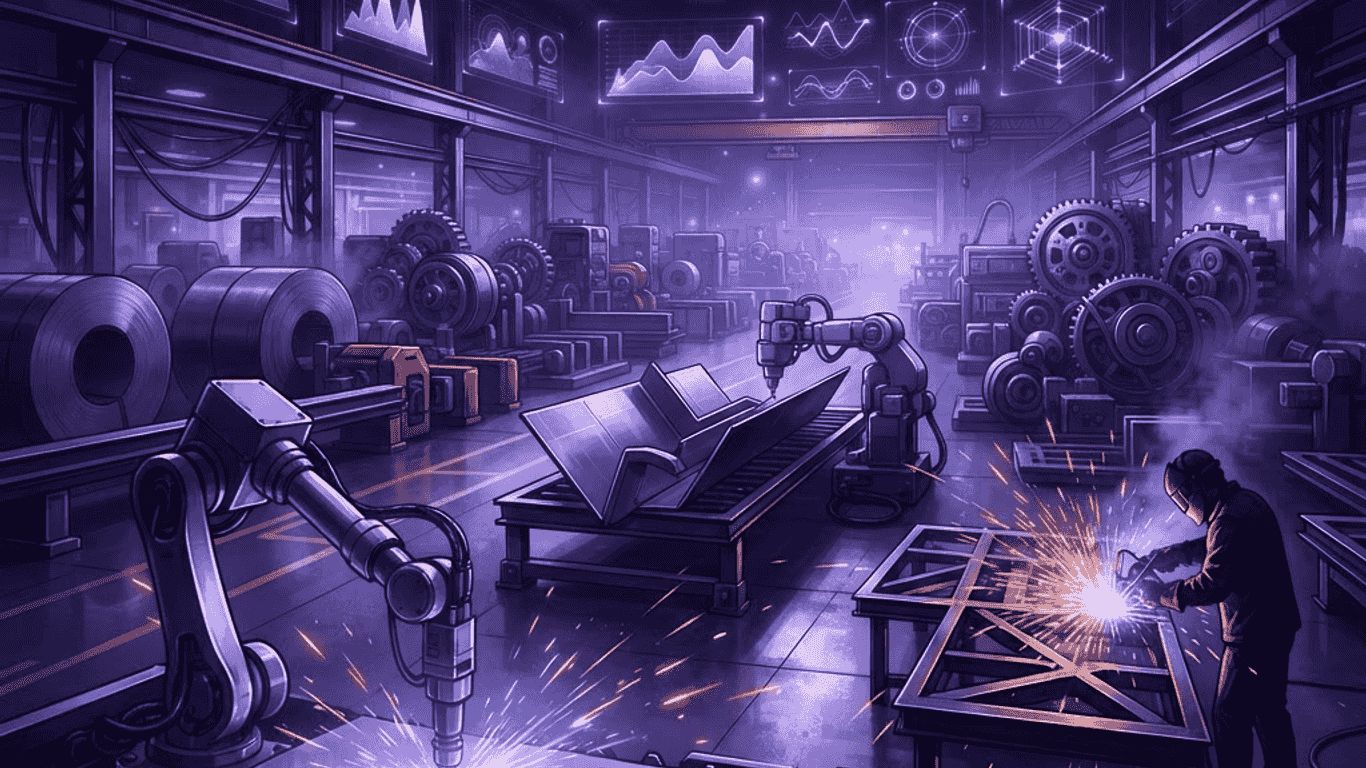
A Deep Metalworking Tradition
Metalworking in St. Paul grew alongside rail equipment, agricultural implements and river commerce, and the skills built in that era never left. Today the sector spans everything from job shops running a few laser cutters to sophisticated contract manufacturers with automated bending cells, robotic welding and full finishing lines. The result is a supply base capable of supporting prototypes and production programs within the same metropolitan area.
Local customers include medical device companies, food processing equipment builders, electrical enclosure producers, construction contractors and architects specifying custom railings and facades. That variety keeps area fabricators versatile, and it means most projects can find a shop whose equipment and tolerance culture genuinely fit the work.
Top 10 Metalworks Companies Serving St. Paul
1. Capitol Precision Fabrication
Capitol Precision Fabrication combines fiber laser cutting, CNC press brakes and welding with in-house engineering. Its reputation rests on repeatable tolerances and thorough first-article documentation for regulated customers.
2. Saint Paul Sheet Metal Works
A sheet metal specialist producing enclosures, chassis, ductwork and brackets, this company is known for fast turnarounds on medium-complexity parts and for helping customers simplify designs to reduce bend and weld operations.
3. Mississippi Structural Steel
Serving commercial construction, Mississippi Structural Steel fabricates beams, columns, stairs and miscellaneous metals. Detailing accuracy and coordinated delivery sequencing keep erection crews on schedule.
4. Northern Welding and Fabrication
Northern Welding and Fabrication handles heavy weldments, tanks, frames and repair work across carbon steel, stainless and aluminum. Certified welders and documented procedures support demanding pressure and structural applications.
5. Great River Machining
Great River Machining focuses on CNC milling and turning for close-tolerance components. Investment in metrology equipment and process documentation makes it a frequent choice for medical and instrumentation work.
6. Midway Stamping and Tooling
Midway Stamping and Tooling produces progressive die stampings plus the tooling to make them. High-volume customers value its die maintenance discipline, which protects part quality over millions of cycles.
7. East Metro Architectural Metals
This shop fabricates railings, stairs, canopies, screens and decorative facades. Designers rely on its finish quality, mockup process and field measurement rigor for visible architectural installations.
8. Summit Stainless Solutions
Summit Stainless Solutions specializes in sanitary stainless fabrication for food, beverage and pharmaceutical customers. Weld finishing, passivation and cleanability documentation define its niche.
9. Bluff Line Metal Finishing
Offering powder coating, plating, anodizing and passivation, Bluff Line Metal Finishing supports other fabricators and OEMs. Consistent color matching and corrosion testing are central to its value in a road-salt climate.
10. Twin Rivers Laser and Waterjet
Twin Rivers Laser and Waterjet provides high-speed cutting services in a broad range of materials and thicknesses. Nesting optimization and quick-quote systems make it efficient for both prototypes and repeat blanket orders.
Trends Shaping Metal Fabrication
Automation continues to raise the floor on quality. Robotic welding, automated bending and offline programming reduce operator-dependent variation and shorten setups, allowing smaller batches to remain economical. Shops investing here can quote competitively without sacrificing margin.
Digital quoting and design collaboration are also changing buyer expectations. Uploading a model and receiving manufacturability feedback within days is now common, and fabricators who flag costly features early save customers substantial redesign expense.
Material and finishing choices are shifting too. Corrosion protection strategies are being upgraded as customers demand longer service life, and interest in aluminum and stainless substitutions is growing where weight or maintenance matters. Sustainability conversations increasingly include scrap recovery rates and coating chemistry.
How to Evaluate a Metalworks Partner
Match equipment to your parts. Confirm laser capacity, press brake tonnage and length, machining envelope, welding processes and finishing capability before assuming a shop can deliver. Ask what percentage of the work stays in-house versus subcontracted.
Verify quality infrastructure. Look for documented inspection practices, calibrated measurement equipment, welder certifications where applicable, and clear nonconformance handling. Request an example inspection report from a similar job.
Discuss engineering collaboration. The most valuable fabricators review designs for bend radii, weld access, tolerance stack-up and finishing masking, then propose changes that cut cost without harming function.
Finally, test communication and scheduling honesty. Shops that quote realistic lead times, provide progress updates and raise material delays early are worth more than shops promising the shortest schedule and missing it.
Controlling Cost in Fabricated Metal Parts
Fabrication pricing responds strongly to details customers can control. Reducing the number of unique bends, standardizing hole sizes to common tooling, relaxing non-critical tolerances and specifying standard sheet thicknesses all reduce setup time and material waste. A design review with your fabricator before releasing drawings frequently produces double-digit savings.
Batch strategy matters as well. Setup cost is spread across quantity, so ordering in economical batch sizes with scheduled releases balances unit price against inventory carrying cost. Blanket orders with periodic pull authorizations let fabricators nest parts efficiently while customers avoid tying up cash in finished inventory.
Finishing decisions also carry hidden cost. Masking requirements, cosmetic grade expectations on non-visible surfaces and specifying premium coatings where standard performance suffices all add expense without functional benefit. Discussing which surfaces genuinely matter, and which corrosion exposure the part will actually see, lets a fabricator recommend a finishing approach that meets requirements at a realistic cost while still surviving Minnesota road salt and humidity cycles.
Final Thoughts
St. Paul's metalworks companies deliver an impressive breadth of capability, from architectural detail work to sanitary stainless systems and high-volume stampings. Buyers who align equipment fit, quality systems and engineering support with their actual requirements will build supplier relationships that improve product quality and reduce total cost over time.