
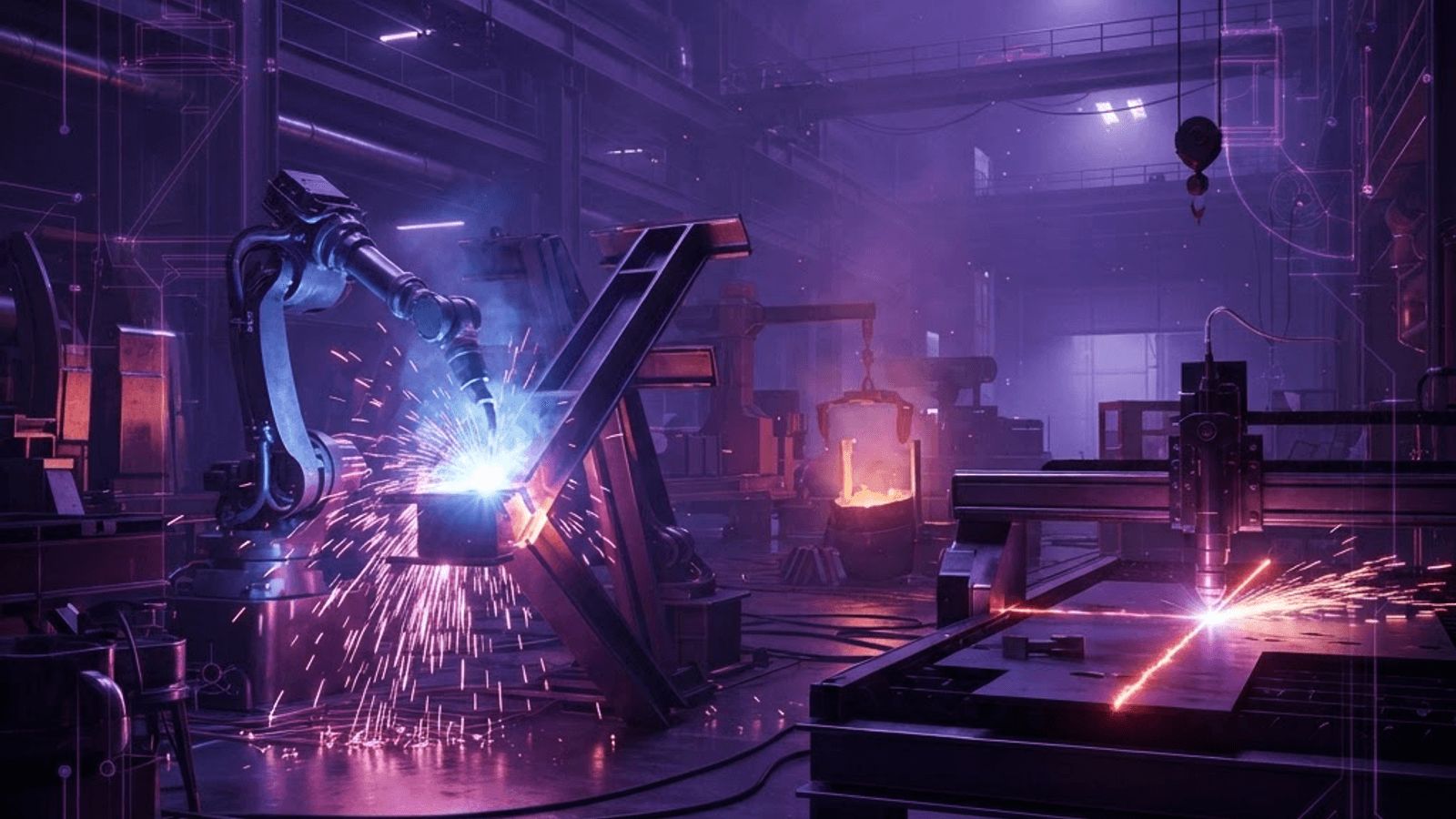
A Metalworking Tradition Built on Regional Industry
Metalworking has anchored Spokane's industrial economy for well over a century. Mining operations needed equipment fabricated and repaired. Railroads required structural work and machining. Agriculture demanded implements and repairs. Timber mills needed heavy fabrication. Each industry contributed to a metalworking base that remains one of the region's genuine industrial strengths.
Today the sector encompasses distinct specialties: structural steel fabrication for construction, precision machining for original equipment manufacturers, sheet metal work for mechanical systems and enclosures, heavy fabrication for industrial equipment, and architectural metalwork for building applications. Most shops concentrate in one or two of these areas, and understanding the distinctions is essential to selecting a suitable partner.
Structural Steel Fabricators
Structural steel fabrication serves the construction industry, producing beams, columns, joists, connections, stairs, railings, and miscellaneous metals for commercial buildings, industrial facilities, and infrastructure projects.
This work operates under rigorous quality requirements. Welding must comply with structural welding codes, welders require documented qualification for specific procedures, and fabrication demands detailed shop drawings coordinated with structural engineering. Certification through recognized structural steel quality programs signals that a fabricator's procedures, personnel, and controls meet published standards, and many public projects require it outright.
Detailing capability strongly differentiates fabricators. Shops with internal detailing departments using three-dimensional modeling identify connection conflicts and coordination issues before steel is cut, preventing field problems that are enormously expensive to resolve once erection begins.
Precision Machining Operations
Precision machine shops serve original equipment manufacturers, aerospace suppliers, medical device companies, and industrial customers requiring tight-tolerance components. These operations run computer numerical control milling machines, lathes, multi-axis machining centers, grinders, and inspection equipment.
Capability here is defined by tolerance capability, material range, and part complexity. Shops with five-axis machining can produce complex geometries in single setups, improving both accuracy and economics. Those with coordinate measuring machines can verify complex features and provide the inspection documentation aerospace and medical customers require.
Material expertise matters considerably. Machining titanium, Inconel, hardened tool steel, or engineered plastics each requires specific tooling, speeds, feeds, and coolant strategies. Shops experienced in your material will deliver better results at lower cost than generalists learning as they go.
Sheet Metal Fabrication Shops
Sheet metal fabricators produce enclosures, ductwork, panels, brackets, chassis, and formed components. Equipment typically includes laser or plasma cutting, press brakes, punch presses, welding stations, and finishing capability.
Spokane's mechanical contracting sector sustains substantial demand for heating, ventilation, and air conditioning ductwork and related components. Meanwhile industrial and electronics customers need precision enclosures and chassis, which requires tighter tolerance control and better finishing than construction ductwork.
Finishing capability significantly affects value. Shops with powder coating, wet painting, plating relationships, or anodizing arrangements deliver finished parts rather than requiring customers to manage a second vendor and additional freight.
Heavy Fabrication and Industrial Metalwork
Heavy fabricators build large structures and equipment: tanks, pressure vessels, hoppers, conveyor frames, industrial platforms, mining equipment structures, and process equipment. This work requires substantial crane capacity, large-envelope welding capability, and often pressure vessel code certification.
The region's mining, agricultural processing, and energy sectors sustain steady demand for this work. Heavy fabricators serving these industries develop deep understanding of abrasion resistance, structural fatigue, and serviceability requirements specific to demanding environments.
Architectural and Ornamental Metalwork
Architectural metalworkers produce railings, stairs, gates, canopies, decorative panels, signage structures, and custom features for buildings. This segment combines fabrication skill with design sensibility and finish quality expectations far exceeding industrial work.
Spokane's downtown revitalization and growing hospitality sector have expanded demand for distinctive architectural metal. Shops working in weathering steel, blackened steel, brass, bronze, and stainless with high-quality finishing serve architects seeking material character that standard products cannot provide.
Evaluating a Metalworks Partner
Welding qualification is fundamental for any fabrication involving structural or pressure-containing work. Ask about welder certifications, welding procedure specifications, and inspection practices including visual, dye penetrant, ultrasonic, or radiographic testing as applicable.
Equipment capability determines what a shop can actually deliver. Confirm maximum part size, material thickness range, crane capacity, and machining envelope against your requirements. Shops occasionally accept work beyond their comfortable capability and struggle to deliver.
Engineering support adds substantial value. Fabricators employing engineers can review designs for fabricability, suggest connection or geometry changes that reduce cost, and perform structural calculations. That input frequently saves more than competitive bidding.
Trends in Regional Metalworking
Automation continues expanding. Fiber laser cutting, robotic welding cells, automated press brakes with offline programming, and pallet-loading machining centers improve throughput and consistency while easing the skilled labor constraints limiting many shops.
Digital workflow integration is reshaping operations. Three-dimensional model-based fabrication, direct model-to-machine programming, and digital shop floor documentation reduce errors and compress schedules. Shops that have adopted these practices deliver faster with fewer mistakes.
Workforce development has become a strategic priority industry-wide. Regional shops partner with community college programs and apprenticeships to develop welders, machinists, and fabricators, since the skilled trades pipeline is the binding constraint on growth for most operations.
Selecting the Right Shop
Provide complete documentation when requesting quotes: dimensioned drawings, material specifications, tolerance requirements, welding standards, finish expectations, quantities, and delivery needs. Ambiguous requests produce noncomparable quotes and disappointing results.
Tour the facility before awarding significant work. Observe equipment condition, organization, work-in-process handling, and inspection practices. Shop floor discipline strongly predicts delivered quality.
Finally, evaluate responsiveness during quoting. A shop that asks clarifying questions, identifies drawing ambiguities, and suggests improvements is demonstrating the engagement that produces good outcomes. Silent quoting often precedes silent problems.