
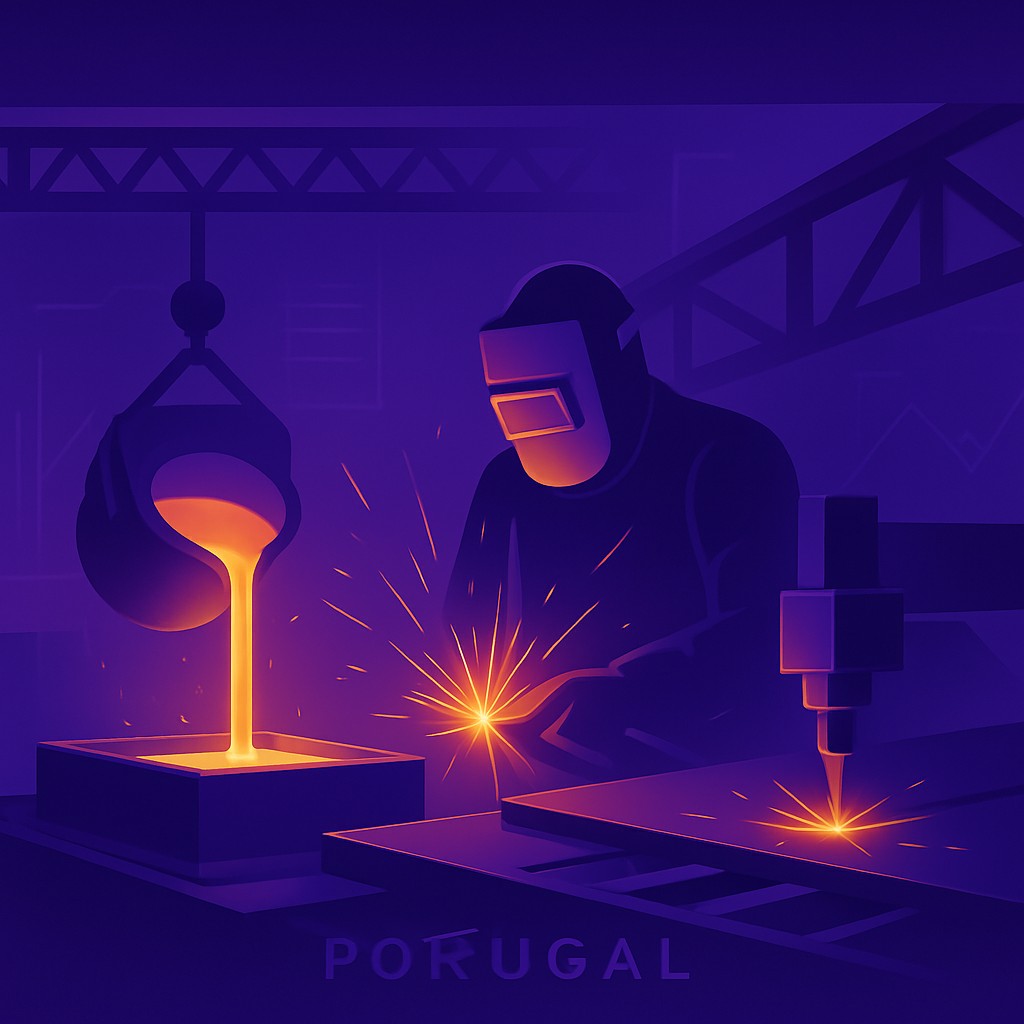
The Strength of Portuguese Metalworking
The metalworks sector is a vital pillar of Portuguese industry, supplying precision components, fabricated structures, and engineered solutions to a wide range of demanding industries. From automotive and aerospace to construction, energy, and consumer goods, Portuguese metalworkers have built a reputation for quality, reliability, and technical skill that extends well beyond national borders.
This success is rooted in a long tradition of craftsmanship combined with continuous investment in modern technology. Portuguese metalworks companies operate advanced machinery, including CNC machining centres, laser-cutting systems, and robotic welding cells, enabling them to deliver complex, high-precision work efficiently.
Versatility Across Industries
One of the defining strengths of the Portuguese metalworks sector is its versatility. Companies serve diverse markets, producing everything from structural steel and machine parts to precision components for aerospace and medical applications. This adaptability allows the industry to remain resilient and to capture opportunities across multiple sectors.
Many firms offer integrated services, handling design, prototyping, machining, welding, finishing, and assembly under one roof. This comprehensive approach simplifies supply chains for clients and ensures consistent quality throughout the production process.
Leading Metalworks Companies
Adira is one of Europe's foremost producers of metalworking machinery, including press brakes and laser-cutting systems, while also demonstrating advanced fabrication expertise. Its reputation for engineering quality is well established.
Cunha & Cunha and similar specialists provide precision machining and metal fabrication services, serving industrial clients who demand tight tolerances and dependable delivery.
Metalcasal focuses on structural steel and metal construction, supporting building and infrastructure projects with robust, well-engineered solutions.
Famo combines machinery production with metal fabrication, offering custom solutions for clients across various industries.
Precision and Industrial Specialists
Sodecia is a notable name in the automotive metal-components sector, supplying parts to major manufacturers and reflecting Portugal's strong links to the car industry.
Inapal Metal specialises in metal components and structures for automotive and industrial applications, valued for its engineering capability and quality systems.
Felino brings expertise in iron casting and machining, producing durable components for diverse industrial uses.
Metalogalva is recognised for galvanised steel structures, supplying products for energy, telecommunications, and infrastructure projects across many markets.
Navalria and other fabrication specialists contribute expertise in marine and heavy-metal works, while Ramalhos demonstrates how metalworking skill supports the production of advanced industrial equipment.
Embracing Advanced Technology
The Portuguese metalworks industry has wholeheartedly embraced advanced manufacturing technologies. Automation, robotics, and digital production systems are increasingly common, improving precision, efficiency, and consistency. Computer-aided design and simulation tools allow engineers to optimise components before production, reducing waste and errors.
This commitment to technology helps Portuguese companies compete on quality rather than simply price. By investing in skills and equipment, the sector continues to move toward higher-value, more sophisticated work that meets the exacting standards of industries like aerospace and medical devices.
Quality, Certification, and Sustainability
Quality assurance is central to the sector's reputation. Leading companies hold internationally recognised certifications and maintain rigorous quality-management systems, which are often prerequisites for working with multinational clients. This focus on quality builds trust and supports long-term partnerships.
Sustainability is also gaining prominence. Metalworks companies are improving energy efficiency, reducing waste, and increasing the use of recycled metals. These efforts align with European environmental goals and respond to customer demand for responsible manufacturing practices.
Conclusion
Portugal's metalworks companies combine craftsmanship, advanced technology, and versatility to serve some of the world's most demanding industries. From machinery producers and precision machinists to structural-steel and casting specialists, the firms highlighted here exemplify the strength of the sector. For businesses seeking reliable, high-quality metalworking partners, Portugal offers expertise and capability that command international respect.