
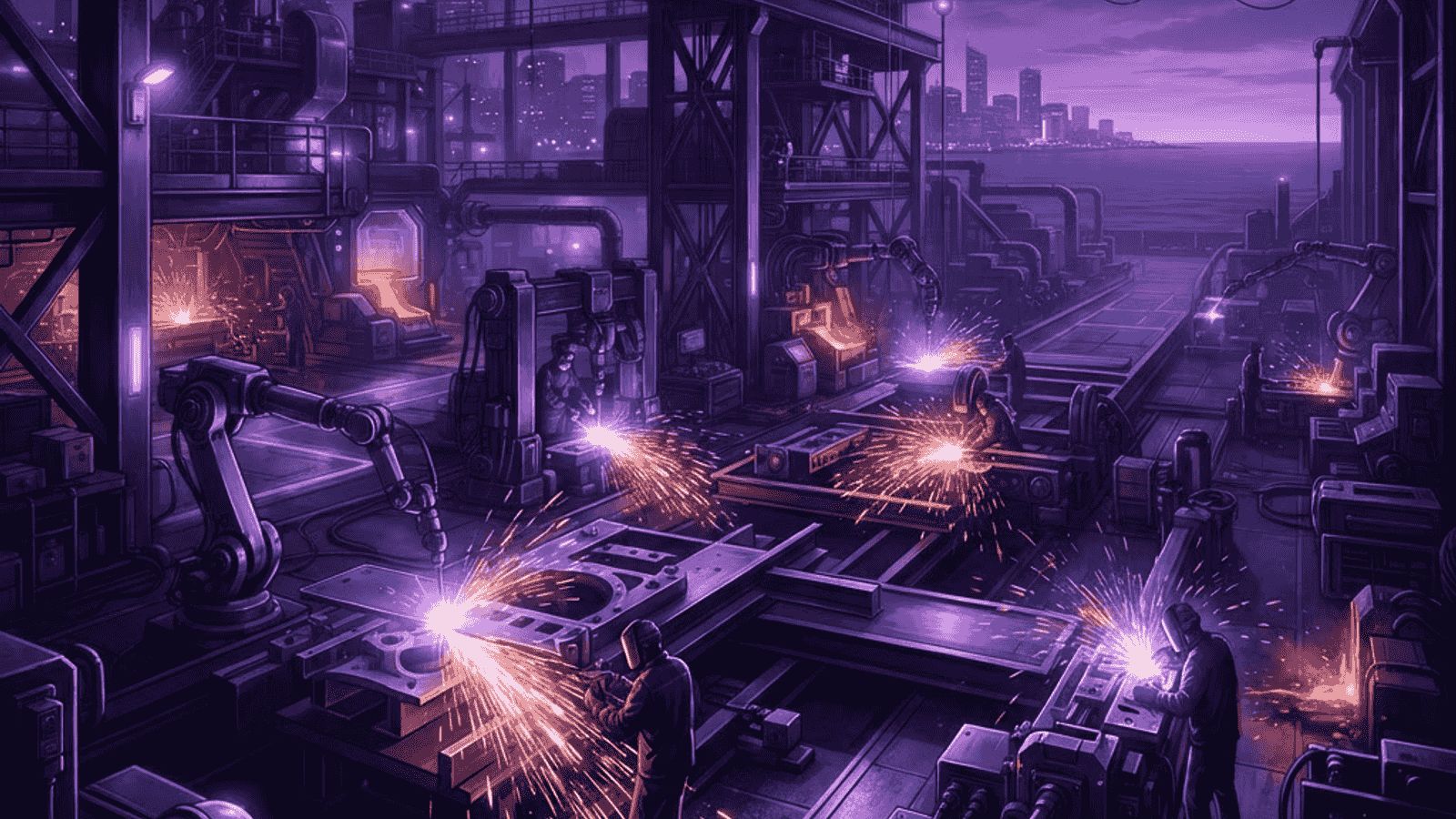
Metalworking on the Treasure Coast
Metalworking is one of the oldest and most versatile trades in Port St. Lucie's industrial base. The city's shops cut, form, weld, machine, and finish metal for construction, marine, agricultural, and manufacturing customers. Because metal fabrication is fundamentally a service business built on skill and equipment rather than proprietary products, the quality gap between an excellent shop and an average one is unusually wide — and unusually consequential.
Florida's environment raises the stakes further. Salt air attacks carbon steel aggressively, and coastal installations demand careful material selection, proper coating systems, and welding practices that do not create corrosion-prone weak points. Local shops that have spent years working near the water understand these details in a way that inland fabricators often do not.
Core Metalworking Capabilities
Fabrication begins with cutting: plasma, laser, waterjet, and saw processes each suit different materials and tolerances. Forming follows, using press brakes, rolls, and shears to shape flat stock into finished geometry. Welding joins the assembly, with process choice — shielded metal arc, gas metal arc, gas tungsten arc — driven by material, thickness, and appearance requirements.
Machining is a separate discipline, removing material to achieve precise dimensions on lathes and mills. Finishing completes the work through grinding, polishing, galvanizing, powder coating, or painting. Shops offering more of these steps internally control quality better and reduce the handoffs that cause schedule slips.
Ten Metalworks Companies Serving Port St. Lucie
Treasure Coast Steel Fabricators handles structural steel for commercial construction, producing beams, columns, stairs, and platforms with shop drawings and erection support.
Lucie Precision Machining operates computer numerical control lathes and mills for tight-tolerance components, serving aerospace, medical, and industrial equipment customers with documented inspection.
Atlantic Marine Metalworks fabricates in aluminum and stainless for the boating industry, building towers, rails, brackets, and hardware engineered to survive constant saltwater exposure.
Sabal Architectural Metals produces railings, gates, canopies, screens, and decorative elements where appearance carries as much weight as structure, with finish quality to match.
Indian River Sheet Metal specializes in ductwork, enclosures, panels, and light-gauge fabrication for mechanical contractors and equipment builders.
Crosstown Welding Services provides mobile and shop welding, including repair work, certified structural welding, and on-site fabrication for facilities that cannot move equipment.
Riverbend Metal Finishing concentrates on coatings and surface treatment, offering powder coating, passivation, polishing, and preparation services to other fabricators and manufacturers.
Palmetto Ornamental Iron works in traditional wrought and forged styles, producing custom residential gates, balconies, and staircases for high-end homes.
Coastal Laser and Waterjet offers precision cutting services on sheet and plate, supporting other shops and manufacturers with fast-turnaround parts from supplied files.
Midway Industrial Fabrication builds tanks, hoppers, frames, and process equipment, combining heavy plate work with piping and structural assembly.
Trends in Metal Fabrication
Automation is spreading rapidly through fabrication. Fiber laser cutting has largely displaced older plasma systems for sheet work, delivering better edge quality at higher speed. Robotic welding cells now handle repetitive production work, freeing skilled welders for complex assemblies where judgment matters.
Digital workflow integration has followed. Shops that accept native computer-aided design files, generate nesting programs automatically, and provide three-dimensional models for approval reduce errors and compress schedules substantially compared to those still working from paper drawings.
Skilled labor remains the sector's binding constraint. Experienced welders and machinists are in short supply nationally, which has pushed shops toward apprenticeship programs, cross-training, and equipment that reduces dependence on scarce manual skill.
Evaluating a Fabrication Partner
Ask about welder qualifications. Certified welders working to recognized procedures produce demonstrably more consistent results, and for structural or pressure work certification is mandatory rather than optional. Request to see qualification records rather than accepting verbal assurance.
Discuss material selection openly, especially for coastal installations. Stainless grades differ meaningfully in corrosion resistance, aluminum alloys vary in strength and weldability, and galvanized coatings come in different thicknesses. A shop that guides these choices is worth more than one that simply builds what was drawn.
Inspect finish quality on completed work. Weld appearance, grinding consistency, coating coverage on edges and inside corners, and hardware fit reveal a shop's standards immediately. For architectural work, this inspection is essential since the metal will be visible for decades.
Clarify scheduling and installation responsibility. Fabrication delays cascade through construction projects, and confusion over who handles delivery, hoisting, and field fitting causes disputes. Settle these terms in the quote.
Final Thoughts
Port St. Lucie's metalworks companies cover a remarkable range of capability, from ornamental ironwork to certified structural steel. Selecting a shop whose core strength genuinely matches the project — and whose material knowledge reflects Florida's coastal realities — makes the difference between metalwork that lasts and metalwork that disappoints.