
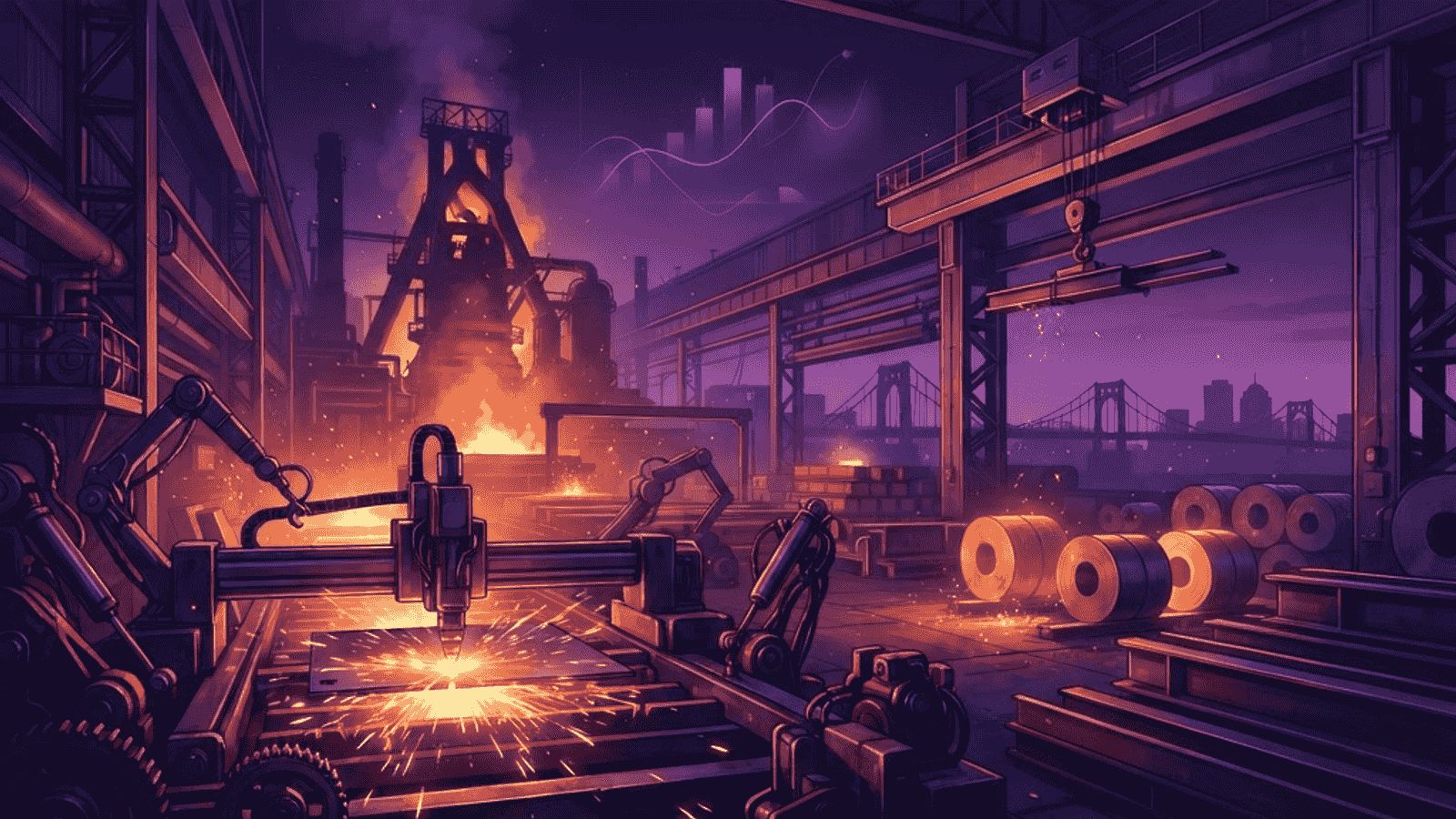
From Steel Town to Advanced Metal Manufacturing
Pittsburgh's metals industry no longer revolves around massive integrated mills, but it never disappeared. It transformed into a dense network of fabricators, machine shops, forgers, coaters, and specialty processors serving energy, transportation, defense, medical, construction, and industrial equipment markets. Regional engineering schools and a long apprenticeship tradition keep skilled welders, machinists, and toolmakers available, which is precisely the constraint limiting metalworking growth in many other American cities.
Today's competitive edge comes from technology and certification rather than raw tonnage. Fiber laser cutting, robotic welding, multi-axis machining, additive manufacturing, and in-process inspection now define capability, and quality credentials often determine which shops can bid at all.
How These Companies Were Assessed
Evaluation considered process capability, equipment modernity, quality certifications, engineering and design-for-manufacture support, finishing options, on-time delivery performance, and reputation among industrial buyers, architects, and general contractors. Shops with documented quality systems and demonstrated repeat institutional work ranked highest.
1. Three Rivers Steel Fabrication
Three Rivers Steel Fabrication produces structural steel for commercial buildings, bridges, and heavy industrial projects. Detailing in three-dimensional modeling coordinates with architectural and mechanical trades before fabrication begins, reducing field conflicts that stall erection. Certified welding procedures, qualified welders, and shop inspection documentation satisfy demanding project specifications. Contractors value sequenced delivery matched to erection schedules on tight urban sites.
2. Allegheny Precision Machining
This shop focuses on multi-axis CNC machining of complex components in alloy steels, stainless, aluminum, titanium, and specialty materials. Tight tolerance work for energy, aerospace, and medical customers is supported by coordinate measuring inspection and documented first-article reporting. Lights-out machining on proven programs improves cost competitiveness on repeat production. Engineering staff routinely suggest geometry adjustments that cut cycle time without affecting function.
3. Steel City Laser and Sheet Metal
Steel City Laser and Sheet Metal handles fiber laser cutting, press brake forming, punching, and welded sheet assemblies for enclosures, brackets, guards, and panels. Fast quoting and short lead times make it a favored partner for equipment builders iterating on prototypes. Nesting optimization and material yield management keep pricing competitive on high-mix orders. In-house powder coating shortens the total delivery cycle by eliminating outside finishing transit.
4. Monongahela Forge Works
Monongahela Forge Works produces closed- and open-die forgings for demanding load-bearing applications. Forged components deliver grain flow and fatigue performance that castings and machined billets cannot match, which matters in oilfield, rail, mining, and heavy equipment service. Heat treatment, non-destructive testing, and material certification accompany production lots. Engineering support helps customers decide when forging genuinely justifies its tooling investment.
5. Keystone Architectural Metals
Serving architects and builders, Keystone Architectural Metals fabricates railings, canopies, stairs, cladding panels, screens, and ornamental features. The company's value lies in translating design intent into buildable details while preserving the visual concept. Finish expertise spans blackened steel, hot-dip galvanizing, anodized aluminum, and stainless with consistent grain direction. Field measurement and installation coordination prevent the fit problems common to custom metal in renovated buildings.
6. Ohio Valley Weldments
This fabricator specializes in large welded assemblies, frames, skids, and structural weldments for machinery builders and process industries. Robotic and manual welding capability lets the shop handle both repeat production and one-off heavy work. Stress relieving, machining after welding, and dimensional inspection ensure critical mounting surfaces stay within tolerance. Customers frequently use the firm as an outsourced fabrication department, including sourcing and assembly of purchased components.
7. Pittsburgh Metal Finishing
Rather than forming metal, Pittsburgh Metal Finishing protects and enhances it through plating, passivation, anodizing, powder coating, and industrial painting. Corrosion performance often determines product warranty exposure, making finish selection a genuine engineering decision. The company advises on pretreatment, coating thickness, and salt spray expectations for specific service environments. Racking and masking expertise preserves critical dimensions and threaded features during coating.
8. Laurel Highlands Tool and Die
Laurel Highlands Tool and Die builds stamping dies, fixtures, gauges, and molds for regional manufacturers. Toolmaking is the quiet foundation of volume production, and access to local die builders shortens maintenance downtime dramatically compared with overseas tooling. The shop also performs die repair, engineering changes, and tryout support. Manufacturers running legacy tooling rely on the firm to reverse engineer worn components without original drawings.
9. Riverbend Metal Recycling and Processing
This company collects, sorts, processes, and supplies ferrous and non-ferrous scrap while also providing toll processing services such as shearing, baling, and grading. For manufacturers, disciplined scrap segregation directly improves material recovery revenue and supports sustainability reporting. Analytical sorting confirms alloy identity, which protects high-value stainless and nickel streams from downgrade. Reliable pickup scheduling keeps production floors clear.
10. Strip District Additive Metals
Strip District Additive Metals applies metal additive manufacturing to prototypes, low-volume production, and legacy part replacement. Complex internal geometry, consolidated assemblies, and rapid design iteration are the technology's practical advantages. The company pairs printing with post-processing including heat treatment, machining, and surface finishing, since printed parts rarely finish net shape. Engineering consultation focuses on identifying which components genuinely benefit rather than printing parts better suited to machining.
Trends Defining the Metalworks Sector
Reshoring has strengthened order books, particularly for shops that can document quality systems and material traceability. Automation continues to spread, with robotic welding cells, automated material handling, and machine monitoring compensating for a tight skilled labor market. Digital integration is raising expectations, as customers increasingly send solid models and expect quoting, nesting, and inspection to flow from that data. Sustainability has become commercially relevant too, with scrap recovery, energy efficiency, and coating chemistry entering supplier evaluations. Finally, defense and energy investment cycles are driving demand for certified welding and non-destructive testing capacity.
How to Select a Metalworking Partner
Define the true requirement before shortlisting shops, distinguishing cosmetic tolerances from functional ones. Confirm certifications relevant to the application, including welding procedure qualification and quality management registration, and ask for sample inspection documentation rather than promises. Verify capacity honestly by asking what else runs on the same machines during your delivery window. Discuss material sourcing and certification, since traceability failures can void an entire lot. For architectural or exposed work, agree on finish standards using physical samples, because language alone rarely captures acceptable appearance.
Final Thoughts
Metalworking remains one of Pittsburgh's genuine competitive strengths, supported by skilled trades, modern equipment, and deep engineering culture. Buyers who engage local fabricators and machinists early in design capture the region's real advantage, which is not simply capacity but the accumulated judgment of people who have made metal behave for generations.