
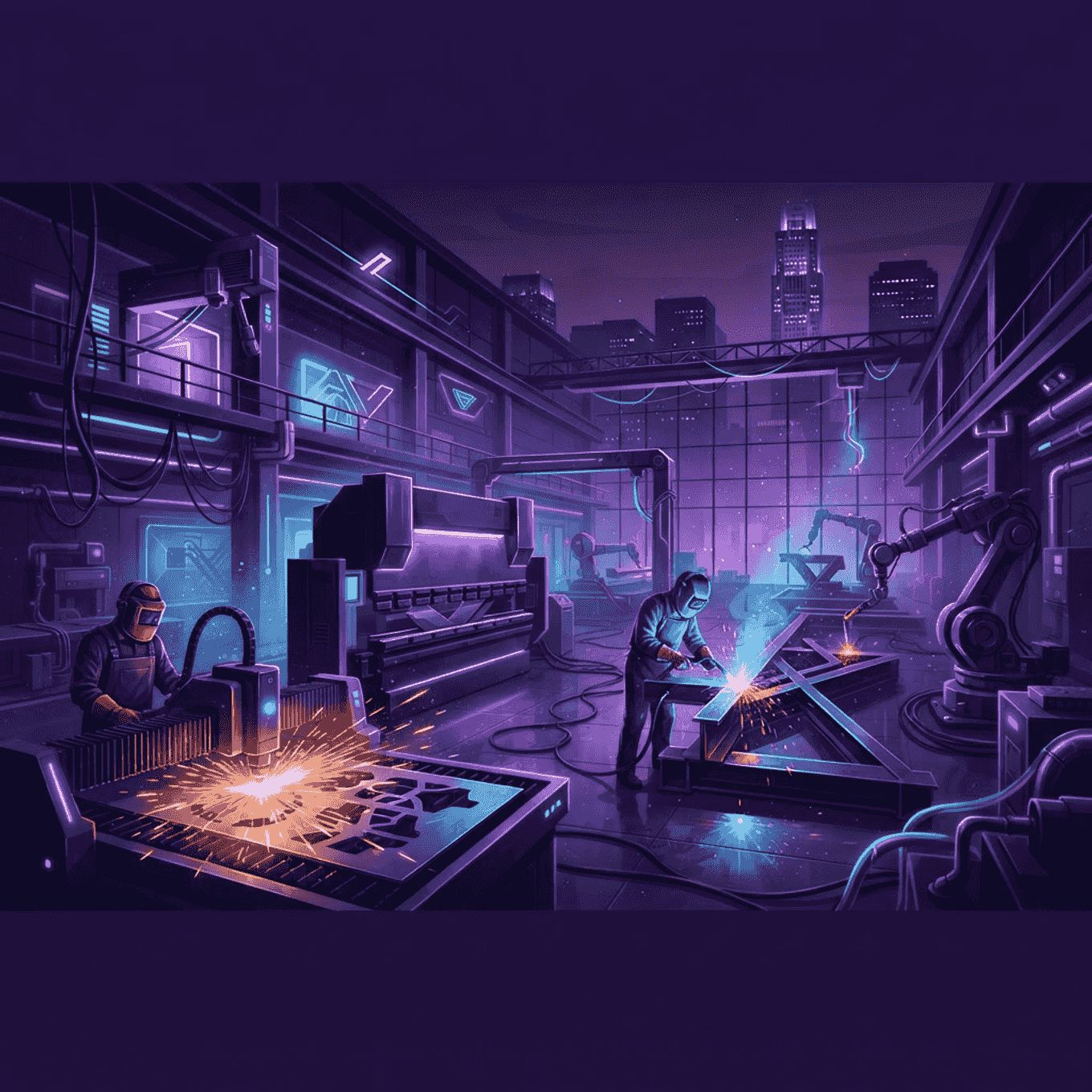
Metalworking: Omaha's Oldest Industrial Strength
If Omaha has an industrial identity, it is written in steel. The city grew as a railroad and stockyards hub, and both required foundries, forges, machine shops and structural fabricators. Those capabilities never left. Today the metro hosts steel service centers, foundries, plate fabricators, laser and waterjet cutting shops, precision machining operations, tool and die makers and store fixture manufacturers whose products ship nationwide. Few American cities of Omaha's size retain such a complete metalworking supply chain.
The practical benefit for buyers is remarkable: a project can move from raw plate through cutting, forming, welding, machining, heat treatment, finishing and assembly without leaving the metro. That proximity compresses lead times, reduces freight on heavy parts and makes it realistic to walk a job and resolve problems in person rather than through weeks of email.
Why the Metro Sustains a Deep Metalworking Base
Demand diversity is the primary reason. Omaha metalworkers serve agriculture, food processing, construction, rail, utilities, material handling, retail fixtures and general manufacturing. When one sector slows, others usually hold, which has allowed shops to maintain skilled crews and continue investing through economic cycles.
Workforce tradition is equally important. Welding, machining and fabrication skills pass through families and through strong community college and apprenticeship programs in eastern Nebraska and western Iowa. Certified welders, experienced machinists and capable estimators are genuinely available here, which is not true everywhere. Add efficient inbound steel logistics by rail and truck, competitive industrial power for energy-intensive processes such as melting and heat treating, and reasonable industrial land for the large bays that plate work requires, and the region's advantages become clear.
How These Companies Were Selected
Rankings considered capability breadth, quality certifications, engineering support, delivery performance and reputation within the regional contractor and manufacturing community. Companies with certified welding procedures, modern cutting and forming equipment, documented inspection practices and long histories of serving demanding customers ranked highest.
The Top 10 Metalworks Companies in Omaha
1. Lozier Corporation
An Omaha institution, Lozier Corporation manufactures retail store fixtures and shelving systems used by major retailers across North America. Its operations combine large-scale coil processing, stamping, roll forming, welding and powder coating with sophisticated logistics, and the precision and repeatability required to produce millions of interchangeable components places it among the most capable metalworking operations in the region.
2. Drake-Williams Steel
With deep Omaha roots, Drake-Williams Steel fabricates structural steel for commercial buildings, industrial facilities and infrastructure projects. The company handles detailing, fabrication, and coordination with erectors, and its experience with complex connections, heavy sections and demanding project schedules makes it a mainstay of the region's commercial construction industry.
3. Paxton & Vierling Steel
Another long-established regional fabricator, Paxton & Vierling Steel provides structural fabrication, plate work and steel supply for construction and industrial customers. Its combination of engineering support, fabrication capacity and material availability allows the company to take on projects that require both volume and technical judgment.
4. Omaha Steel Castings
Operating in the metro for well over a century, Omaha Steel Castings produces carbon, alloy and stainless steel castings for rail, energy, mining, construction and industrial equipment customers. Modern molding technology, metallurgical laboratory support, nondestructive testing and in-house machining let it deliver finished castings rather than rough parts that customers must process elsewhere.
5. Heartland Metal Fabrication
Heartland Metal Fabrication handles sheet metal and plate fabrication including enclosures, frames, hoppers, guards and skids. Its integrated workflow from programming through cutting, forming, welding and finishing supports both prototype work and repeat production, and its estimating team is known for realistic lead times rather than optimistic promises.
6. Midlands Laser & Waterjet
Specializing in precision cutting, Midlands Laser & Waterjet processes steel, stainless, aluminum, copper and non-metallic materials with fiber laser and abrasive waterjet equipment. Fast quoting from customer files, tight kerf control and efficient nesting reduce material waste, making it a common first stop for fabricators and equipment builders across the region.
7. Papio Precision Sheet Metal
Focused on close-tolerance sheet metal work, Papio Precision Sheet Metal produces electrical enclosures, chassis, panels and brackets for electronics, instrumentation and industrial customers. Hardware insertion, deburring, powder coating and silkscreen capabilities allow the shop to ship parts ready for assembly.
8. Cornhusker Welding & Fabrication
This shop provides structural and custom welding services including field repair, equipment modification, stainless sanitary welding and heavy weldments. Certified procedures, aluminum and stainless expertise and mobile capability make it valuable for food processors and industrial plants that cannot move equipment out of service areas.
9. Missouri River Machine & Weldment
Combining large-envelope machining with heavy fabrication, Missouri River Machine & Weldment produces frames, housings and machine bases that must be welded, stress relieved and then machined to precise tolerances. Controlling both operations in one facility eliminates the distortion and scheduling problems that arise when weldments travel between vendors.
10. Elkhorn Tool & Die
Rounding out the list, Elkhorn Tool & Die designs and builds stamping dies, forming tools, fixtures and gauges, and maintains tooling for regional manufacturers. Tool and die work is the foundation beneath high-volume metal production, and having this expertise locally means damaged tooling can be repaired in days rather than weeks.
Trends Shaping Metalworking in Omaha
Automation is advancing quickly, with fiber lasers, robotic welding cells, automated press brakes and material handling systems raising throughput while easing pressure from skilled labor shortages. Digital workflows now run from customer models directly into nesting and machine programs, reducing errors and quoting time. Material choices are shifting as aluminum and high-strength low-alloy steels let designers reduce weight without sacrificing capability, requiring new welding and forming expertise. Sustainability is gaining attention through scrap recovery, energy efficiency and powder coating that eliminates solvent emissions. Meanwhile, customers increasingly ask fabricators for assembly, kitting and inventory programs rather than loose parts.
How to Choose a Metalworking Partner
Define what matters most before shopping: tolerance, cosmetic appearance, structural certification, lead time or price. Few shops optimize for all of them. Confirm welding certifications appropriate to your application, and ask how weld quality is verified. Provide complete drawings with tolerances and finish requirements rather than assuming shop judgment, and clarify inspection expectations up front. Tour the facility and observe organization, fixturing, material identification and how work in process is protected from damage. Ask about capacity honestly, including how the shop handles rush changes without derailing other jobs. Finally, discuss finishing, since coating quality often determines how a fabricated product is perceived and how long it survives outdoors.
Final Thoughts
Omaha's metalworks companies represent generations of accumulated capability, from century-old foundries and structural fabricators to modern laser and precision machining operations. That density gives buyers real options and short supply chains, whether the need is a single repair weldment or a nationwide fixture program. Engaging a fabricator early, sharing design intent rather than only dimensions, and building a relationship over multiple projects consistently produces the best results.