
Metalworking as Newark's Most Durable Trade
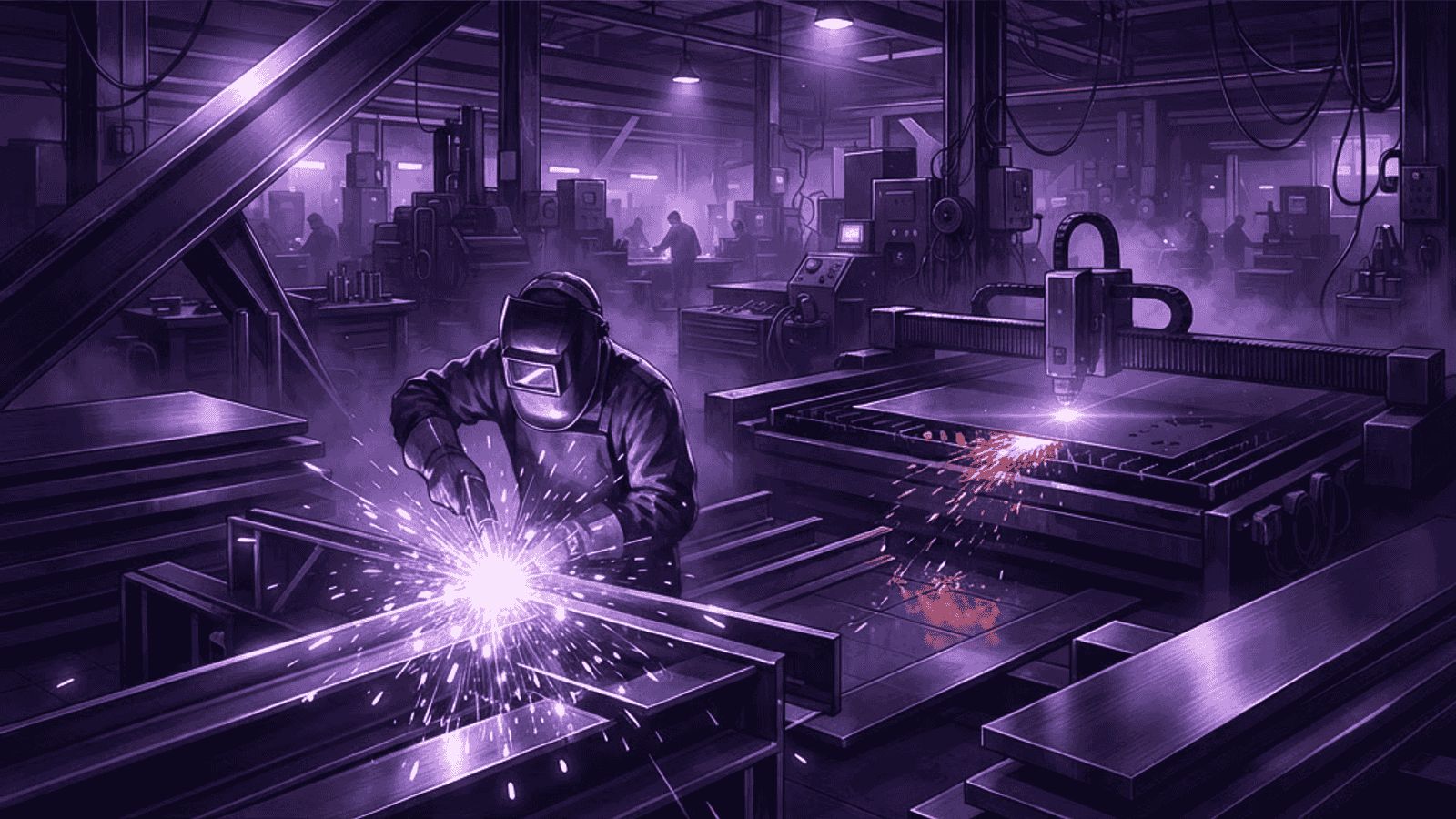
Of all the industrial trades that built Newark, metalworking has proven the most persistent. Fabrication cannot easily be offshored because steel is heavy, projects are custom, tolerances must be verified on site, and schedules are unforgiving. A stair railing, a mezzanine, a machine frame, or a rooftop equipment support must fit an actual building or machine, and that requires a fabricator near enough to measure, adjust, and install.
The city's metalworking sector spans a wide range of scale and sophistication. Structural steel fabricators produce building frames. Architectural metal shops make railings, canopies, storefronts, and decorative facades. Precision machine shops turn and mill components to thousandths of an inch. Ornamental ironworkers craft gates and fences. Sheet metal shops fabricate ductwork and enclosures. Each requires different equipment and expertise.
The Top 10 Metalworks Companies in the Newark Area
1. Structural Steel Fabricators and Erectors
These firms detail, fabricate, and erect the steel frames of buildings, mezzanines, and industrial structures. Their work is governed by engineering drawings, welding qualification standards, and inspection requirements, and coordination with concrete and other trades is constant.
2. Architectural Metal and Miscellaneous Metals Shops
Architectural fabricators produce railings, stairs, canopies, sunshades, and decorative panels in steel, aluminum, stainless, and bronze. Appearance matters as much as strength here, so finish quality and weld blending receive intense attention.
3. Precision Machine Shops
Machine shops equipped with computer-controlled lathes and milling centers produce components for machinery, aerospace, medical devices, and industrial equipment. Tolerances measured in thousandths and documented inspection reports define this segment.
4. Sheet Metal Fabrication and HVAC Duct Manufacturers
Sheet metal shops fabricate ductwork, plenums, enclosures, and custom housings. Computer-controlled plasma and laser cutting combined with press braking allow rapid production of complex flat patterns folded into finished assemblies.
5. Ornamental Iron and Custom Gate Fabricators
Ornamental shops produce fences, gates, window guards, and decorative ironwork for residential and commercial clients throughout the city. Traditional forging techniques often combine with modern welding and powder coating.
6. Welding and Field Service Contractors
Mobile welding contractors perform repairs and modifications on site, serving factories, warehouses, marine facilities, and building owners. Certified welders working under pressure to restore operations quickly are a distinct and valuable specialty.
7. Metal Finishing, Powder Coating, and Galvanizing Operations
Finishing services apply protective and decorative coatings including powder coat, wet paint, anodizing, plating, and hot-dip galvanizing. In a coastal, road-salt environment, corrosion protection determines how long fabricated metal lasts.
8. Laser Cutting and Waterjet Service Bureaus
Cutting service providers process plate and sheet for other fabricators and manufacturers. Laser, plasma, and waterjet each suit different thicknesses and materials, and access to these services lets smaller shops take on complex work.
9. Metal Service Centers and Distributors
Service centers stock and process bar, plate, sheet, tube, and structural shapes, providing cut-to-length and first-stage processing. Their inventory depth determines how quickly a fabricator can start a job.
10. Scrap Metal Recycling and Processing Companies
Newark's scrap yards collect, sort, shear, and bale ferrous and non-ferrous metal for remelting. Recycled steel is a primary feedstock for domestic mills, making this segment integral to the industry rather than peripheral to it.
Understanding Metal Fabrication Processes
Fabrication generally follows a defined sequence. Detailing converts engineering drawings into shop drawings specifying every piece, cut, hole, and weld. Errors here propagate expensively, so review is critical.
Cutting and forming shape the raw material through sawing, laser or plasma cutting, punching, drilling, and press braking. Modern equipment nests parts to minimize scrap and holds tight repeatability.
Welding and assembly join components using processes selected for material and application, performed by welders qualified to recognized procedures. Weld inspection may include visual examination, dye penetrant, ultrasonic, or radiographic testing depending on the criticality of the joint.
Finishing and delivery complete the work, including surface preparation, coating, and coordination of shipping and field installation. Installation sequencing on an occupied building often requires night and weekend work.
Trends in Metalworking
Automation has reached small shops. Robotic welding cells, automated material handling, and offline programming improve consistency and help offset the shortage of experienced welders, which is the single largest constraint the industry faces.
Digital workflow has become standard. Three-dimensional modeling of steel frames allows clash detection before fabrication, eliminating the field conflicts that once consumed enormous amounts of rework.
Sustainability favors steel. High recycled content, complete recyclability at end of life, and long service life give fabricated steel a strong environmental profile, and fabricators increasingly document these attributes for project certification.
What Buyers Should Evaluate
Verify welding qualifications and quality certifications appropriate to your project. Structural work carries specific certification expectations, and pressure or safety-critical work carries more.
Assess capacity and scheduling honestly. Ask what work is currently in the shop, what the realistic lead time is, and how the fabricator handles field dimension changes discovered during installation.
Discuss corrosion protection explicitly. Specifying the right coating system for the exposure environment costs little at fabrication and prevents expensive premature failure.
Conclusion
Newark's metalworks sector combines structural fabrication, architectural metal, precision machining, sheet metal, finishing, and recycling into a comprehensive local capability. The companies and categories above illustrate that breadth. For buyers, success depends on careful shop drawing review, verified welder qualifications, realistic schedule discussion, and coating specifications matched to real service conditions.