
Miami's Metalworking Sector Is More Diverse Than It Looks
Metalworking in Miami rarely means mass production. Instead, the city supports a dense network of custom fabricators, machine shops, ornamental ironworks, sheet metal contractors and marine specialists that thrive on one-off and short-run work. That mix reflects local demand: luxury residential and hospitality projects that need architectural metal, a large marine and yachting industry that needs corrosion-resistant components and repairs, aviation and logistics operations near the airport that need brackets and fixtures, and a food-service industry that needs stainless fabrication for commercial kitchens.
The coastal environment shapes nearly every job. Salt air accelerates corrosion, so material selection, weld cleanliness and finishing quality determine whether a product lasts two years or twenty. Experienced Miami shops know that a stainless railing installed near the ocean will develop surface rust if it was fabricated with contaminated tooling or left unpassivated, and that aluminum needs proper isolation from dissimilar metals. Those details separate a genuine metalworks specialist from a general welding operation.
Core Capabilities to Understand Before You Buy
Fabrication and machining are different disciplines. Fabrication cuts, forms, welds and assembles material into structures such as railings, stairs, gates, frames, enclosures and ductwork. Machining removes material to produce precise parts to tight tolerances, typically using lathes and computer-controlled milling centers. Many jobs require both, plus a third capability, finishing, which includes grinding, polishing, passivation, anodizing, powder coating or galvanizing.
Equally important is engineering support. Shops with in-house detailing can convert an architect's concept into shop drawings, verify field dimensions, and produce submittals that pass review. For structural elements, welder certification and procedure documentation matter, and for anything attached to a building facade in Miami-Dade County, code compliance and attachment engineering are non-negotiable.
The Top 10 Metalworks Companies in Miami
1. Biscayne Metal Fabricators. A broad-capability custom shop handling architectural steel, aluminum and stainless assemblies including stairs, railings, canopies and structural miscellaneous metals. Clients consistently note its shop drawing quality and coordination with general contractors.
2. Doral Precision Machine Works. A computer-controlled machining specialist producing turned and milled components in aluminum, stainless, brass and engineering plastics. Its reputation centers on tight tolerance repeatability and rapid prototype turnaround for marine, aviation and industrial clients.
3. Magic City Ornamental Iron. Focused on decorative and security metalwork such as gates, driveway entries, window guards, balconies and interior screens. The company blends traditional forging techniques with modern finishing, which appeals to residential architects working in Mediterranean and contemporary styles alike.
4. Atlantic Marine Metalworks. Dedicated to the yachting and marine sector with stainless rails, davits, hardware, exhaust components and onboard repair services. Its differentiator is deep knowledge of marine-grade alloys and finishing that survives constant saltwater exposure.
5. Hialeah Sheet Metal Company. Specializes in ductwork, plenums, enclosures, hoods and custom sheet metal for mechanical and commercial construction. Contractors value its fast fabrication cycles and ability to deliver in phased packages that match mechanical rough-in schedules.
6. Everglades Stainless Kitchen Fabrication. Produces commercial kitchen equipment including counters, sinks, shelving, exhaust hoods and prep stations. Restaurant groups appreciate its sanitary weld finishing and understanding of the layout constraints in Miami's compact urban kitchens.
7. Wynwood Architectural Metal Studio. Works at the intersection of art and fabrication, producing perforated screens, sculptural facades, signage structures and feature staircases. It is a frequent collaborator on hospitality and creative-district projects where visual detail drives the design.
8. Port Industrial Welding Services. Provides heavy structural welding, equipment repair, pressure-related fabrication and on-site mobile welding for warehouses, terminals and industrial facilities. Its round-the-clock response capability is a major advantage for operations that cannot afford downtime.
9. Kendall Aluminum Works. Concentrates on aluminum extrusion fabrication for storefronts, screen enclosures, louvers, pergolas and shading systems. Its expertise in thermal movement and coastal-rated attachments makes it a common choice for exterior applications.
10. South Florida Laser and Waterjet Cutting. A processing specialist offering laser, plasma and waterjet cutting, forming and light assembly for other fabricators and product companies. Buyers use it for accurate flat-pattern parts, nesting efficiency and quick quote turnaround on digital files.
Technology and Trends in Local Fabrication
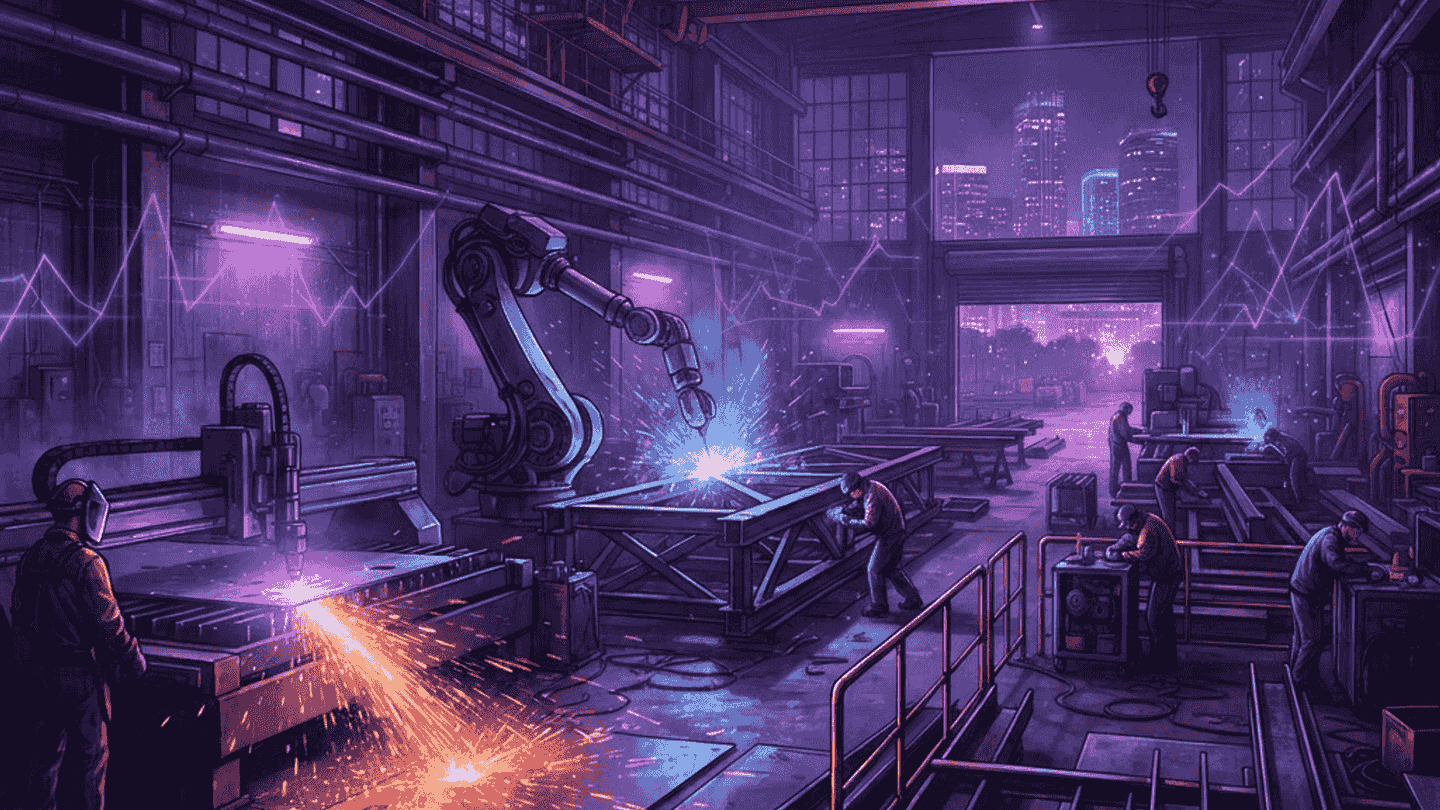
Digital workflows have transformed the sector. Three-dimensional modeling, direct file-to-machine cutting and automated nesting reduce both waste and error, while robotic welding cells are becoming viable even for medium-volume runs. Portable measurement tools and laser scanning let shops capture as-built conditions on existing buildings, which is invaluable in a city full of renovation projects where nothing is quite square.
Material trends are shifting too. Designers increasingly favor aluminum for weight and corrosion resistance, higher-grade stainless for coastal exposure, and powder coating over wet paint for durability and color consistency. Sustainability is entering the conversation through recycled content, local sourcing that reduces freight, and finishing processes with lower emissions.
How to Select the Right Metalworks Partner
Ask to see completed work that resembles your project, ideally in person. Inspect weld appearance, corner transitions and finish uniformity, because these reveal craftsmanship far better than a portfolio photograph. Confirm which processes happen in-house versus through subcontractors, since every handoff adds schedule risk. Request welder certifications and, for structural or facade work, confirm the shop can supply engineering documentation acceptable to local reviewers.
Discuss scheduling candidly. Custom metal is often on the critical path, so ask about current backlog, shop drawing turnaround, and how field-verification visits are handled. Clarify who is responsible for installation and whether the shop carries appropriate insurance for site work. Finally, evaluate communication quality during the quoting stage, because a fabricator who asks detailed questions early is the one least likely to deliver a surprise at installation. In Miami's demanding coastal environment, that diligence is what turns metalwork into a durable asset rather than a recurring maintenance problem.