
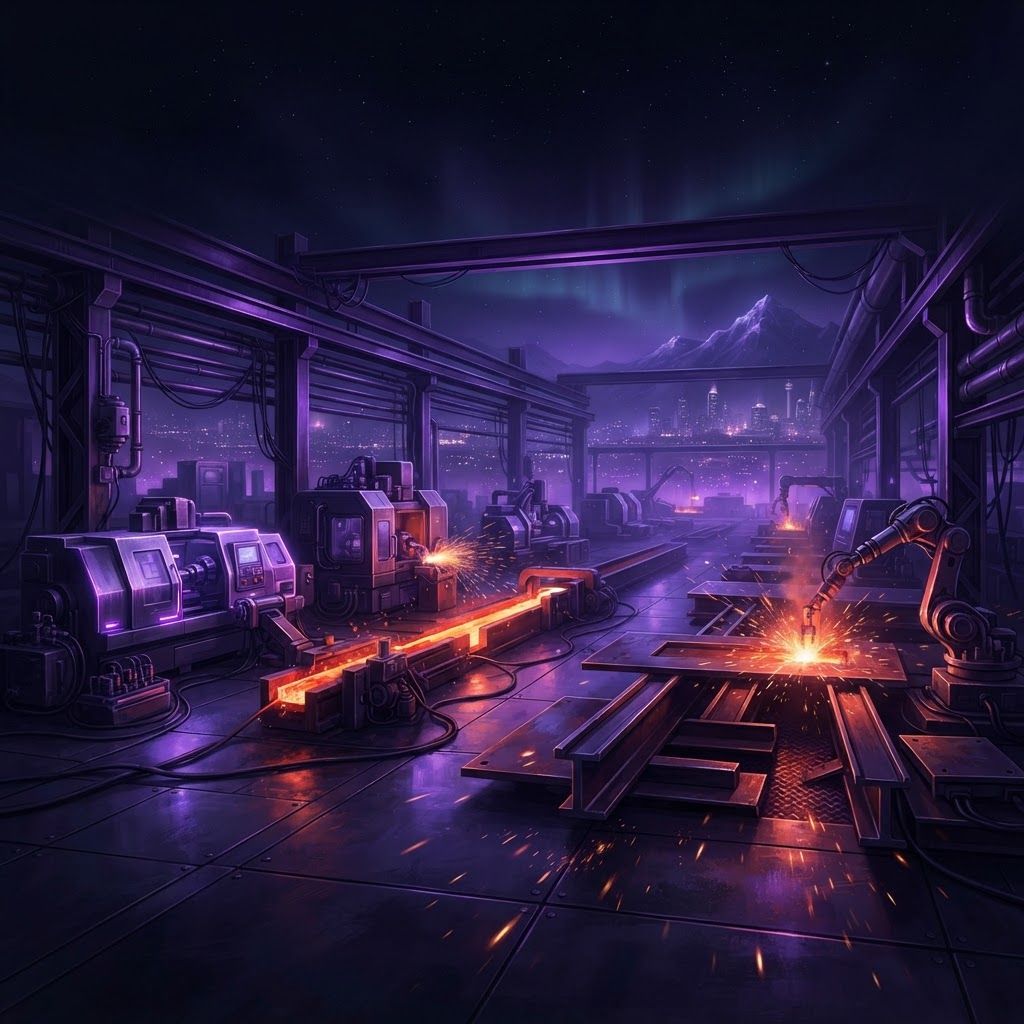
The Metalworking Heritage of East Tennessee
Metalworking in the Knoxville region traces back to nineteenth-century foundries and railroad shops, but its modern character was shaped by the twentieth century: Tennessee Valley Authority construction, the Oak Ridge complex, and the automotive supply chain that spread across the state. Each wave demanded different skills, and the accumulated result is a metalworking base that handles both heavy structural work and precision components requiring documented traceability.
That combination is genuinely unusual. Many regions specialise in one or the other. Knoxville supports certified structural steel fabricators, multi-axis precision machine shops, sheet metal fabricators serving mechanical contractors, architectural metal studios, and specialty welding operations qualified for nuclear and pressure work, all within a compact geographic radius.
Understanding Metalworking Capabilities
Metalworking is not a single trade, and buyers should be precise about what they need. Structural fabrication involves cutting, drilling, and welding beams, columns, and plate into building and equipment frames. Precision machining removes material to tight tolerances on lathes, mills, and machining centres. Sheet metal fabrication forms thinner gauge material through shearing, punching, laser cutting, and press braking. Casting and forging shape metal through molten pouring or plastic deformation. Finishing operations include powder coating, plating, galvanising, anodising, and heat treatment. Most projects touch several of these, and the question is which firm owns the critical path processes.
The Top 10 Metalworks Companies in Knoxville
1. Tennessee Valley Steel Fabricators
Tennessee Valley Steel Fabricators produces structural steel for commercial buildings, industrial facilities, and infrastructure projects. Certified welding procedures, qualified welders, and documented quality control support work where inspection is mandatory rather than optional. In-house detailing accelerates the shop drawing cycle that so often delays steel packages.
2. Smoky Mountain Precision Machining
Smoky Mountain Precision Machining runs multi-axis CNC milling and turning for tight-tolerance components in aerospace, medical, and instrumentation markets. Its temperature-controlled inspection area, coordinate measuring equipment, and disciplined first-article process give customers verifiable rather than assumed accuracy. Exotic alloys and hard materials are routine work.
3. Volunteer Sheet Metal Works
Volunteer Sheet Metal Works fabricates ductwork, enclosures, panels, and custom sheet metal assemblies using laser cutting, CNC punching, and press brake forming. Programming from customer solid models eliminates flat-pattern errors that cause fit problems in the field. Powder coating in-house keeps multi-step jobs on one schedule.
4. Appalachian Welding & Heavy Fabrication
Appalachian Welding & Heavy Fabrication takes on large weldments, pressure vessels, tanks, and structural assemblies requiring code compliance. Crane capacity, weld procedure qualification, and nondestructive examination coordination allow the shop to serve energy, chemical, and utility clients. Field welding crews extend its capability to on-site work.
5. Riverbend Architectural Metals
Riverbend Architectural Metals produces railings, stairs, canopies, decorative panels, and feature metalwork for architects and builders. Its work bridges fabrication and craft, requiring both structural competence and a finish quality that survives close visual inspection. Collaboration with designers during detailing prevents the compromises that occur when aesthetics meet code late.
6. Cherokee Metal Stamping
Cherokee Metal Stamping manufactures stamped components and progressive die parts at production volumes for industrial and automotive customers. Die design and maintenance in-house protect part consistency across long runs. Secondary operations including tapping, welding, and assembly are integrated into its production flow.
7. East Tennessee Foundry & Castings
East Tennessee Foundry & Castings pours iron and non-ferrous castings for machinery, municipal, and industrial applications. Pattern support, sand casting expertise, and machining of finished castings allow customers to source a completed component rather than manage multiple suppliers. Reverse engineering of obsolete parts is a recurring service.
8. Fort Loudoun Metal Finishing
Fort Loudoun Metal Finishing provides powder coating, wet painting, plating, and surface preparation for fabricators and manufacturers. Because coating failures usually trace to preparation rather than product, the company invests heavily in blasting, cleaning, and pretreatment control. Colour matching and adhesion testing support customers with cosmetic requirements.
9. Ridgeline Tool & Die
Ridgeline Tool & Die designs and builds dies, moulds, fixtures, and gauges supporting regional manufacturers. This work sits upstream of production, and its quality determines the ceiling on part quality for years afterward. The shop's toolmakers also handle repair and refurbishment of tooling that has drifted out of specification.
10. Knoxville Laser & Waterjet Cutting
Knoxville Laser & Waterjet Cutting offers cutting services across steel, stainless, aluminium, and non-metallic materials, with waterjet handling heat-sensitive and thick material. Fast quoting from digital files and short lead times make it a common first stop for prototype and low-volume work. Forming and light fabrication round out its offering.
Certifications and Quality Systems
Metalworking is a category where documentation carries real weight. Structural work may require fabricator certification and qualified welding procedures. Pressure work brings code stamps and inspection requirements. Aerospace and medical customers expect quality management certification and full material traceability. Even in general industrial work, mill test reports, calibrated inspection equipment, and first-article documentation separate suppliers who control their process from those who inspect their way to acceptable parts. Ask what the quality system actually requires of operators, not just which certificate hangs in the lobby.
Trends in Regional Metalworking
Automation is spreading through even mid-sized shops, with robotic welding cells, automated material handling, and lights-out machining addressing a persistent skilled labour shortage. Digital workflows now run from customer models to nesting software to machine code with minimal manual translation, cutting both errors and lead time. Additive manufacturing has found a practical niche in tooling, fixtures, and complex low-volume parts rather than replacing conventional processes. And reshoring continues to bring machined and fabricated work back to domestic shops where engineering changes can be handled in days.
How to Select a Metalworking Partner
Match the shop to the work honestly. A structural fabricator and a precision machine shop are both metalworkers and are rarely interchangeable. Provide models and complete specifications including material grade, tolerance, finish, and inspection requirements, since ambiguity is priced as risk. Ask about capacity and current backlog rather than theoretical lead time. Tour the facility and observe housekeeping, tooling condition, and how in-process material is protected. Finally, discuss engineering support, because the best metalworking suppliers routinely suggest changes that cut cost without affecting function.
Final Thoughts
Knoxville's metalworks companies deliver a rare span of capability, from code-stamped heavy fabrication to micron-level machining, supported by finishing and tooling resources that keep projects local. For manufacturers, builders, and designers, that concentration means fewer handoffs, shorter schedules, and the ability to stand next to the work when something needs to be resolved. Choosing well comes down to precision about requirements and honesty about which shop is genuinely built for the job.