
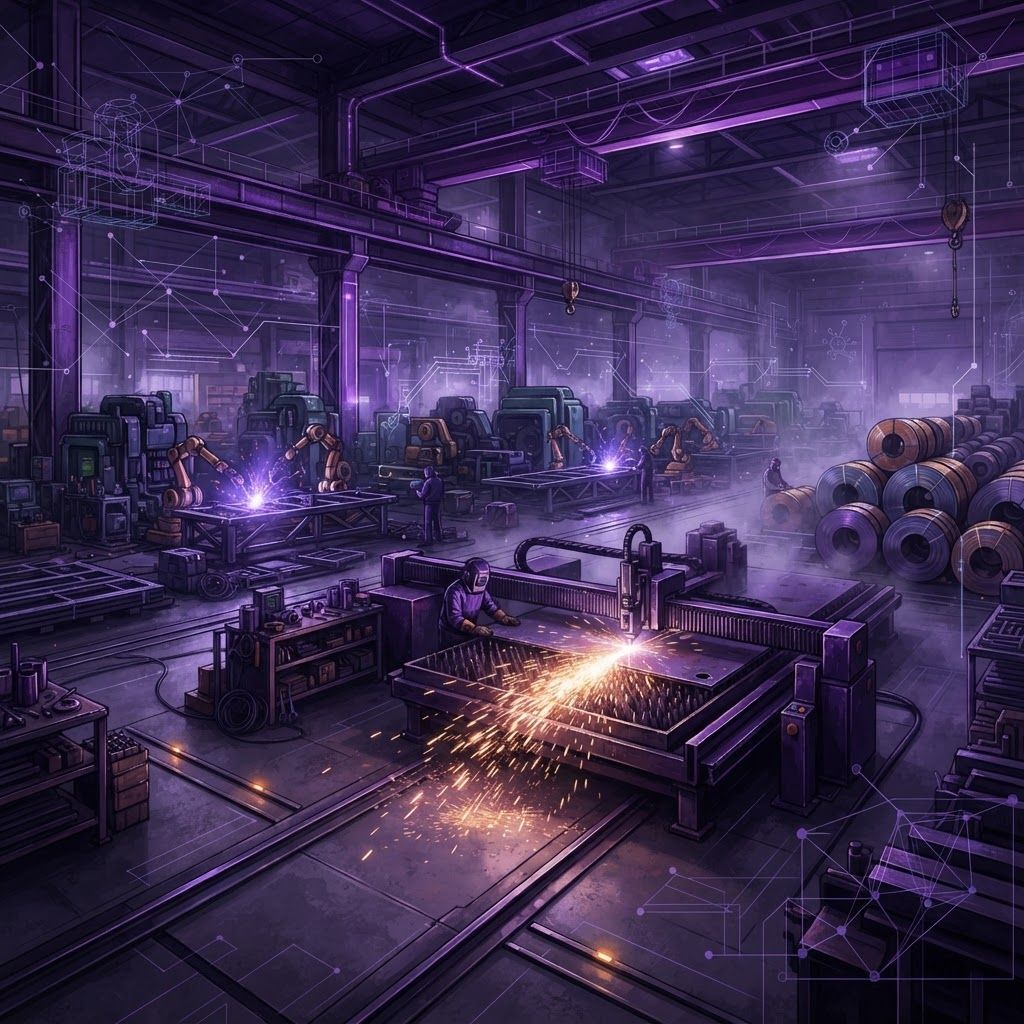
The Metalworking Base Around Irving
Metal fabrication is one of the least visible but most essential industries in North Texas. Almost every sector active in the region depends on it. Aerospace and defence programmes need precision machined components and assemblies. Construction requires structural steel, miscellaneous metals, stairs, railings, and architectural facade elements. Food processing and pharmaceutical plants need stainless steel tanks, skids, and sanitary piping. Data centres need cable tray, enclosures, and equipment frames. Energy operations need pressure components, skid packages, and heavy weldments.
Irving benefits from sitting inside this demand while offering industrial space, highway access in every direction, and proximity to a skilled trade workforce supported by regional technical training programmes. The result is a fabricator population ranging from small job shops turning single prototype parts to large plants running automated laser and press brake cells with certified welding programmes.
Know Which Kind of Metalworks You Need
The category splits along process lines, and matching your part to the right process is the most consequential decision you will make. Precision machine shops remove material using computer controlled mills, lathes, and multi axis machines, producing tight tolerance components from bar, plate, or castings. Sheet metal fabricators cut, punch, form, and weld thinner gauge material into enclosures, brackets, panels, chutes, and ducting. Structural steel fabricators work with beams, columns, plate, and tube to produce building frames and heavy supports, generally under code certification. Welding and heavy weldment shops build large assemblies, frames, tanks, and pressure retaining components. Architectural metal specialists produce railings, canopies, screens, cladding, and decorative features where appearance drives acceptance.
Sending a thin gauge enclosure to a heavy structural shop, or a heavy weldment to a precision machining house, produces poor pricing and slow delivery even when both shops are competent at their own work.
Certifications and Capability Evidence
Metalworking is a field where certifications carry real meaning. Welding work should be performed to a recognised code with qualified procedures and welder qualification records available on request. Structural fabrication for commercial construction commonly requires shop certification and special inspection coordination. Aerospace and defence work typically requires a quality management system aligned to the relevant aerospace standard, plus documented material traceability from mill certificate to finished part.
Beyond paperwork, ask for measurable capability. Request a first article inspection report from recent work, a capability study on a comparable tolerance, and evidence of calibrated inspection equipment including coordinate measuring capability where tight tolerances apply. A shop that answers these questions comfortably is a shop that controls its process.
Ten Metalworks Companies Worth Shortlisting
1. Trinity Precision Machining runs multi axis milling and turning cells for aerospace, medical, and industrial components, with documented traceability and first article reporting as standard practice.
2. Las Colinas Sheet Metal Fabricators operates fibre laser cutting, CNC punching, and press brake forming for enclosures, panels, brackets, and custom sheet assemblies, with in house powder coating.
3. Northgate Structural Steel fabricates building frames, columns, beams, and miscellaneous metals under code certification, supported by detailing and erection drawing production.
4. Valley Ranch Stainless and Sanitary Fabrication builds stainless tanks, process skids, sanitary piping, and food grade equipment with polished finishes and weld documentation for hygienic service.
5. DFW Heavy Weldments handles large frames, bases, and heavy plate assemblies with overhead crane capacity, stress relieving, and machining of finished weldments.
6. Freeport Architectural Metals produces railings, canopies, sunshades, perforated screens, and decorative cladding for commercial interiors and building exteriors.
7. Riverside Tube and Roll Forming specialises in tube bending, roll forming, and mandrel work for handrail, furniture frames, and equipment structures.
8. Grapevine Creek Waterjet and Plasma Cutting provides profile cutting of plate, thick sections, and exotic alloys where heat affected zone control or complex geometry matters.
9. Irving Metal Finishing and Coating offers powder coating, wet paint, passivation, anodising coordination, and industrial finishing with pretreatment control and adhesion testing.
10. Metroplex Contract Assembly and Metal Kitting combines fabrication with hardware insertion, sub assembly, kitting, and drop shipping for equipment manufacturers outsourcing entire metal packages.
How to Brief a Fabricator Properly
Poor documentation causes most fabrication disputes. Supply a full drawing package with dimensions, tolerances applied only where function requires them, material specification including grade and finish, weld symbols with the applicable code, and clear acceptance criteria for cosmetic surfaces. Provide a three dimensional model alongside drawings where possible, but state which document governs if they conflict.
Be explicit about what matters. Fabricators price to the tightest tolerance and the strictest cosmetic requirement on the drawing. If only two features need tight control and the rest can be standard shop tolerance, saying so directly can reduce cost substantially without affecting function.
Pricing, Lead Times, and Practical Realities
Material cost, machine time, setup, secondary processing, and finishing drive fabrication pricing. Setup cost dominates on small quantities, which is why price per part falls sharply between one piece and twenty. Design choices matter too. Standard material thicknesses, consistent bend radii, avoidance of unnecessary tight tolerances, and designs that minimise fixturing all reduce cost.
Lead times commonly run one to three weeks for simple sheet metal, two to six weeks for machined components depending on complexity, and longer for structural packages tied to construction sequencing. Finishing and outside processes such as heat treatment or plating add transit time that is easy to underestimate.
Final Thoughts
The metalworks companies serving Irving cover nearly every process a product or project could require, which means the burden of a good outcome sits largely with how well you select and brief the shop. Match the process to the part, verify capability with data rather than assurances, document requirements precisely, and involve the fabricator during design. Handled that way, local metalworking capacity becomes one of the most dependable advantages of manufacturing in North Texas.