
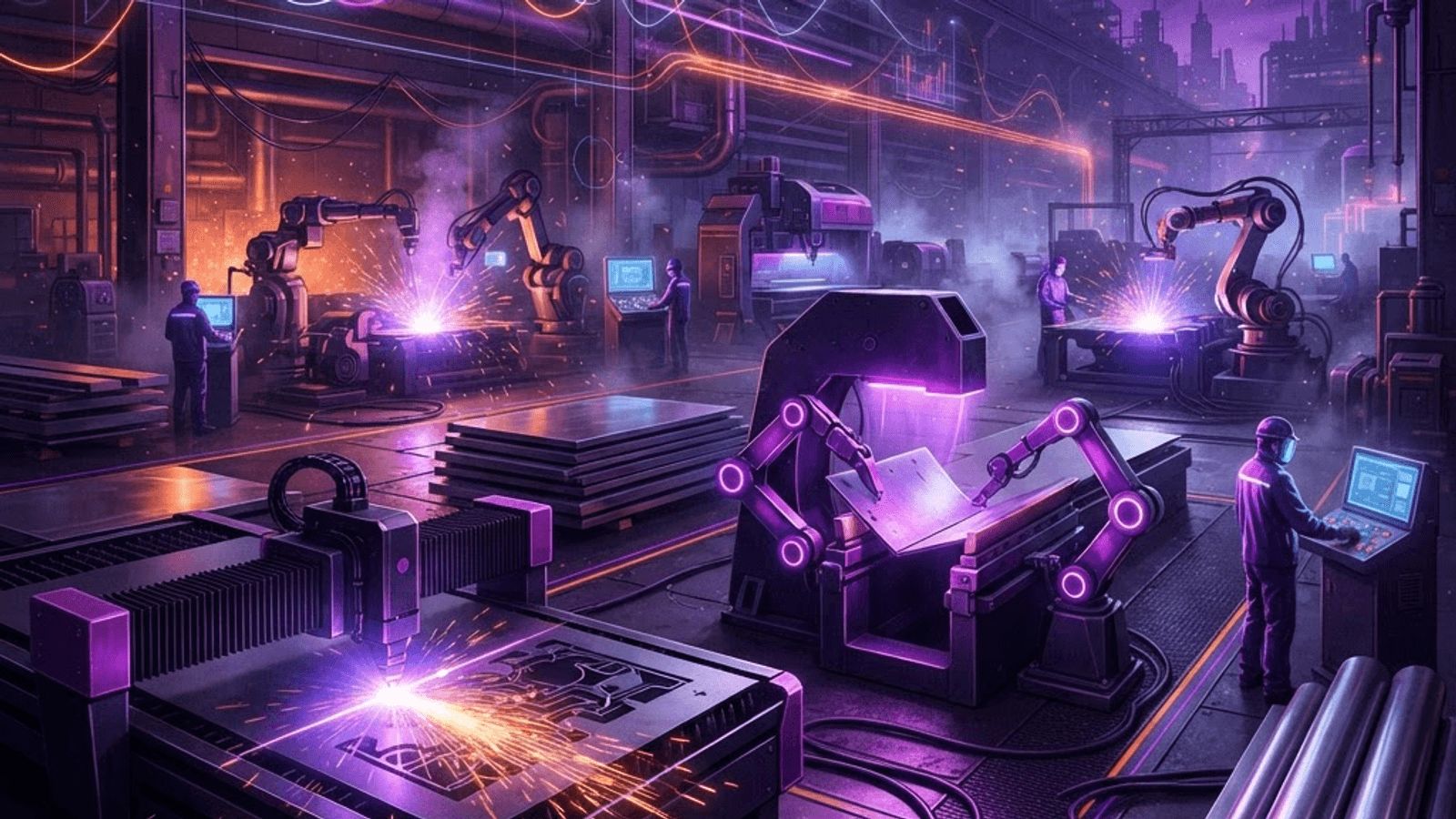
Metalworking is the connective tissue of West Michigan manufacturing. Nearly every product built in the region passes through a machine shop, stamping press, laser cutter or welding cell at some point. The area supports hundreds of metalworking firms ranging from two-person job shops to operations running lights-out machining across multiple shifts, serving automotive, furniture, medical, aerospace and general industrial customers.
The Metalworking Sector in Grand Rapids
The industry's strength comes from diversity of capability. Precision machining shops hold tolerances measured in ten-thousandths of an inch. Sheet metal fabricators cut, form, weld and finish enclosures and brackets. Stampers produce high-volume components with progressive dies. Finishers apply powder coating, plating, anodizing and passivation. Toolmakers build the dies and fixtures the rest depend on.
Because customers in different industries demand different quality systems, many local shops hold multiple certifications, making them adaptable when one market softens.
The Top 10 Metalworks Companies Serving Grand Rapids
1. Autocam
Autocam is recognized for extremely high-precision, high-volume machined components. Its process control discipline and metrology capability set a benchmark for precision machining in West Michigan.
2. Lacks Enterprises
While primarily known for plastics and decorative finishing, Lacks Enterprises brings substantial metal finishing and plating expertise, including chrome and specialty coatings that require sophisticated chemistry and environmental controls.
3. Gill Industries
Gill Industries produces metal stampings, welded assemblies and mechanisms, serving seating and closure system applications where functional performance and safety validation are essential.
4. Shape Corp
Shape Corp specializes in roll forming and metal structural components engineered for crash energy management and lightweighting, supplying automotive programs from its Grand Haven operations.
5. Wolverine Coil Spring Company
Wolverine Coil Spring manufactures springs, wire forms and stampings from Grand Rapids, supplying components used across furniture, automotive and industrial products.
6. Grand Rapids Sheet Metal Fabricators
Fabrication shops across the region provide laser cutting, turret punching, press brake forming, welding and assembly for enclosures, frames, brackets and machine guarding. Many offer full turnkey service including finishing and hardware insertion.
7. Feyen Zylstra and Industrial Service Contractors
Industrial contractors provide millwright services, structural steel installation, custom weldments and on-site fabrication that support plant expansions and equipment installations throughout West Michigan.
8. Powder Coating and Finishing Operations
Finishers apply powder coat, wet paint, plating and passivation with color matching and durability testing. For products exposed to weather or heavy handling, finishing quality determines perceived product quality more than any other factor.
9. Tool and Die Shops
Die builders and mold makers throughout Kent and Ottawa counties design and construct progressive dies, fixtures, gauges and specialty tooling. Their craftsmanship underpins the productivity of every stamping and molding operation in the region.
10. CNC Machining Job Shops
A broad tier of machining shops offers milling, turning, multi-axis work, Swiss machining and electrical discharge machining. Their flexibility supports prototype development, low-volume production and service parts that larger operations decline.
How to Choose a Metalworking Partner
Match capability precisely to the part. Confirm machine list, work envelope, axis capability and whether the shop can hold the required tolerances repeatably rather than occasionally. Ask about inspection equipment, including coordinate measuring machines, and whether the shop provides first article inspection reports and in-process inspection documentation.
Material expertise varies. Stainless steel, aluminum, titanium, tool steels and exotic alloys each present distinct machining and welding challenges. A shop experienced with the specific alloy will produce better results and quote more accurately than one learning on the job.
Quality Systems and Certifications
Quality management certification signals process discipline, but the useful conversation goes deeper. Ask how the shop handles nonconforming material, whether it performs root cause analysis on defects, how it controls calibration of measuring equipment and how revisions to drawings are managed. Shops serving medical or aerospace customers typically maintain the most rigorous documentation practices, which benefits all their customers.
Cost Drivers in Fabrication and Machining
Understanding what drives cost enables better design decisions. Tight tolerances applied where they are not functionally required add expense disproportionately. Unnecessary secondary operations, exotic materials, complex setups and small batch sizes all raise unit cost. Engaging a fabricator during design review often uncovers changes that reduce cost substantially without affecting performance, such as adjusting bend radii to standard tooling or consolidating parts into a single formed component.
Technology Trends in Metalworking
Fiber laser cutting has largely displaced older cutting technologies for sheet work, delivering faster speeds and cleaner edges. Automated bending cells and robotic welding are expanding as skilled labor tightens. Additive manufacturing now supplements traditional methods for prototypes, fixtures and low-volume complex geometries. Digital quoting and job tracking systems give customers better visibility into order status than the industry historically provided.
Final Thoughts
The metalworks companies around Grand Rapids offer capability depth that rivals much larger manufacturing centers. Success comes from matching shop strengths to part requirements, involving the fabricator early in design, and evaluating quality systems as seriously as price quotations.