
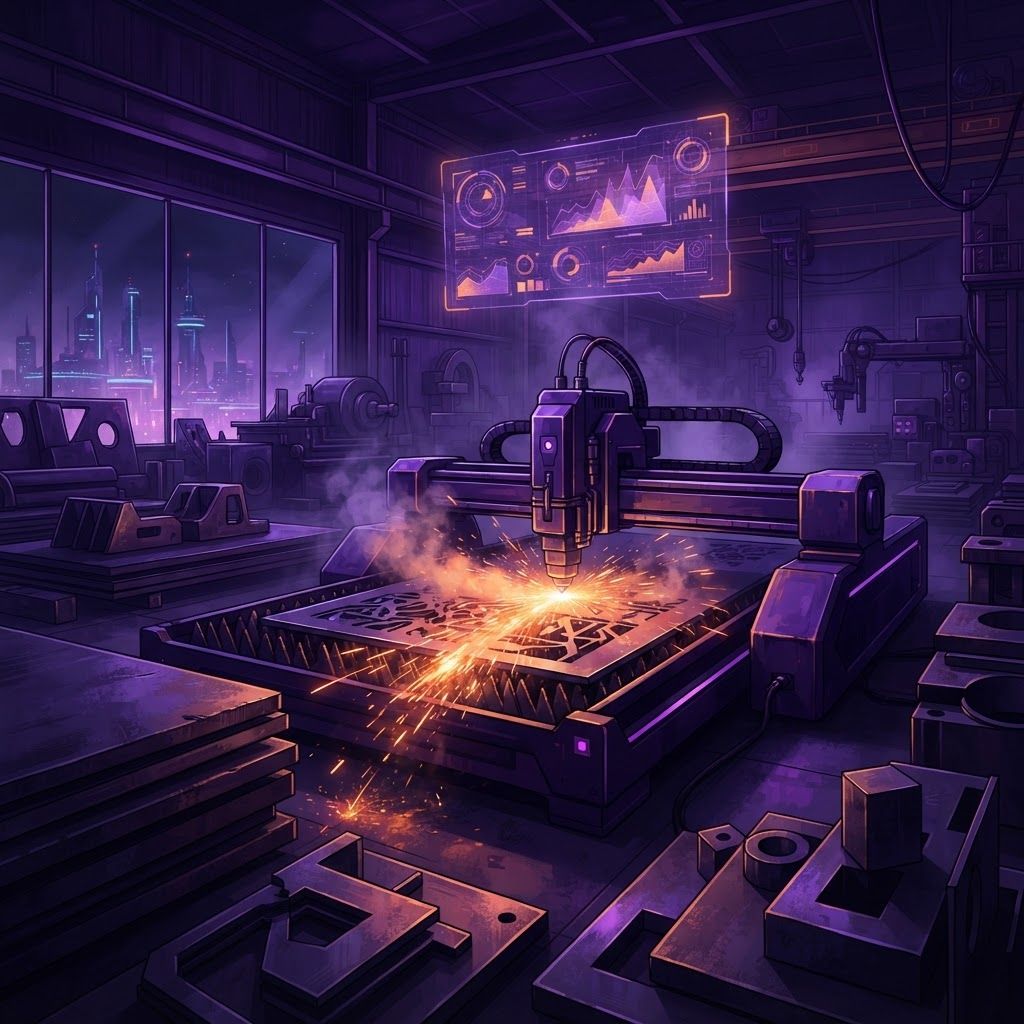
Metal Fabrication in Garland
Garland's industrial districts have supported metalworking for generations, and the trade remains central to the local economy. Fabricators here serve construction, energy equipment, food processing, transportation, and general manufacturing, producing everything from structural steel assemblies to precision machined components. The work spans a wide range of sophistication, from simple cut and weld jobs to tight tolerance CNC machining and certified pressure vessel work.
Buyers often underestimate how much fabricator capability varies. A shop with excellent welders and no CNC equipment will struggle with precision machined parts, and a machining house with no certified welders cannot deliver code stamped weldments. Matching the job to the right shop is the single most important decision in metal fabrication procurement, and it requires understanding what each shop actually does well rather than what its capability list claims.
Core Metalworking Processes
Cutting operations include laser cutting for thin to medium gauge sheet, plasma cutting for thicker plate, waterjet for materials sensitive to heat, and sawing for structural shapes. Forming covers press brake bending, roll forming, and stamping. Joining is dominated by welding, with MIG for speed and general steel work, TIG for precision and stainless or aluminum, and stick welding for field and structural applications. Machining removes material to tight tolerance using CNC mills, lathes, and multi axis machining centers. Finishing includes grinding, deburring, powder coating, galvanizing, painting, and passivation for stainless.
Top 10 Best Metalworks Companies in Garland
1. Garland Precision Fabrication
A mid sized job shop combining laser cutting, press brake forming, and welding under one roof, with in house engineering support for design for manufacturability review.
2. Ironline Structural Steel
Focused on structural steel fabrication for commercial construction, including beams, columns, stairs, and railings, with detailing services and field erection coordination.
3. Apex CNC Machining
A precision machining house running multi axis CNC mills and lathes for tight tolerance components in small to medium production volumes.
4. Trinity Welding Works
A welding specialist with certified welders across multiple procedures, handling stainless, aluminum, and carbon steel work including code stamped pressure retaining welds.
5. Northgate Sheet Metal
Sheet metal fabrication for HVAC ductwork, enclosures, panels, and custom brackets, with fast turnaround on prototype and short run work.
6. Lone Star Metal Finishing
A finishing house providing powder coating, wet paint, sandblasting, and passivation services to other fabricators and direct manufacturing customers.
7. Cedar Ridge Machine and Tool
A tool and die operation producing stamping dies, jigs, fixtures, and production tooling, along with repair and rebuild services for existing tooling.
8. Vanguard Plate Processing
Heavy plate cutting and forming using plasma and oxyfuel, serving energy equipment and heavy machinery customers requiring thick section work.
9. Shiloh Ornamental Metal
Architectural and ornamental metalwork including gates, handrails, decorative panels, and custom fabrication for residential and commercial design projects.
10. Redline Contract Manufacturing
A contract manufacturer offering fabrication, assembly, and light kitting, positioned for customers who want a single supplier managing multiple process steps.
How to Evaluate a Fabricator
Start with capability match. Ask what equipment the shop owns rather than what it can arrange, because subcontracted operations add lead time and coordination risk. Confirm the maximum part size, material thickness range, and materials routinely processed.
Tolerance capability matters next. A shop that holds plus or minus one thirty second of an inch on weldments is not the same as one holding plus or minus five thousandths on machined features. Ask for typical rather than best case tolerances, and request first article inspection on new parts.
Certification requirements vary by application. Structural work may require AISC certification, pressure work requires ASME code compliance, and welding procedures should be qualified to AWS standards. Quality system certification such as ISO 9001 signals process discipline but does not by itself guarantee capability.
Lead time and capacity deserve direct discussion. Ask about current backlog, typical quote turnaround, and how the shop handles expedite requests. A shop running at full capacity will quote longer lead times or higher prices, and both are honest signals.
Pricing and Quoting
Fabrication pricing reflects material cost, machine time, labor, setup, finishing, and overhead. Setup cost is fixed per run, which is why unit pricing drops sharply with quantity. Buyers who order in economic batch sizes rather than piece by piece capture meaningful savings.
Provide complete drawings with dimensions, tolerances, material specification, finish requirement, and quantity when requesting quotes. Incomplete information forces fabricators to assume worst case, which inflates pricing. Comparing quotes requires identical scope, so confirm whether finishing, material certification, and freight are included.
Final Thoughts
Metalworks companies in Garland offer genuine depth across cutting, forming, welding, machining, and finishing. The buyers who get the best outcomes treat fabricator selection as a capability matching exercise, provide complete technical documentation, order in sensible quantities, and build relationships with two or three shops covering complementary processes. That approach delivers better quality and more reliable schedules than chasing the lowest quote on every job.