
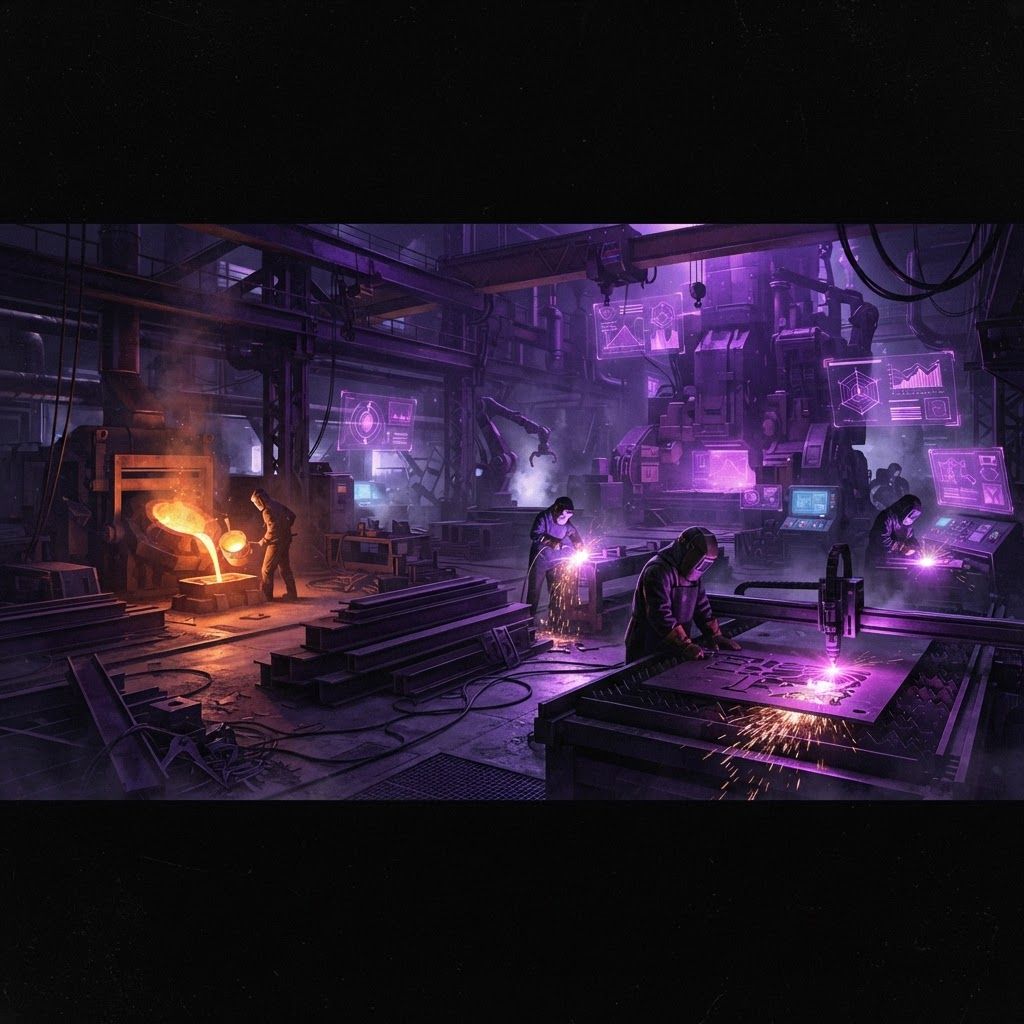
Metalworking as the Backbone of Regional Industry
Metalworking is the enabling trade behind nearly every other industry. Ports need structural steel and repair welding. Farms need implement fabrication. Petrochemical facilities need pressure components and piping. Manufacturers need machined parts, jigs, and fixtures. Builders need architectural metal and structural framing. In Brownsville, all of these demands converge, supporting a metalworks sector with substantial breadth.
Proximity to the port gives local shops an additional advantage in raw material access. Steel plate, structural shapes, and aluminum arrive efficiently, which shortens lead times for projects that would otherwise wait on inland freight.
Understanding Metalworking Capabilities
The term metalworks covers several distinct disciplines. Structural fabrication builds frames, platforms, and heavy assemblies from plate and shapes. Sheet metal work produces enclosures, ductwork, and formed panels. Precision machining removes material to tight tolerances. Welding and repair services restore worn or damaged components. Finishing operations, including galvanizing, powder coating, and painting, protect finished work.
Certification matters in this field. Welders certified to recognized procedure specifications, shops with documented weld procedures, and quality systems supporting material traceability distinguish serious operations from general repair shops.
1. Rio Grande Steel Fabrication
Rio Grande Steel Fabrication produces structural steel assemblies, platforms, stairs, and industrial frameworks. Its detailing team produces shop drawings that coordinate with building models, reducing field fit-up problems during erection.
2. Brownsville Precision Machining
Brownsville Precision Machining operates multi-axis CNC equipment for close-tolerance components in stainless steel, aluminum, and exotic alloys. Inspection using coordinate measuring equipment provides documented dimensional verification on critical features.
3. Gateway Sheet Metal Works
Gateway Sheet Metal Works fabricates enclosures, panels, ductwork, and custom sheet components. Laser cutting and CNC press brake forming allow the shop to produce complex flat patterns and tight bend tolerances efficiently.
4. Frontera Welding and Industrial Services
Frontera Welding and Industrial Services provides field welding, equipment repair, and on-site fabrication for plants and facilities. Its mobile crews minimize downtime by performing repairs in place rather than requiring equipment removal.
5. Valley Architectural Metals
Valley Architectural Metals produces railings, gates, canopies, stair systems, and decorative metalwork for commercial and residential architecture. Finish quality and design collaboration with architects define the company's approach.
6. Southmost Marine Steel
Southmost Marine Steel serves the maritime sector with vessel repair, deck structures, and corrosion-resistant fabrication. Working in a salt-exposed environment demands specialized coating and material knowledge that the company has developed over years of port work.
7. Cameron Pipe and Pressure Fabrication
Cameron Pipe and Pressure Fabrication builds piping spools, pressure vessels, and process skids to recognized construction codes. Radiographic testing and documented weld procedures support customers in energy and chemical processing.
8. Laguna Aluminum Works
Laguna Aluminum Works specializes in aluminum fabrication for transportation, marine, and architectural applications. Aluminum welding requires different technique and equipment than steel, and this focused expertise is a meaningful differentiator.
9. Port Brownsville Heavy Fabrication
Port Brownsville Heavy Fabrication handles oversized projects requiring large-capacity lifting, extensive floor space, and waterway access for shipment. The company takes on work that most inland shops physically cannot accommodate.
10. Border Tool and Die
Border Tool and Die designs and builds stamping dies, fixtures, molds, and production tooling. Tool and die work demands exceptional precision and material knowledge, and the shop serves manufacturers across the border region.
Trends in Metalworking
Automation continues to expand, with fiber laser cutting, robotic welding cells, and automated material handling improving both throughput and consistency. These investments allow domestic shops to compete on cost while offering quality and responsiveness that distant suppliers cannot.
Digital workflows are the second shift. Shops increasingly accept 3D models directly, generating cutting programs and shop drawings from customer data. This reduces transcription errors and shortens the path from design to fabrication. Workforce development is the third priority, as experienced welders and machinists retire and shops invest in apprenticeship and training programs.
Selecting a Metalworks Partner
Match the shop's equipment envelope to your part size and tolerance requirements before anything else. Verify welding certifications relevant to your application, and ask how material certifications are tracked. Discuss finishing, since coating quality determines service life in coastal environments. For ongoing work, evaluate scheduling transparency, because a shop that communicates realistic lead times is more valuable than one that promises optimistically and delivers late.
Corrosion Protection in a Coastal Environment
Metal fabricated for use near the Gulf faces conditions that inland projects rarely encounter. Salt-laden air accelerates corrosion dramatically, and a coating system adequate in central Texas may fail within a couple of seasons in Brownsville. Surface preparation is the decisive variable. Proper blasting to the specified profile, immediate priming before flash rust forms, and correct film thickness determine whether a coating lasts two years or twenty.
Material selection plays a role as well. Hot-dip galvanizing, stainless alloys, and aluminum each offer different corrosion performance at different costs. Shops with genuine coastal experience will discuss these tradeoffs candidly rather than defaulting to whatever is cheapest to quote.
Working Effectively With a Fabrication Shop
The quality of a fabrication project is largely determined before any metal is cut. Clear drawings, defined tolerances, specified weld requirements, and agreed finish standards prevent the interpretation gaps that produce disputes later. Shops appreciate customers who state what actually matters, because it lets them focus effort where it counts rather than holding unnecessary precision everywhere.
Scheduling transparency works both ways. Shops running heavy backlogs can usually accommodate a customer who plans ahead, while last-minute requests compete against committed work. Building a predictable relationship almost always produces better pricing and better turnaround than treating each job as a fresh bidding exercise.
Final Thoughts
Brownsville's metalworks companies span structural fabrication, precision machining, sheet metal, marine steel, pressure work, and tooling. That range makes the region largely self-sufficient for industrial metal needs, with local shops offering the responsiveness that complex projects require.