
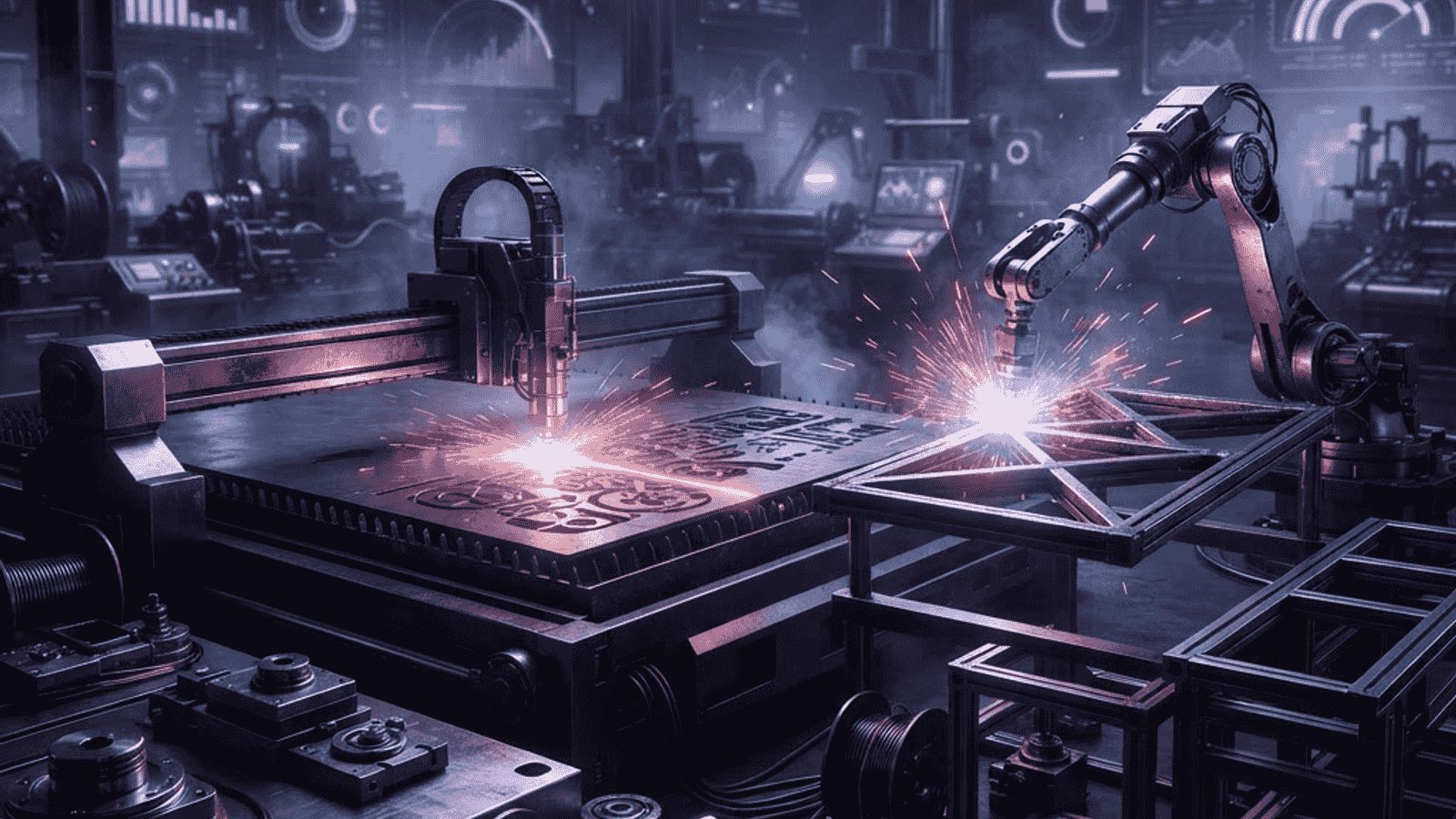
Metalworking as Aurora's Industrial Backbone
Metalworking underpins nearly every other industry in Aurora. Furniture makers need welded frames, plastics processors need molds and machine components, food producers need stainless equipment, and construction requires structural steel and miscellaneous metals. As a result, the city supports an unusually broad concentration of machine shops, fabricators, and finishing operations.
The sector ranges from two-person job shops handling repair work to sophisticated facilities running lights-out machining with robotic part loading. That range is an advantage for buyers, because a prototype and a production program can often be sourced within the same city, sometimes from the same supplier.
Understanding Metalworking Capabilities
Sourcing effectively requires distinguishing between processes. CNC machining removes material to produce precise components and is measured in tolerances often held to thousandths of an inch. Sheet metal fabrication cuts, bends, and assembles flat stock into enclosures, brackets, and panels. Structural fabrication produces beams, columns, and frames for construction. Welding services join components using processes selected for the base metal and application. Finishing operations, including powder coating, plating, anodizing, and passivation, protect and improve appearance.
Many projects require several of these in sequence, and suppliers who can manage the full chain internally reduce coordination burden and the risk of parts being damaged in transit between vendors.
The Top 10 Best Metalworks Companies in Aurora
1. Aurora Precision Machining operates multi-axis CNC mills and turning centers for aerospace-grade, medical, and industrial components. Documented inspection procedures, CMM verification, and strong first-article reporting make it a trusted choice for critical parts.
2. Ironworks Steel Fabricators handles structural steel for commercial construction, including beams, columns, stairs, and railings, with detailing and erection coordination. Its ability to sequence deliveries to a construction schedule is a notable strength.
3. Summit Sheet Metal Works specializes in laser cutting, press brake forming, and assembly of enclosures, panels, and brackets. Fast turnaround on prototypes plus scalability into production runs makes it popular with equipment manufacturers.
4. Titan Welding & Repair provides mobile and in-shop welding across steel, stainless, and aluminum, including certified structural work and heavy equipment repair. Availability during unplanned downtime is a major reason clients rely on it.
5. Vertex Tool & Die builds stamping dies, fixtures, and gauges, supporting other manufacturers rather than end consumers. Tight tolerance work, careful material selection, and long tool life define its reputation.
6. Northgate Metal Finishing offers powder coating, plating, and passivation with strong process control on film thickness and adhesion. Consistent color matching across production batches is a common reason clients stay.
7. Crescent Architectural Metals produces decorative and functional architectural elements: railings, canopies, cladding panels, and custom feature pieces. The company collaborates directly with architects during detailing.
8. Prairie Stamping & Forming runs progressive and secondary stamping operations for high-volume components. Per-piece economics at volume are its advantage, supported by in-house die maintenance.
9. Lakeside Stainless Solutions focuses on food, beverage, and pharmaceutical equipment where sanitary welding, polished finishes, and cleanability are mandatory. Documentation supporting hygienic design requirements is part of the service.
10. Aurora Laser & Waterjet Services completes the list as a cutting specialist, offering fiber laser, plasma, and waterjet processing for thick plate, exotic alloys, and heat-sensitive materials. Many other local shops subcontract cutting here.
Automation and Skilled Labor
The most significant change in Aurora metalworking over the past decade has been automation paired with workforce development. Robotic welding cells, automatic tool changers, pallet systems enabling unattended machining, and offline programming have raised throughput substantially. At the same time, the industry faces a shortage of experienced machinists and welders, which has pushed leading shops into apprenticeship programs and partnerships with local technical schools.
Buyers benefit from this investment through better repeatability and shorter lead times, but should recognize that automated shops prefer predictable, well-documented work. Providing complete drawings with clearly identified critical dimensions helps a supplier apply automation effectively rather than treating each order as a custom problem.
Certifications and Quality Expectations
Certifications communicate process discipline. Welding certifications indicate qualified procedures and welder testing. Quality management certifications demonstrate documented systems for handling nonconformance, calibration, and traceability. Industry-specific approvals matter for aerospace, medical, and pressure-containing applications.
Beyond certificates, assess practical evidence: calibration records, material certifications, in-process inspection frequency, and how the shop handles a rejected part. A supplier who investigates root cause and documents corrective action is worth more than one who simply replaces the piece.
Sourcing Guidance
Send complete technical packages including 3D models, dimensioned drawings, material specification, surface finish requirements, tolerances, and quantity. Identify which dimensions are truly critical; over-toleranced drawings inflate cost unnecessarily. Discuss whether design adjustments could reduce machining time, since experienced shops routinely identify savings during quoting.
For ongoing programs, consider blanket orders with scheduled releases. Suppliers can then buy material efficiently and batch production, lowering unit cost while keeping your inventory manageable.
Final Thoughts
Aurora's metalworks companies deliver the precision, capacity, and finishing expertise that regional manufacturers and builders depend on. From tight-tolerance machined components to structural steel packages and sanitary stainless equipment, the local ecosystem is remarkably complete. Success comes from clear specifications, honest volume expectations, and choosing suppliers whose core capability genuinely matches the work rather than those willing to attempt anything.