
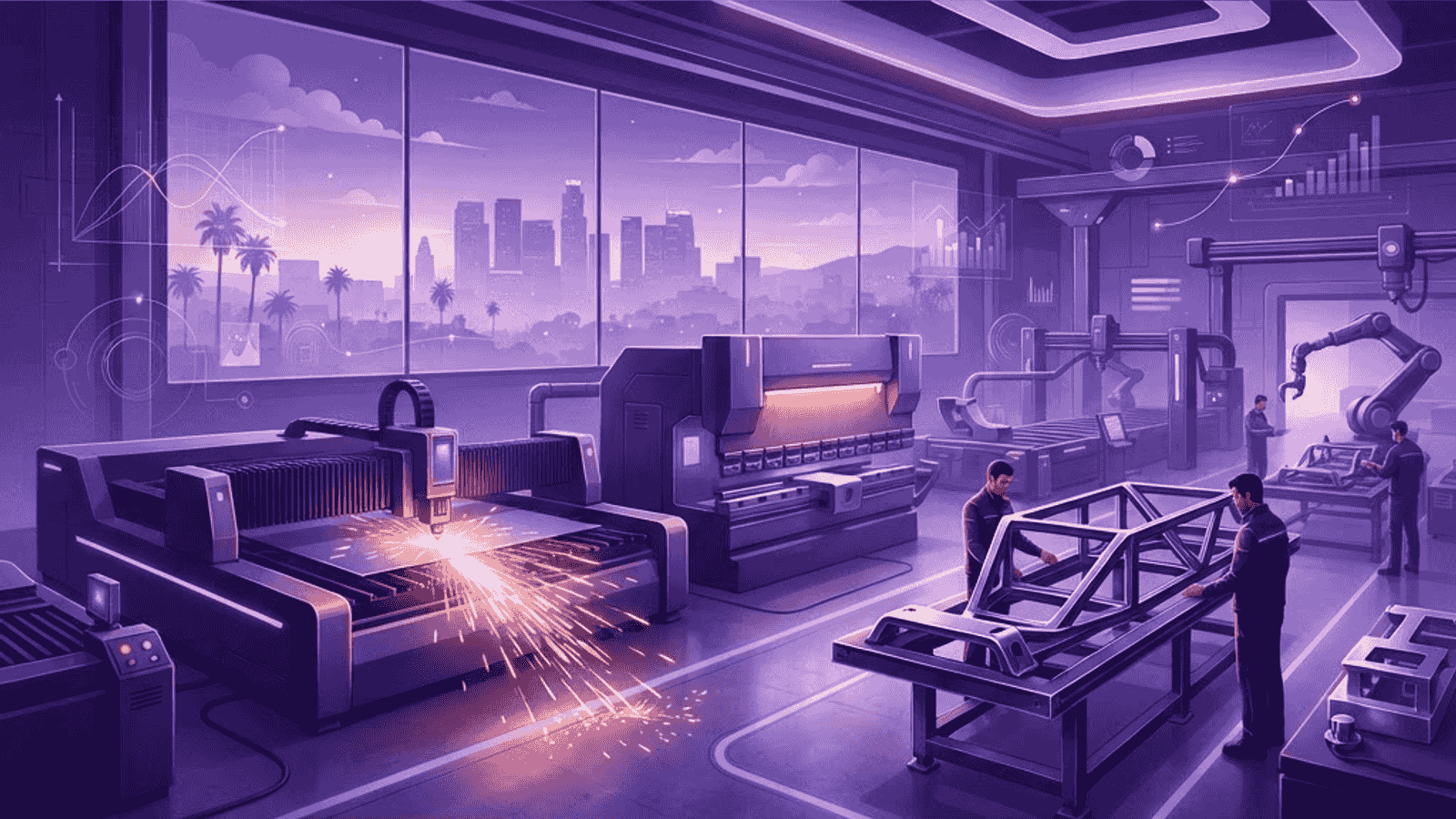
Metalworking in Anaheim: Aerospace Discipline, Broad Application
Few industries have shaped Anaheim's industrial identity as thoroughly as metalworking. The aerospace programs that dominated Southern California manufacturing for decades trained generations of machinists, welders, sheet metal mechanics, and inspectors, and established documentation and tolerance expectations that persist throughout the local supply base.
Today those capabilities serve a far more diverse customer set. Medical device companies, semiconductor equipment builders, food processing plants, architects, entertainment venues, automotive specialists, and industrial equipment manufacturers all draw on Anaheim metalworks firms. The result is a supplier community comfortable with both a single prototype requiring exotic alloys and a repeating production order of thousands of stamped parts.
The Top 10 Best Metalworks Companies in Anaheim
1. Canyon Precision Machining
Canyon operates multi-axis CNC milling and turning centers producing close-tolerance components in aluminum, stainless, titanium, and engineering plastics. Coordinate measuring inspection, documented first article reports, and material certification traceability support customers in regulated industries.
2. Orange County Sheet Metal Fabrication
Laser cutting, punching, forming, and welding of sheet products for enclosures, brackets, panels, and chassis form this company's core. Its programming team optimizes nesting and bend sequencing, which reduces both material waste and setup time on complex parts.
3. Brookhurst Welding and Structural Fabrication
Structural and pressure-related welding requires qualified procedures and certified welders. Brookhurst maintains welder qualifications across processes and materials, performs weld inspection including nondestructive testing coordination, and fabricates frames, platforms, and structural assemblies.
4. Katella Metal Stamping and Tooling
For repeating production, stamping delivers cost advantages that machining cannot match. Katella designs and builds dies and runs progressive and secondary stamping operations, with in-house tool maintenance keeping long-running programs stable.
5. Platinum Triangle Architectural Metals
Railings, canopies, decorative panels, storefronts, and sculptural elements demand aesthetic precision alongside structural adequacy. This firm works closely with architects and general contractors, producing shop drawings and finish samples for approval before fabrication.
6. La Palma Metal Finishing and Plating
Anodizing, powder coating, passivation, plating, and polishing determine corrosion resistance and appearance. La Palma provides these services with process controls and testing that document coating thickness and adhesion for customers with specification requirements.
7. Anaheim Canyon Tube and Pipe Fabrication
Bending, end forming, and welding tubular assemblies for equipment frames, handrails, exhaust systems, and process piping is this shop's specialty. Mandrel bending capability preserves wall thickness and cross-section on tight radius bends.
8. Ball Road Waterjet and Laser Cutting
Job shops and manufacturers frequently need cutting services without full fabrication. Ball Road offers waterjet cutting for heat-sensitive and thick materials alongside fiber laser cutting for speed and edge quality, serving both prototype and production needs.
9. Harbor Metal Supply and Service Center
Fabricators need reliable material access, and Harbor stocks bar, plate, sheet, tube, and structural shapes across common alloys with saw cutting and shearing services. Material certifications accompany shipments for traceability-sensitive work.
10. Sunkist Metal Assembly and Integration
Many customers prefer a finished assembly rather than loose parts. Sunkist combines fabrication with hardware insertion, subassembly, mechanical integration, and packaging, reducing the number of vendors a customer must coordinate.
How to Evaluate a Metalworks Partner
Match tolerance capability to your actual requirements. Specifying tolerances tighter than a part needs drives cost sharply upward, while assuming a general fabricator can hold precision machining tolerances leads to rejected parts. Discuss critical dimensions specifically rather than applying blanket tolerances.
Verify certifications relevant to your industry. Quality management registration, aerospace credentials, welding procedure qualifications, and material traceability systems each matter in particular contexts. Request documentation rather than accepting verbal claims.
Examine inspection equipment and practices during a facility visit. Coordinate measuring machines, height gauges, surface plates, calibrated hand tools with current calibration records, and defined inspection sampling plans indicate a shop that measures rather than assumes.
Discuss capacity and scheduling realistically. Ask about current backlog, shift coverage, and how rush work is accommodated. A shop that promises immediate turnaround while visibly overloaded will disappoint, and honest scheduling conversation is a strong indicator of overall reliability.
Trends in Metal Fabrication
Automation has advanced considerably, with automated bending cells, robotic welding, and lights-out machining improving consistency and addressing skilled labor shortages. Shops investing in these technologies compete effectively on moderate volumes that previously moved offshore.
Fiber laser technology has largely displaced older cutting methods, delivering faster processing and better edge quality on thin and medium materials, which has changed how designers approach sheet metal part geometry.
Additive manufacturing has found a complementary role, producing tooling, fixtures, and complex prototypes that support conventional fabrication rather than replacing it. Meanwhile, customer expectations around digital communication have risen, with online quoting, file-based ordering, and production status visibility becoming competitive requirements.
Getting Strong Results From Metal Suppliers
Supply complete information: solid models, drawings with clear critical dimensions, material specification, finish requirements, and quantity expectations including likely repeat volumes. Ambiguity produces either inflated quotes or incorrect parts.
Request design for manufacturability feedback, since small geometry changes often reduce cost substantially. Anaheim's metalworks companies bring precision heritage and modern equipment to a remarkably wide range of work, and clear specification combined with genuine dialogue produces parts that arrive correct, on time, and at defensible cost.