
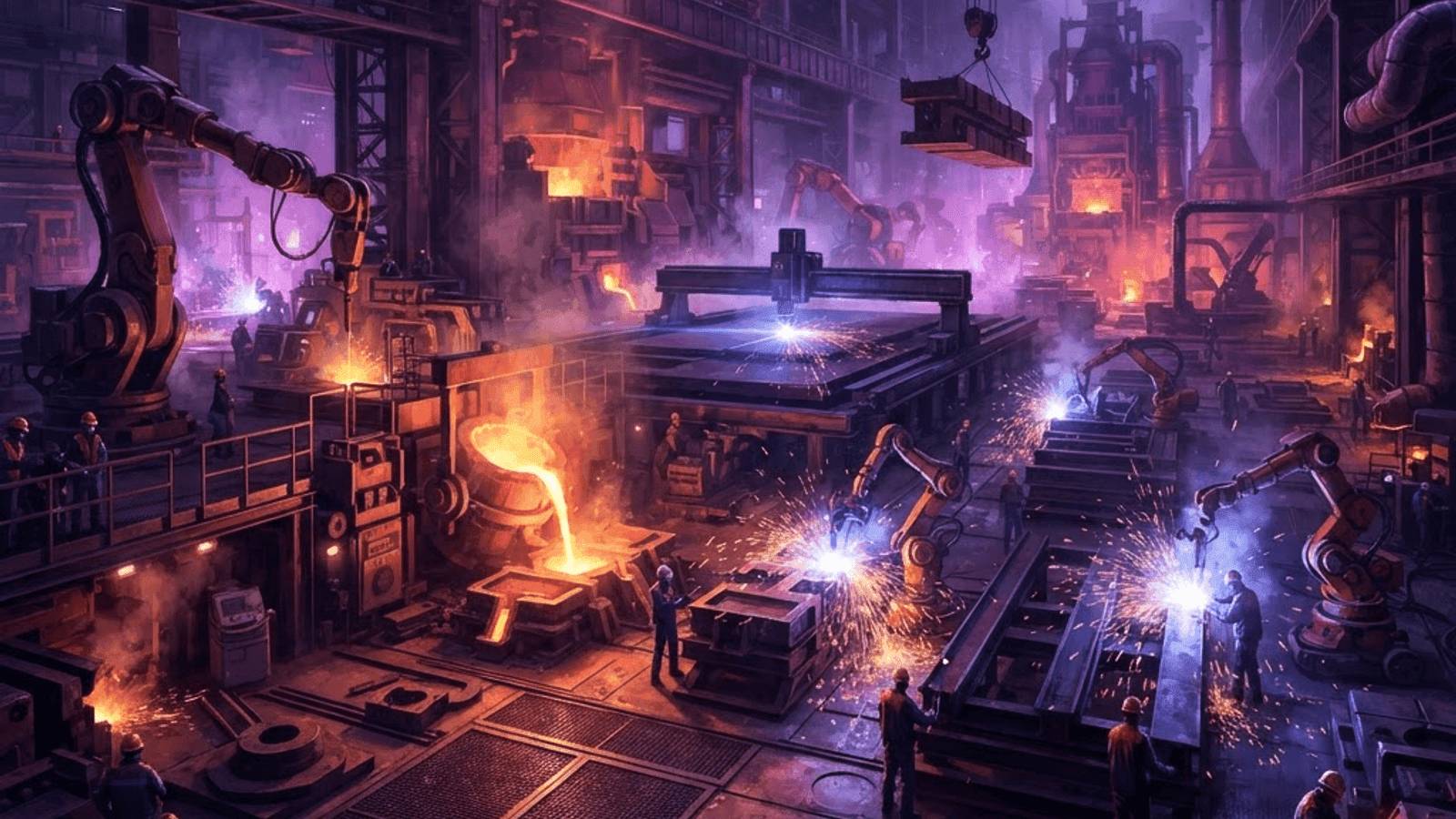
Metalworking at the Heart of Alexandrian Industry
Metalworking is the enabling industry behind almost every other. Machinery builders need machined components, construction projects need structural steel, shipyards need plate fabrication, and food processors need stainless steel vessels. Alexandria's concentration of metalworks companies, supported by the port, local steel supply and generations of skilled tradesmen, makes the city a natural centre for this work.
The sector spans an enormous range of scale and sophistication. At one end sit heavy fabricators producing pressure vessels and structural assemblies weighing many tonnes. At the other are precision machine shops working to tolerances measured in hundredths of a millimetre. Between them lie foundries, sheet metal shops, surface treatment facilities and specialist welding contractors.
Understanding Metalworking Capabilities
Buyers should distinguish clearly between process types. Fabrication involves cutting, forming and welding plate and section into assemblies. Machining removes material from solid stock to produce precise geometry. Casting pours molten metal into moulds to create complex shapes efficiently at volume. Forging shapes metal under pressure to improve grain structure and strength for demanding applications.
Surface treatment, including galvanising, powder coating, painting and plating, is frequently the difference between a component that lasts and one that corrodes. In Alexandria's salt-laden coastal atmosphere, this consideration carries more weight than it would inland.
Welding qualification deserves specific attention. Certified welding procedures, qualified welders and documented inspection separate structural work that can be relied upon from work that cannot.
Ten Leading Metalworks Companies in Alexandria
1. Delta Steel Fabrication produces structural steel for industrial buildings, warehouses and infrastructure. Its capability covers detailing, fabrication, surface treatment and erection, which removes the coordination risk of splitting these scopes between contractors.
2. Mediterranean Heavy Engineering manufactures pressure vessels, heat exchangers and storage tanks to international codes, supported by certified welding procedures and in-house radiographic and ultrasonic testing.
3. Alexandria Foundry Works casts iron and steel components for machinery, pumps and automotive applications. Its pattern shop and metallurgical laboratory support both new part development and the reproduction of obsolete castings.
4. Pharos Precision Machining operates computer-controlled turning and milling centres producing precision components for industrial and marine customers, with coordinate measuring inspection to verify conformance.
5. Nile Sheet Metal Industries specialises in laser cutting, punching, bending and welding of sheet metal, producing enclosures, panels, ducting and light fabrications with fast turnaround.
6. Horus Galvanising provides hot-dip galvanising and duplex coating systems. Given how aggressively coastal conditions attack unprotected steel, its services extend the life of structures and components across the region substantially.
7. Amun Marine Fabrication serves the shipbuilding and repair sector with hull plate work, deck structures and marine outfitting, drawing on Alexandria's long maritime engineering tradition.
8. Coastal Stainless Solutions fabricates stainless steel equipment for food, pharmaceutical and chemical processing, including tanks, pipework and hygienic fittings with the surface finishes those industries require.
9. Ramses Forging Industries produces forged components including shafts, flanges and fittings where mechanical properties exceed what casting can deliver.
10. Sidi Kerir Metal Finishing completes the list with powder coating, wet painting and specialist protective coating systems applied under controlled conditions with documented film thickness verification.
Trends in the Metalworks Sector
Digital manufacturing has spread rapidly. Three-dimensional modelling, nesting software that minimises material waste and direct machine programming from design files have improved both accuracy and material efficiency at the better shops.
Automation of welding, particularly robotic welding for repetitive assemblies, has improved consistency and productivity. It is most viable for medium-volume standardised work rather than one-off fabrication.
Quality documentation has become a competitive requirement rather than an optional extra. Customers in energy, marine and food processing expect material traceability, welder qualification records and inspection reports as standard deliverables.
Selecting a Metalworks Partner
Provide complete technical information including drawings, material specifications, tolerances, welding requirements and surface treatment expectations. Incomplete information produces quotations that are not comparable and work that disappoints.
Verify certifications relevant to your application and ask to see welding procedure specifications and welder qualifications for structural or pressure work.
Inspect the workshop. Material segregation, storage conditions, calibration records for measuring equipment and general housekeeping reveal the quality culture more reliably than any brochure.
Discuss protective treatment early rather than as an afterthought. Specifying the correct coating system for coastal exposure at the design stage costs a fraction of remediating corroded steel a few years later, and the best Alexandria metalworks companies will raise the subject themselves.
The Strategic Importance of Local Metalworking
Metalworking capability is foundational to industrial resilience. When a critical component fails, the ability to have a replacement machined, cast or fabricated locally within days rather than waiting weeks for an import determines how long a plant stays offline. Alexandria's density of metalworks companies gives manufacturers across the region exactly that safety net.
This capability also supports innovation. Businesses developing new products or modifying processes can prototype quickly, test, and iterate without the cost and delay of overseas fabrication. Many of the machinery, packaging and food processing innovations that emerge from the region depend on that local workshop base.
For buyers, the practical step is to establish relationships before they are urgently needed. A fabricator who already understands your equipment, holds your drawings and knows your material specifications will respond far faster in a breakdown than one approached cold, and in industrial operations that response time is often worth more than any price difference.