
The Overlooked Link in Healthcare
Medical supply companies rarely receive attention until a family suddenly needs a hospital bed delivered before a discharge, or a wheelchair that actually fits, or oxygen equipment that works reliably overnight. At that moment the quality of the supplier determines whether recovery at home is manageable or miserable. Winston-Salem, with its dense healthcare sector and substantial older population, supports a well-developed durable medical equipment market.
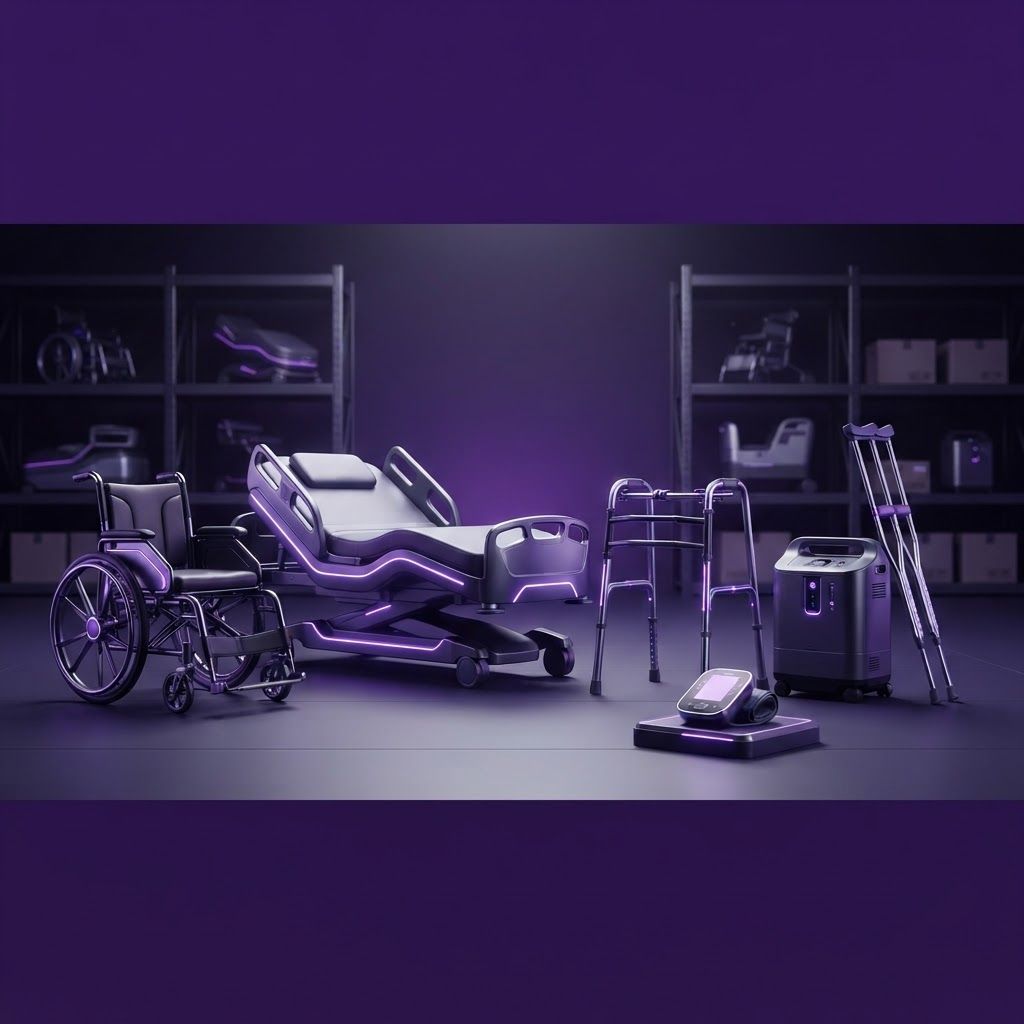
The industry covers a wider range than most people realize: mobility devices, respiratory equipment, hospital beds and patient lifts, bathroom safety products, wound care supplies, diabetic supplies, orthotics and prosthetics, ostomy and urological products, enteral nutrition, and compression therapy. Different suppliers specialize in different segments, and matching need to specialty matters.
Ten Medical Supply Providers and Categories
Hospital-affiliated home medical equipment services connected to the major local health systems coordinate directly with discharge planners, which is the fastest path to equipment arriving before a patient comes home. Integration with the medical record simplifies documentation for insurance authorization.
Lincare and comparable respiratory equipment providers specialize in oxygen concentrators, continuous positive airway pressure devices, nebulizers, and ventilator support, including the ongoing supply replacement and equipment servicing that respiratory therapy requires.
AdaptHealth style national durable medical equipment companies operate locally across multiple product categories with the billing infrastructure to handle insurance authorization at scale.
Independent local home medical equipment dealers in Winston-Salem compete on service: same-day delivery, in-home setup, equipment demonstration, and staff who answer the phone. For complex needs, this attention is worth real money.
Mobility specialty dealers handle manual and power wheelchairs, scooters, and seating systems. Complex rehabilitation technology requires an assistive technology professional working alongside a physical or occupational therapist, because a poorly fitted wheelchair causes pressure injuries and postural problems.
Orthotic and prosthetic providers fabricate and fit braces, custom foot orthoses, and prosthetic limbs. This work is highly individualized, and certified practitioners with local fabrication capability produce noticeably better fit than mail-order alternatives.
Wound care and ostomy supply specialists serve patients with chronic wounds, surgical drains, and ostomies, providing products and, importantly, education. Certified wound and ostomy nurses affiliated with these suppliers prevent complications that would otherwise result in readmission.
Diabetic supply providers handle glucose meters, test strips, continuous glucose monitors, insulin pumps, and therapeutic footwear. Many patients obtain these through pharmacies, but pump and monitor supplies often run through specialty distributors.
Retail pharmacy and big box medical sections cover the low end effectively: canes, walkers, shower chairs, compression stockings, braces, and first aid supplies. For simple items, retail is faster and often cheaper than insurance-billed equipment.
Medical equipment loan closets and nonprofit programs in Forsyth County provide refurbished walkers, wheelchairs, commodes, and shower chairs at no cost or minimal cost to residents in need. For temporary needs after surgery, these programs prevent unnecessary spending.
Insurance and Coverage Basics
Durable medical equipment coverage is documentation-driven and frequently frustrating. Medicare and most insurers require a physician order establishing medical necessity, and specific items require additional documentation such as face-to-face encounter notes, sleep study results for respiratory devices, or therapist evaluations for complex wheelchairs.
Suppliers must be enrolled with the payer for claims to process. Using a non-enrolled supplier means paying entirely out of pocket. Competitive bidding programs restrict which suppliers can bill Medicare for certain product categories in given regions, which limits choice more than patients expect.
Rental versus purchase rules add complexity. Many items are rented for a defined period after which ownership transfers, while others are purchased outright or rented indefinitely. Understanding which applies prevents confusion when monthly charges continue.
Cash purchase is sometimes the better choice. For inexpensive items, the deductible and paperwork often exceed the retail price. A basic walker or shower chair purchased at retail costs less than the administrative effort of billing it.
How to Choose a Supplier
Ask about delivery timelines and whether setup is included. Equipment delivered in a box to a doorstep is useless to a family managing a discharge alone. Hospital beds, lifts, and oxygen systems should be assembled and demonstrated in the home.
Confirm service and repair capability. Power wheelchairs and respiratory equipment fail, and a supplier without local technicians means long waits. Ask about after-hours support for life-sustaining equipment specifically.
Verify accreditation. Accredited suppliers meet standards for quality, staff training, and complaint resolution, and accreditation is required for Medicare participation.
Assess the fitting process for anything worn or sat in. Wheelchairs, braces, prosthetics, and compression garments require measurement and adjustment. Suppliers who measure carefully and follow up prevent skin breakdown and abandonment of expensive equipment.
Practical Advice for Families
Start the conversation before discharge, not after. Discharge planners and case managers at local hospitals can initiate equipment orders while the patient is still admitted, which is far easier than arranging it retroactively.
Consider home layout when ordering. Doorway widths, stair configurations, bathroom dimensions, and flooring all determine whether a device is usable. An occupational therapist home assessment prevents expensive mistakes.
Plan for consumables. Ostomy supplies, wound dressings, catheters, and respiratory tubing require ongoing reorder, and setting up automatic shipment prevents gaps.
Final Thoughts
Winston-Salem has a solid mix of hospital-integrated equipment services, national suppliers, specialty providers, and community loan programs. The suppliers worth working with are those that deliver promptly, set equipment up properly, fit devices individually, and answer the phone when something breaks. For simple items, retail purchase beats insurance billing, and nonprofit loan closets solve short-term needs at no cost.