
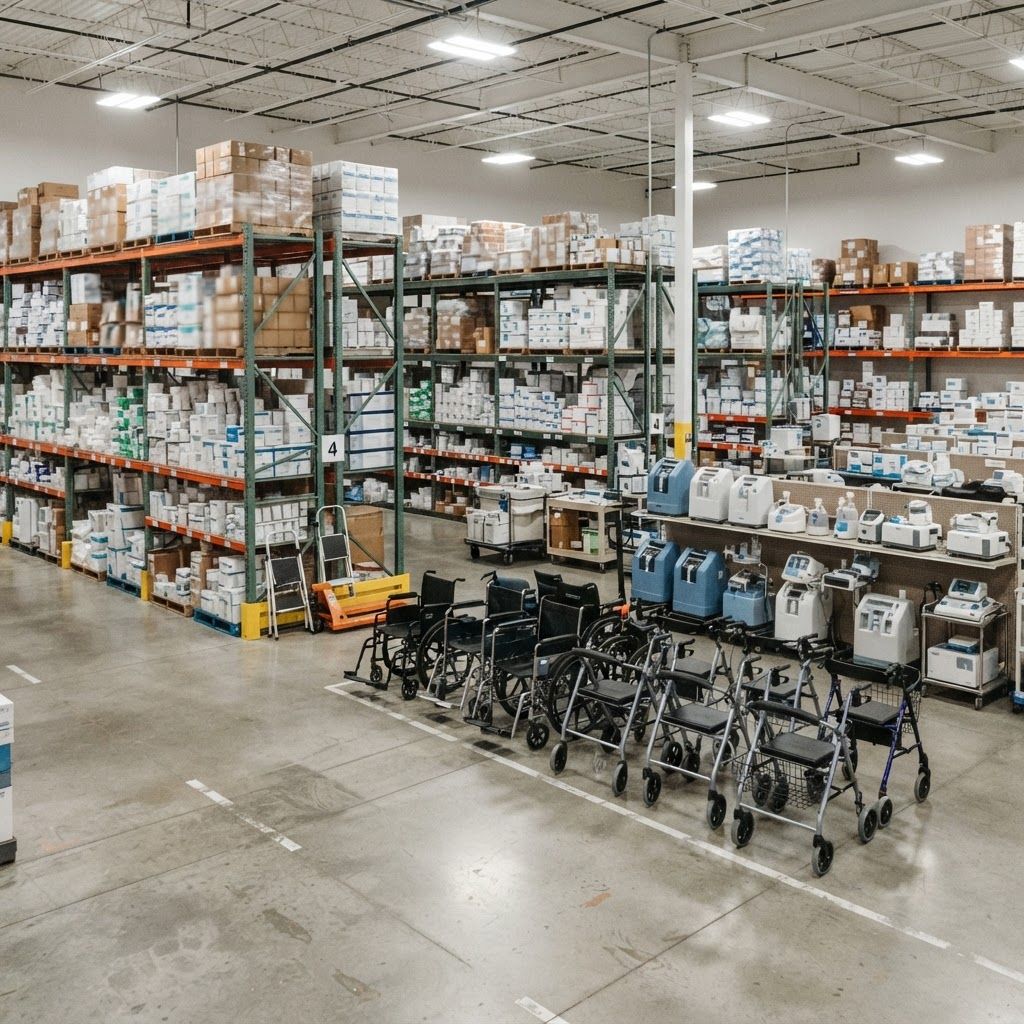
St. Louis occupies an unusually important place in American healthcare logistics. The region is home to major hospital systems, a dense cluster of medical device manufacturers, and one of the country's most significant plant and life sciences corridors. That ecosystem has produced a mature medical supply sector serving three very different customers at once: large health systems buying by the pallet, independent clinics managing tight inventories, and families arranging equipment for a loved one recovering at home. Understanding which type of supplier you are actually dealing with is the first step to getting the right product at the right price.
Types of Medical Supply Providers
Durable medical equipment providers, commonly called DME suppliers, handle wheelchairs, hospital beds, walkers, oxygen concentrators, CPAP machines, and other reusable devices, and they typically bill insurance directly. Distributors focus on consumable volume: gloves, gowns, syringes, wound care, and diagnostics sold to clinics and facilities. Specialty suppliers concentrate on narrow categories such as orthotics and prosthetics, respiratory therapy, or ostomy and urology products, and they usually employ clinically trained fitters. Home medical equipment retailers serve walk-in consumers who want to see and test a product before buying. Many companies blend these models, but their core competency shows up in delivery speed, insurance expertise, and service quality.
The 10 Best Medical Supply Companies in St. Louis
1. Rotech Healthcare
Rotech is a major national home medical equipment provider with a substantial St. Louis presence, and its strength is respiratory care. Oxygen therapy, CPAP and BiPAP setup, nebulizers, and ongoing supply replenishment are handled with the insurance documentation experience that trips up smaller operators.
2. Lincare
Also focused on home respiratory and sleep therapy, Lincare provides equipment delivery, in-home setup, patient education, and routine resupply. Its local branches are a common referral destination for pulmonologists and sleep clinics across the metro.
3. Advacare Home Services
Advacare covers a broad slate of home medical equipment including mobility devices, bathroom safety products, hospital beds, and respiratory supplies. Families discharging a patient from the hospital often appreciate the coordinated delivery and setup process.
4. Medline Industries St. Louis Distribution
Medline is one of the largest medical supply manufacturers and distributors in North America, and its regional distribution capability serves hospitals, surgery centers, and long-term care facilities. For facility buyers, the value proposition is breadth of catalog plus supply chain reliability.
5. Henry Schein Medical
Henry Schein supports physician practices, dental offices, and outpatient clinics with consumables, small equipment, and practice-level ordering systems. Its account representatives are known for helping smaller practices standardize purchasing and reduce waste.
6. McKesson Medical-Surgical
McKesson serves the alternate-site market, including physician offices, home care agencies, and long-term care operators. Its logistics network and analytics tools make it a common choice for organizations managing multiple locations and needing predictable fulfillment.
7. Binson's Home Health Care Centers
Binson's operates full retail showrooms alongside its home delivery business, which is genuinely useful for products that require fit and feel, such as wheelchairs, cushions, compression garments, and bracing. Staff can walk customers through insurance coverage on the spot.
8. Hanger Clinic
Hanger specializes in orthotics and prosthetics, an area where clinical skill matters more than catalog size. Certified practitioners handle evaluation, custom fabrication, fitting, and long-term adjustment, supporting patients through amputation recovery and complex bracing needs.
9. Apria Healthcare
Apria delivers home respiratory therapy, sleep apnea equipment, negative pressure wound therapy, and mobility products. Its scale allows for structured resupply programs and integrated communication with prescribing physicians.
10. St. Louis Medical Supply
A locally focused independent provider, St. Louis Medical Supply competes on responsiveness and personal service. Customers frequently cite short wait times, direct phone access to knowledgeable staff, and willingness to accommodate unusual or urgent requests.
How to Choose a Medical Supply Partner
For individuals and families, insurance participation is the deciding factor. Confirm the supplier is in network with your specific plan, ask whether they bill insurance directly or require upfront payment and reimbursement, and get the expected out-of-pocket amount in writing. Then ask about service logistics: How quickly can equipment be delivered after a prescription is received? Is in-home setup and training included? Who handles repairs, and is a loaner provided during service? For facility buyers, focus on fill rates, backorder communication, contract pricing transparency, and whether the distributor can support par-level management and standardization across sites.
Trends Reshaping Medical Supply in the Region
Three shifts stand out. First, care is moving into the home. Hospital-at-home programs and earlier discharge protocols are driving demand for sophisticated home equipment and remote monitoring. Second, supply chain resilience has become a purchasing criterion, not an afterthought. Buyers now ask about domestic sourcing, safety stock, and secondary vendors in ways they rarely did before recent global disruptions. Third, digital ordering and automated resupply are becoming standard, with connected CPAP and glucose monitoring devices triggering replacement shipments based on actual usage data rather than fixed calendars.
Final Thoughts
The best medical supply company for a St. Louis hospital is rarely the best one for a family setting up a bedroom for home recovery. Match the provider to your role: choose clinical expertise and insurance fluency for individual patient needs, and choose logistics strength and contract clarity for facility purchasing. In both cases, responsiveness when something goes wrong is the truest measure of a supplier's value.