
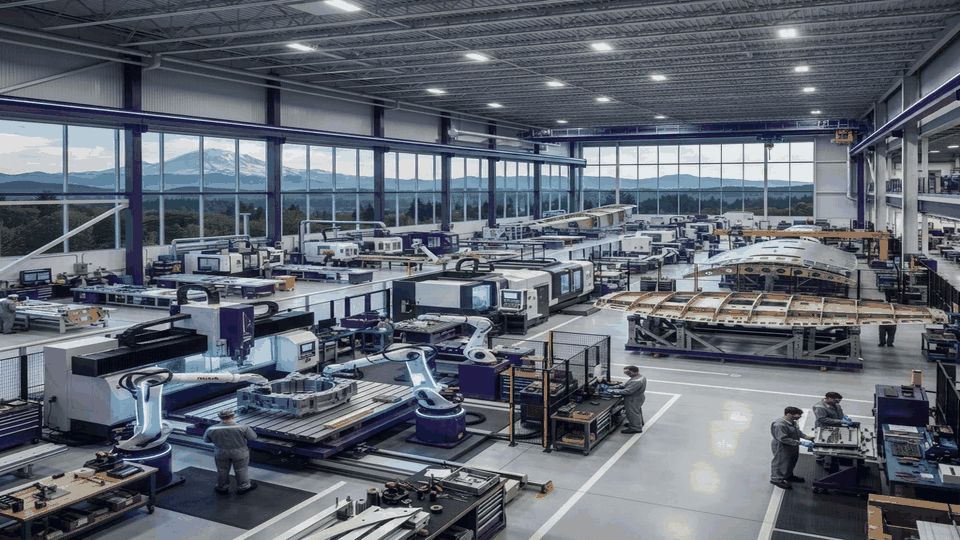
Washington’s Machinery Manufacturing Advantage
Washington State combines deep aerospace expertise, major ports, productive farmland, and a growing advanced-manufacturing workforce. That mix has created demand for everything from precision tooling and food-processing systems to forestry equipment and heavy-duty truck components. The best supplier depends on the application, but buyers should consistently assess engineering support, quality systems, production capacity, service coverage, and experience in regulated industries.
1. PACCAR
Bellevue-based PACCAR is one of Washington’s best-known industrial manufacturers. Through brands including Kenworth and Peterbilt, it develops heavy-duty commercial vehicles, powertrain technologies, and related systems used in freight, construction, and vocational work. Kenworth’s long-standing presence in the Seattle area gives the company especially strong regional significance. Its scale, dealer support, engineering investment, and focus on connected and lower-emission transportation distinguish it.
2. Genie
Genie, a Terex brand with roots and operations in Redmond and Moses Lake, produces aerial work platforms used on construction sites, in warehouses, and across industrial facilities. Its product range includes boom lifts, scissor lifts, and material-handling equipment. Buyers value Genie for broad equipment choices, recognizable design standards, and an extensive service ecosystem. The company’s Washington history also reflects the state’s ability to turn practical engineering ideas into global machinery brands.
3. Key Technology
Walla Walla-based Key Technology designs sorting, conveying, and processing equipment for food producers. Its optical sorting systems help processors identify defects and foreign material while improving consistency and throughput. The company is particularly relevant to Washington’s potato, vegetable, fruit, and packaged-food industries. Integrated controls, application testing, and knowledge of sanitary production environments make Key Technology a notable option for processors modernizing lines.
4. Alliance Machine Systems International
Based in Spokane, Alliance Machine Systems International serves corrugated packaging operations with automation and material-handling machinery. Its systems help box plants move, bundle, stack, and manage finished products more efficiently. Alliance stands out for engineering around complete production workflows rather than isolated pieces of equipment. This approach can help customers reduce manual handling, improve plant safety, and create steadier output.
5. Pearson Packaging Systems
Spokane-based Pearson Packaging Systems develops secondary packaging automation, including case erectors, packers, sealers, and robotic cells. Its machinery supports food, beverage, consumer goods, and other high-volume industries. Pearson’s emphasis on modular automation and lifecycle support is useful for businesses that need to expand gradually or integrate new machinery into an existing line. Robotics and data-enabled service remain important parts of its direction.
6. SCAFCO Grain Systems
SCAFCO Grain Systems in Spokane manufactures grain storage bins, handling equipment, and related agricultural infrastructure. Its products support farms, elevators, and commercial storage projects in the Pacific Northwest and beyond. Engineering for capacity, weather exposure, safe handling, and long service life is central to this market. The company benefits from proximity to Eastern Washington’s major grain-growing region and the export routes that connect it to global buyers.
7. Columbia Machine
Vancouver-based Columbia Machine is known for concrete product equipment, palletizing systems, and factory automation. Its machinery serves building-material producers and other operations that require reliable repetitive handling. Columbia combines equipment engineering with controls and production-line integration, helping customers address labor constraints and throughput goals. Its long operating history and international reach reinforce its standing among Washington industrial manufacturers.
8. Keltic Engineering
Keltic Engineering in Seattle provides precision machining and manufacturing for demanding aerospace and commercial applications. The company’s capabilities are suited to buyers requiring close tolerances, controlled processes, and careful documentation. Located within the Puget Sound aerospace cluster, Keltic can draw on a regional network of finishing, testing, and specialty manufacturing resources. Responsiveness and experience with complex parts are important differentiators for smaller precision suppliers.
9. Nicholson Manufacturing
Located in the Seattle area, Nicholson Manufacturing produces machinery for sawmills and wood-processing operations, particularly equipment used in log preparation and debarking. Its specialization matters in a region with a deep forestry and timber-products heritage. Customers in this category typically prioritize durability, maintenance access, uptime, and the ability to process variable raw material. Nicholson’s focused industry experience supports those needs.
10. Idaho Forest Group’s Washington Equipment Operations
Industrial operations around Washington’s timber corridor also rely on machinery expertise associated with major forest-products producers such as Idaho Forest Group, which operates in the region and continually invests in mill technology. While best known as a lumber producer, its Washington footprint illustrates how sophisticated machinery, scanning, optimization, and material handling are embedded in modern manufacturing.
How to Select a Machinery Partner
Start with a detailed requirement covering materials, cycle time, tolerances, plant conditions, safety expectations, and downstream integration. Ask candidates about commissioning, operator training, replacement parts, remote diagnostics, and preventive maintenance. Washington buyers should also consider freight access and technician travel from Puget Sound, Spokane, Vancouver, or central agricultural regions. A strong machinery partner does more than deliver hardware: it helps validate the process, documents performance, trains the workforce, and supports the equipment throughout its useful life.