
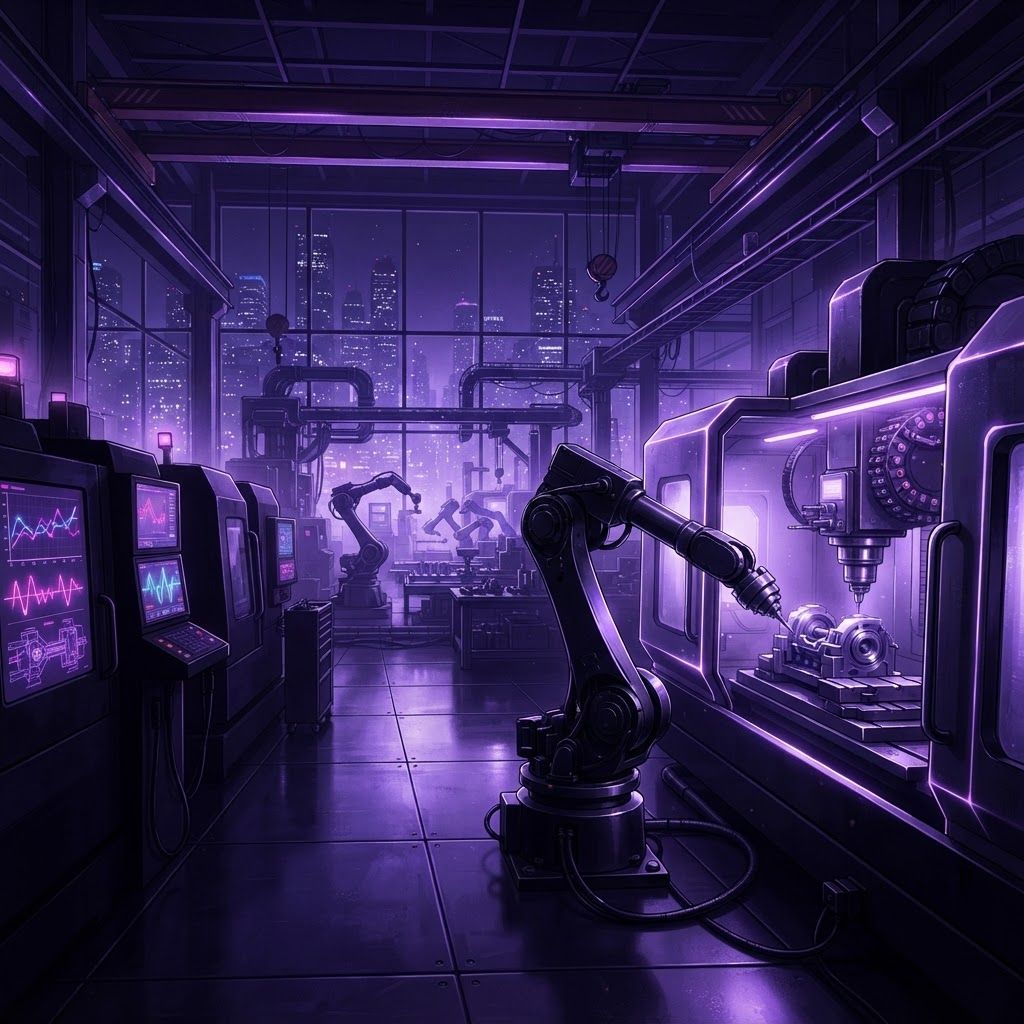
Why Toledo Became a Machinery Manufacturing Center
Toledo sits at a rare intersection of geography and industrial history. The city grew up around the western edge of Lake Erie, where lake freighters, four major rail corridors, and the crossing of Interstates 75 and 80/90 made it inexpensive to bring in raw steel and ship out finished equipment. That logistical advantage attracted glass, automotive, and heavy fabrication work in the late nineteenth and early twentieth centuries, and machinery manufacturing followed naturally: the factories building cars and bottles needed presses, conveyors, ovens, molds, and automation, and local shops learned to build them.
The result is a machine-building ecosystem that is unusually deep for a metropolitan area of Toledo's size. Within a short drive of downtown you can find foundries, precision machining shops, gear cutters, hydraulic specialists, controls integrators, and full-line original equipment manufacturers. That density matters to buyers because a machine builder rarely works alone. When a press builder can source castings, weldments, and electrical panels from suppliers within thirty minutes, lead times shrink and engineering changes stop being expensive surprises.
The Ten Machinery Manufacturers That Define the Market
The companies below represent the range of machinery capability found in and around Toledo, from global equipment brands to specialized custom builders.
1. Libbey Machine Works Tradition
Toledo's glass heritage produced some of the most sophisticated forming machinery in the world, and the engineering culture behind glass container equipment still influences local machine design. Glass forming demands machines that run continuously at high temperatures with tolerances measured in thousandths of an inch. Builders shaped by that discipline tend to over-engineer bearings, cooling, and guarding, and buyers in other industries benefit from the habit.
2. Norplas and Automotive Tooling Suppliers
The automotive assembly presence in the region created a tier of tooling and equipment makers that specialize in injection molds, trim fixtures, and automated assembly cells. Their differentiator is validation discipline: automotive customers require documented process capability studies before a machine is accepted, so these builders arrive with measurement plans, not just drawings.
3. Precision Machining and Contract Fabricators
A large group of independent job shops across Lucas and Wood counties supply machined components, weldments, and subassemblies to machine builders. Many operate multi-axis CNC centers and offer in-house heat treating and inspection. For a buyer, these shops are the fastest path to replacement parts for aging equipment when original documentation has been lost.
4. Hydraulic and Fluid Power Specialists
Presses, injection molders, and material handling equipment all depend on fluid power. Toledo-area hydraulic houses build and rebuild power units, manifolds, and cylinders, and increasingly convert older hydraulic systems to servo-electric drives to reduce energy consumption and eliminate oil handling.
5. Conveyor and Material Handling Builders
Warehouse and distribution growth along the I-75 corridor has driven demand for belt, roller, and overhead conveyors, palletizing cells, and sortation. Local builders differentiate by designing for retrofit, fitting new lines into buildings that were never planned for automation.
6. Industrial Furnace and Thermal Equipment Makers
Heat treating, curing, drying, and annealing equipment is a regional specialty rooted in glass and metals. These builders bring combustion engineering expertise and, more recently, electrification options that help customers reduce emissions.
7. Packaging Machinery Companies
Food processing and consumer goods plants across northwest Ohio support fillers, cappers, labelers, case packers, and shrink systems. The strongest packaging builders in the market focus on quick changeover, since brands now run more package formats in smaller batches.
8. Controls and Automation Integrators
Modern machinery is largely software, and integrators supply the programmable logic controllers, human machine interfaces, servo systems, safety circuits, and data connectivity that turn mechanical assemblies into production assets. Many Toledo integrators also handle machine safety assessments and risk reduction.
9. Robotics and Machine Vision Providers
Robotic welding, palletizing, machine tending, and vision inspection cells are among the fastest growing categories. Providers in the region typically build turnkey cells with guarding, tooling, and end effectors rather than selling robots alone.
10. Rebuild and Retrofit Houses
Rebuilding a well-built machine often delivers better return than replacing it. Toledo supports a set of firms that strip equipment to the frame, remachine ways and bores, and install modern drives and controls, extending service life by decades at a fraction of new equipment cost.
Capabilities That Separate Strong Builders from Average Ones
Buyers evaluating machinery manufacturers should look past the quoted price and examine engineering depth. Does the builder produce its own mechanical and electrical design in house, or subcontract it? Are simulation tools used to verify cycle time and structural loads before steel is cut? Is there a documented factory acceptance test protocol?
Service is the second differentiator. Machinery generates value only while it runs, so the availability of spare parts, remote diagnostics, and field technicians matters more over a machine's life than the initial capital figure. The best regional builders publish parts lists, stock long-lead components, and offer preventive maintenance agreements.
Industry Trends Shaping Toledo Machine Building
Several forces are reshaping the market. Reshoring and supply chain resilience have increased domestic equipment demand, particularly for automation that offsets tight labor availability. Energy costs have pushed customers toward servo-electric actuation, variable frequency drives, and heat recovery. Data connectivity is now expected rather than optional, with machines reporting availability, performance, and quality metrics to plant systems.
Workforce development is the quiet story behind all of it. Regional community colleges and apprenticeship programs feed machinists, welders, and controls technicians into the industry, and builders that invest in training tend to hold schedule commitments better than those that do not.
How to Choose the Right Partner
Start by writing a specification that describes the outcome you need rather than the machine you imagine. State throughput, part variation, uptime expectation, footprint limits, and the standards you must satisfy. Ask each candidate to explain the riskiest part of the project and how they intend to control it. Visit the shop floor, look at work in progress, and talk to the people who will actually build your equipment.
Finally, weigh total cost of ownership. Energy use, changeover time, spare parts pricing, and expected service intervals often outweigh a modest difference in purchase price within the first two or three years of operation.
Conclusion
Toledo's machinery manufacturers offer a combination that is genuinely difficult to find elsewhere: heavy industrial heritage, a dense supplier network, and engineering talent trained on demanding applications. Whether the requirement is a single custom fixture, a full automated line, or a rebuild of equipment that has already earned its keep, the regional supply base has the depth to support it.