
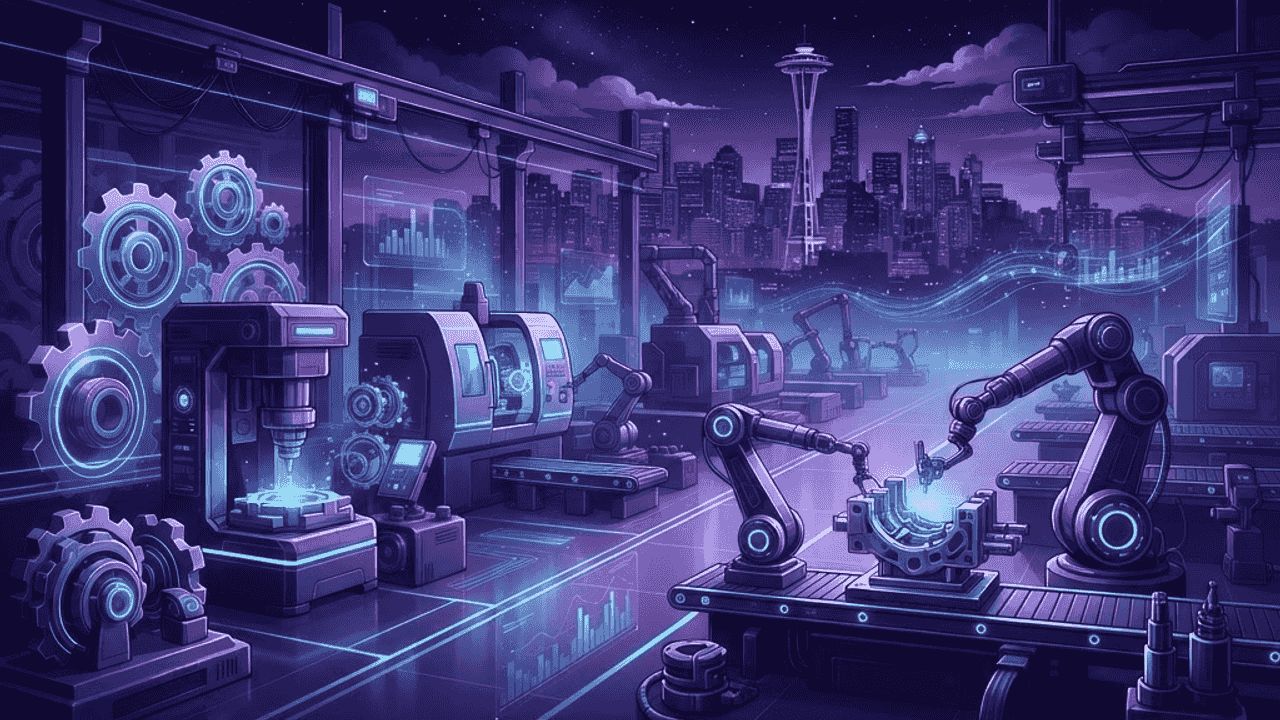
The Backbone of Pacific Northwest Industry
Machinery manufacturing is one of the quiet engines of Seattle's industrial economy. From heavy equipment used in construction and marine operations to precision automation systems for factories, the region's machinery producers supply the tools that keep other industries running. Seattle's deep manufacturing heritage, rooted in aerospace and maritime commerce, has fostered a community of engineers and machinists capable of building sophisticated, durable equipment.
These manufacturers serve a broad customer base that includes food processing, forestry, shipping, agriculture, and general industrial operations. Their work ranges from custom one-off machines engineered to solve specific challenges to standardized product lines produced in volume. This diversity gives the region a resilient and adaptable machinery sector.
Types of Machinery Manufactured in Seattle
The machinery produced in Seattle falls into several broad categories. Industrial automation systems, including conveyors, robotic cells, and material handling equipment, help factories improve efficiency and safety. Heavy machinery for construction, marine, and forestry applications is engineered to withstand demanding environments and heavy loads.
Precision machinery and specialized equipment represent another important segment. Manufacturers in this space build custom machines for packaging, processing, and testing, often integrating advanced controls and sensors. There are also producers of machine components and subassemblies that supply larger equipment builders, forming an interconnected regional supply chain.
Hallmarks of a Top Machinery Manufacturer
Excellence in machinery manufacturing rests on engineering capability, build quality, and reliability. The best manufacturers employ experienced mechanical and electrical engineers who can design robust systems tailored to specific applications. Precision machining, quality welding, and rigorous assembly standards ensure that finished equipment performs dependably over years of use.
Support after the sale is equally important. Leading firms provide installation assistance, training, spare parts, and responsive service to minimize downtime. This lifecycle support is often what distinguishes a trusted long-term partner from a one-time vendor, particularly for equipment that is critical to a customer's operations.
The Push Toward Automation and Smart Machinery
Automation is transforming the machinery landscape in Seattle and beyond. Manufacturers are increasingly integrating programmable controls, sensors, and connectivity into their equipment, enabling remote monitoring, predictive maintenance, and data-driven optimization. These smart machines help customers reduce downtime, improve throughput, and gather insights that inform better decision-making.
Robotics and flexible automation are also on the rise, allowing manufacturers to build equipment that adapts to changing production needs. For industries facing labor shortages and rising costs, this shift toward intelligent machinery offers a path to greater productivity and competitiveness.
Sustainability and Efficiency
Energy efficiency and sustainability have become important considerations in machinery design. Seattle manufacturers are engineering equipment that consumes less power, reduces waste, and operates more cleanly. Efficient motors, optimized hydraulics, and smart control strategies all contribute to lower operating costs and reduced environmental impact.
This focus aligns with the priorities of many Pacific Northwest customers who value sustainable operations. By designing machinery with efficiency in mind, manufacturers help their clients meet environmental goals while improving the bottom line.
Why Local Machinery Manufacturers Matter
Partnering with a local machinery manufacturer offers practical advantages. Proximity makes it easier to collaborate on custom designs, conduct acceptance testing, and receive prompt service. When a critical machine needs repair or adjustment, a nearby manufacturer can respond quickly, reducing costly downtime.
Local manufacturers also understand the specific needs and conditions of Pacific Northwest industries, from marine environments to food processing regulations. This regional expertise translates into equipment that is well suited to its intended use, backed by a team that speaks the customer's language.
Selecting the Right Machinery Partner
To choose the right machinery manufacturer, begin by clearly defining your application, throughput needs, and operating environment. Assess a manufacturer's engineering depth, relevant project experience, and quality processes. Ask about service and support capabilities, including availability of spare parts and technicians. A facility visit can provide valuable insight into a manufacturer's capabilities and culture.
Total Cost of Ownership and Long-Term Value
When evaluating machinery, the purchase price tells only part of the story. Experienced buyers focus on total cost of ownership, which includes energy consumption, maintenance, downtime, and the equipment's expected service life. A machine that costs more upfront but runs efficiently and reliably for decades often delivers far greater value than a cheaper alternative that requires frequent repairs. Seattle manufacturers that engineer durable, serviceable equipment help customers minimize these lifetime costs. Availability of spare parts and knowledgeable service technicians also affects long-term value, as prompt repairs keep production running. Some manufacturers offer maintenance contracts and remote monitoring that catch problems before they cause failures. By considering the complete picture rather than the initial price alone, businesses can make smarter investments in machinery that supports their operations dependably and economically over many years of demanding use.
Conclusion
Seattle's machinery manufacturers play an essential role in supporting the region's industrial economy. With expertise spanning automation, heavy equipment, and precision systems, they offer capable partners for businesses seeking reliable, well-engineered machinery. By prioritizing engineering strength, build quality, and dependable support, companies can find manufacturers ready to build equipment that drives their operations forward for years to come.