
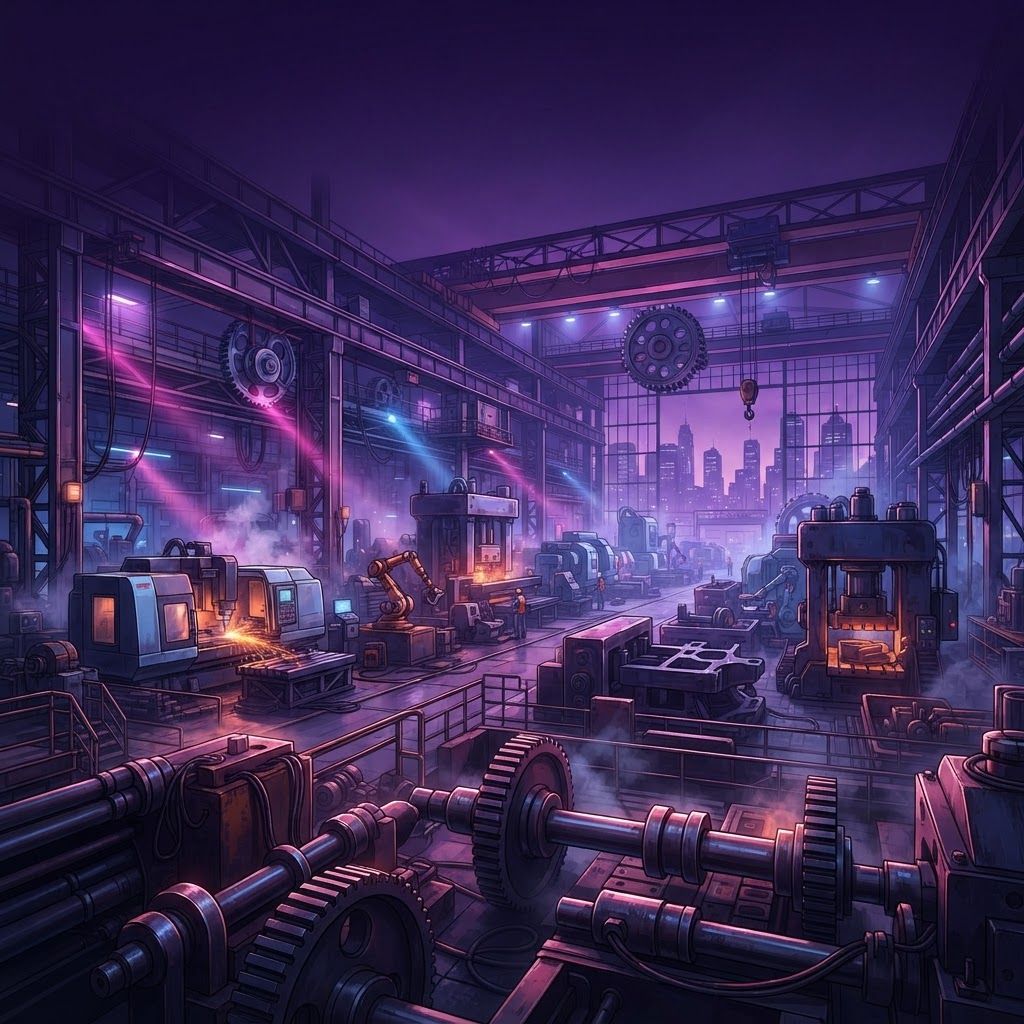
Machinery Manufacturing in Central Virginia
Machinery manufacturing rewards patience, engineering depth, and the ability to build one-of-a-kind equipment that must work on the first attempt. Richmond has developed a strong cluster of these builders, largely because the surrounding region contains such a variety of industries. Tobacco processing, pharmaceuticals, food production, paper converting, chemicals, and logistics all demand purpose-built machinery, and local companies grew up solving those problems.
The character of the sector is consultative rather than transactional. Most projects begin with a process problem, not a part number. A customer describes throughput targets, product characteristics, and space constraints, and the builder responds with concepts, layouts, and a proposal. That means selecting a machinery manufacturer is as much about engineering communication as it is about machine tools.
Core Capabilities That Matter
Look first for integrated engineering: mechanical design, controls programming, and electrical design working together under one roof. Projects fail most often at the seams between disciplines, and companies that subcontract controls to an outside party often struggle during commissioning. Three-dimensional modeling with interference checking, load calculations, and simulation of motion sequences all reduce risk before metal is cut.
Fabrication and machining capacity in house shortens schedules and improves accountability. Ask about welding certifications, machining envelope, and whether the builder can assemble and run the full machine before shipment. Factory acceptance testing, where the equipment is proven with customer product on the builder's floor, is one of the strongest predictors of a smooth installation.
The Top 10 Machinery Manufacturers in Richmond
1. James River Machine Works
James River Machine Works is one of the region's most versatile custom equipment builders, producing conveyors, indexing systems, and complete process lines. Its combination of large-envelope machining, structural fabrication, and in-house controls engineering allows it to take full responsibility for a project. Customers consistently mention thorough documentation, including as-built drawings and spare parts lists delivered at handover.
2. Dominion Industrial Equipment
Dominion Industrial Equipment focuses on material handling: palletizers, lift and transfer units, pneumatic conveying, and bulk handling systems. Its engineers specialize in difficult materials such as powders, granules, and fibrous products where standard conveyors fail. Retrofit work is a strength, and the company is known for fitting new equipment into crowded legacy plants.
3. Capital Packaging Machinery
Capital Packaging Machinery designs and builds filling, capping, labeling, and cartoning equipment for food, beverage, and personal care producers. Sanitary design principles, washdown-rated construction, and validation support make it a strong fit for regulated production. Changeover speed is a design priority, reflecting customers who run many product variants.
4. Shockoe Automation Systems
Shockoe Automation Systems is an integrator and builder specializing in robotic cells, vision inspection, and end-of-line automation. It designs custom grippers and fixtures, programs the robots, and validates cycle times before shipment. Manufacturers pursuing labor reduction and consistency improvements form the bulk of its customer base.
5. Tredegar Heavy Machinery
Tredegar Heavy Machinery builds large-scale equipment including presses, mixers, shredders, and process vessels. Structural analysis, heavy welding capability, and crane capacity distinguish it from lighter fabricators. Recycling, mining support, and building products customers rely on its ability to build machinery that endures brutal duty cycles.
6. Fall Line Precision Machinery
Fall Line Precision Machinery occupies the opposite end of the spectrum, producing laboratory automation, medical device assembly equipment, and precision test stands. Tight tolerances, motion control expertise, and clean design practices define its work. Documentation packages are prepared with validation requirements in mind.
7. Hanover Agricultural Machinery
Hanover Agricultural Machinery manufactures implements and processing equipment for farms and agribusiness across Virginia, including grading, sorting, and handling systems. Its designs favor field serviceability, using standard components that farmers can source locally. Seasonal responsiveness during planting and harvest windows is part of its reputation.
8. Midlothian Machine and Tool
Midlothian Machine and Tool combines contract machining with machine building, making it a practical partner for companies that need both components and complete assemblies. Quick-turn capability and a well-equipped inspection room support customers with urgent breakdown work as well as planned projects.
9. Broad Street Process Systems
Broad Street Process Systems builds skidded process equipment, including piping systems, heat transfer skids, and dosing units. Delivering pre-assembled and pre-tested skids dramatically reduces on-site construction time, an approach that appeals to chemical and pharmaceutical clients working within tight shutdown windows.
10. Chesterfield Equipment Rebuilders
Chesterfield Equipment Rebuilders specializes in machinery rebuilding, retrofitting, and control system modernization. For plants running dependable but aging equipment, rebuilding often delivers most of the benefit of new machinery at a fraction of the cost. The company documents each rebuild thoroughly, restoring machines to known baselines.
Trends in Machinery Manufacturing
Automation demand continues to rise as manufacturers confront persistent labor shortages, pushing builders toward robotics, vision systems, and equipment that requires minimal operator intervention. Connected machinery is now expected rather than optional; buyers want data on cycle times, downtime causes, and energy consumption available to plant systems.
Predictive maintenance is another growth area. Vibration sensors, current monitoring, and thermal measurement built into new equipment let plants intervene before failures occur. Energy efficiency also increasingly influences purchase decisions, with servo drives, regenerative systems, and optimized pneumatics reducing lifetime operating cost.
How to Evaluate a Machinery Builder
Ask for references on projects of comparable scope, then actually call them and ask about commissioning and after-sales support rather than only the sale. Review the proposal for clarity on scope boundaries, utilities, installation responsibility, and acceptance criteria. Vague proposals become expensive change orders.
Confirm long-term support: parts availability, response times, remote diagnostic capability, and operator training. Custom machinery may run for twenty years, so the builder's stability and willingness to support legacy equipment matter enormously. Finally, insist on factory acceptance testing with your own product wherever practical.
Final Thoughts
Richmond's machinery manufacturers offer engineering depth across packaging, material handling, heavy process equipment, precision automation, and rebuilding services. The right choice depends on matching your process challenge to a builder with genuine experience in that domain. Invest time in the specification phase, evaluate support capability alongside price, and the equipment you commission will pay back for years.