
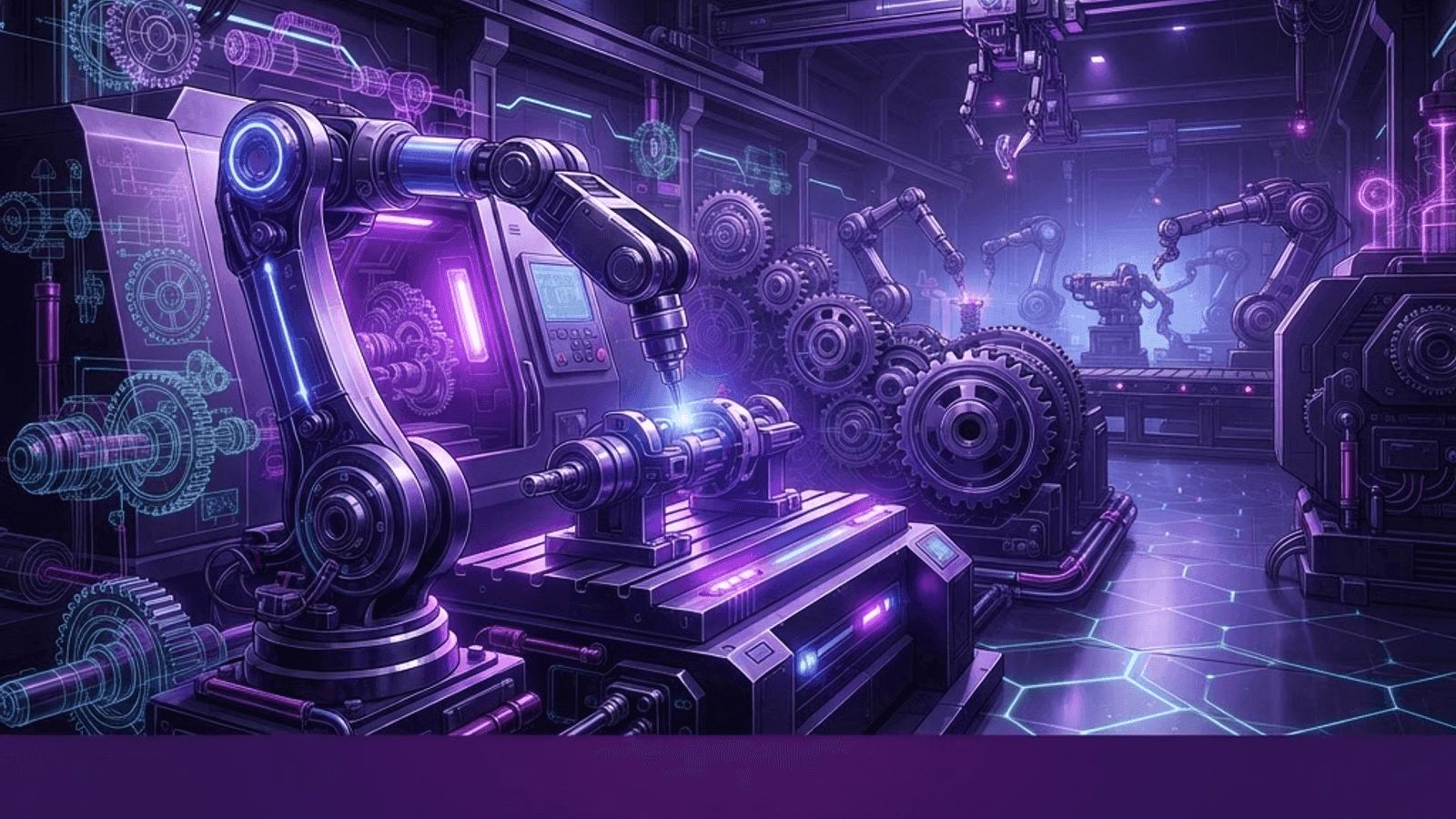
Machinery Manufacturing in the Region
Machinery manufacturers occupy a foundational position in the industrial economy. The equipment they build enables production across food processing, pharmaceuticals, packaging, plastics, construction materials, and countless other sectors. In the area serving Ramapo, this industry consists of custom machine builders, precision machine shops, automation integrators, fabricators, and suppliers of replacement parts and rebuild services.
The regional strength lies in engineered-to-order work. Companies here excel at solving specific production problems with purpose-built equipment rather than producing standardized machines at scale, a model that rewards engineering talent and craftsmanship over sheer volume capacity.
Custom Machine Building
Custom machinery projects begin with a production challenge. A manufacturer needs to assemble a product faster, inspect parts more reliably, handle material more safely, or package output more efficiently. Machine builders translate that need into a functional specification, then design, fabricate, assemble, program, and commission a solution.
The process involves mechanical design, electrical schematic development, control programming, pneumatic and hydraulic system design, and safety engineering. Modern builds rely heavily on three-dimensional modeling and simulation, which allows motion and interference to be verified before any metal is cut.
Acceptance testing is a critical milestone. Factory acceptance testing at the builder's facility demonstrates function before shipment, while site acceptance testing verifies performance under actual production conditions. Well-structured contracts define measurable acceptance criteria covering throughput, uptime, and quality rates.
Automation and Robotics Integration
Automation integration has become one of the fastest-growing segments. Integrators deploy industrial robots for material handling, palletizing, machine tending, welding, and assembly. Collaborative robots designed to work safely alongside people have lowered the barrier for smaller manufacturers, enabling automation of tasks that never justified traditional caged systems.
Vision systems add inspection and guidance capability, identifying defects, verifying assembly, reading codes, and locating parts presented in varying positions. Combined with programmable controllers and human-machine interfaces, these systems deliver consistency that manual processes cannot match.
Successful integration depends as much on process understanding as on technology. The strongest integrators study the existing operation carefully, identify where variation originates, and design solutions that address root causes rather than automating an inefficient process.
Precision Machining and Fabrication
Machine shops supporting this sector produce components to tight tolerances using multi-axis milling and turning centers, grinding, and electrical discharge machining. Materials range from common steels and aluminum to stainless alloys, tool steels, and engineering plastics.
Fabrication capabilities include laser and waterjet cutting, forming, welding, and finishing. Weldment quality matters significantly in machine frames, where distortion or inadequate stiffness undermines precision throughout the equipment's life.
Inspection resources such as coordinate measuring machines and optical comparators verify conformance, and documented inspection reports accompany parts destined for critical applications.
Rebuilds, Retrofits, and Service
Not every capital need requires new equipment. Rebuilding existing machinery often delivers comparable capability at lower cost and shorter lead time. Services include mechanical restoration, control system modernization replacing obsolete components, safety upgrades bringing older equipment to current standards, and performance enhancements.
Control retrofits are especially common, since mechanical structures frequently outlast their electronics by decades. Replacing legacy controls with current platforms restores parts availability, improves diagnostics, and enables data collection that older systems could not provide.
Ongoing service support including preventive maintenance, spare parts supply, and emergency response is a decisive factor for buyers. Downtime costs frequently exceed equipment cost differences by a wide margin.
Safety and Compliance
Machinery safety is governed by recognized standards addressing risk assessment, guarding, control reliability, emergency stops, and energy isolation. Competent builders conduct formal risk assessments, document hazard mitigation, and provide safety-rated control architecture appropriate to the assessed risk level.
Electrical construction must satisfy applicable standards, and equipment often requires field evaluation or listing before it may be operated. Builders experienced in these requirements save customers costly retrofits after installation.
Industry 4.0 and Connected Equipment
Machinery increasingly generates data. Sensors monitor vibration, temperature, cycle counts, and energy consumption, feeding analytics that predict maintenance needs before failures occur. Connectivity allows remote diagnostics, reducing service response times and travel costs.
Buyers should evaluate what data equipment produces, how it can be accessed, and whether integration with existing production systems is supported. Cybersecurity deserves attention as well, since connected industrial equipment expands the attack surface of a facility network.
Choosing a Machinery Manufacturer
Look for demonstrated experience with similar applications. A builder who has solved comparable problems brings hard-won knowledge that shortens development and reduces risk.
Assess engineering depth by reviewing how the company approaches specification development. Strong partners ask probing questions about product variation, throughput requirements, changeover frequency, operator interaction, and maintenance access.
Evaluate project management practices. Custom machinery projects involve long timelines and many dependencies, and disciplined scheduling, milestone reporting, and change control prevent the delays that plague poorly managed builds.
Confirm documentation deliverables including mechanical drawings, electrical schematics, bills of material, control program source, operation manuals, and spare parts lists. Inadequate documentation cripples long-term maintainability.
Finally, weigh service capability and geographic proximity. Equipment that cannot be supported promptly becomes a liability regardless of how well it was built.
Final Thoughts
Machinery manufacturers serving Ramapo provide engineering-intensive capability that enables productivity across the regional industrial base. The most successful equipment projects result from thorough specification, collaborative design, realistic scheduling, and a long-term relationship extending well beyond commissioning. Choose a builder who treats your production goals as the measure of success rather than simply delivering hardware.