
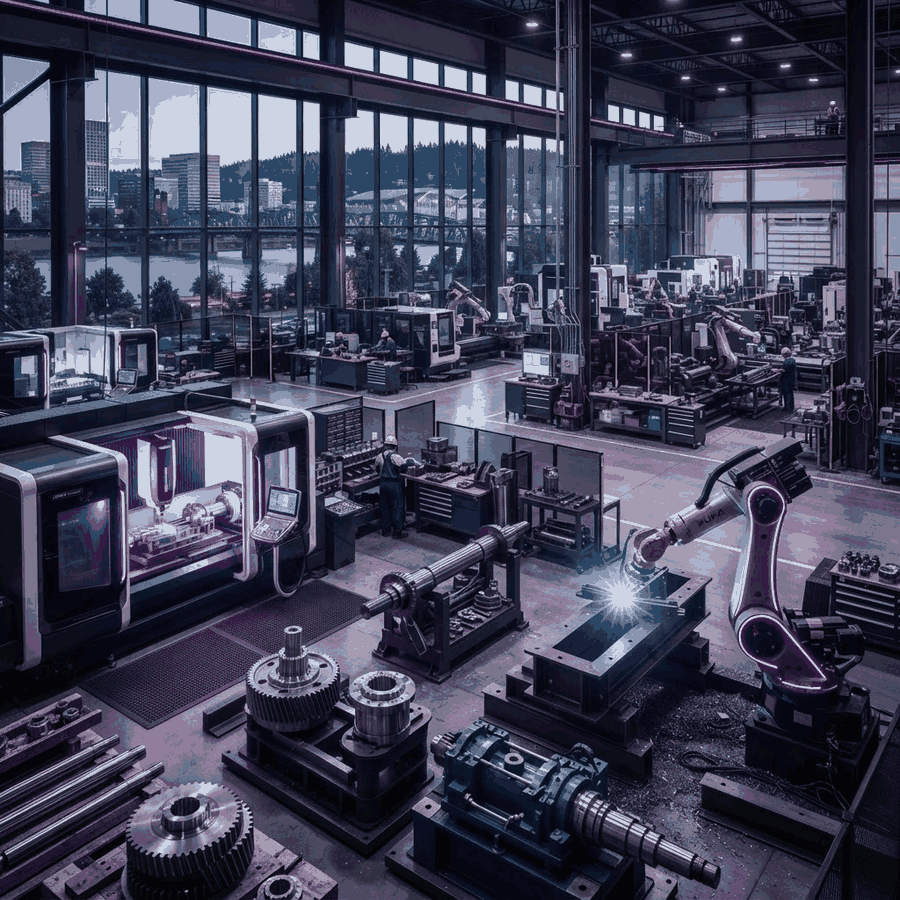
Portland's Machinery Manufacturing Tradition
Machinery manufacturing has long been a cornerstone of Portland's industrial economy, supporting industries ranging from agriculture and forestry to food processing and advanced manufacturing. The city's machinery producers are known for building durable, precise, and reliable equipment that stands up to demanding operating conditions. This reputation for quality has made Portland a trusted source for both custom machinery and standardized industrial equipment.
The strength of the sector comes from a deep pool of skilled machinists, engineers, and fabricators who bring decades of combined experience to their work. Combined with modern manufacturing technology, this expertise allows local firms to tackle complex projects that require tight tolerances and rigorous quality control.
Understanding Machinery Manufacturing Services
The best machinery manufacturers in Portland offer comprehensive services that span the entire production lifecycle. These typically include design and engineering, CNC machining, welding and fabrication, assembly, and testing. Many firms also provide maintenance, repair, and retrofitting services, helping clients extend the life of their existing equipment.
When selecting a machinery manufacturer, businesses should evaluate the company's engineering capabilities, machining precision, and experience with their particular industry. The ability to handle both one-off custom builds and repeatable production runs is a valuable indicator of a versatile, capable partner.
The Region's Standout Manufacturers
Portland is home to several highly regarded machinery manufacturers. Cascade Machine Works is known for its precision CNC machining and custom equipment builds, serving clients across multiple industries. Willamette Industrial Systems specializes in heavy machinery for food processing and packaging, an important sector in the region's economy.
Rose City Fabrication delivers custom conveyor systems and material handling equipment, while Bridgetown Machinery focuses on automation and robotic integration for modern production facilities. Pacific Precision Manufacturing and Northwest Equipment Group also rank among the leaders, offering expertise in specialized machinery, tooling, and industrial automation solutions.
Automation and Advanced Manufacturing Trends
The machinery manufacturing sector in Portland is embracing automation and smart manufacturing at an accelerating pace. Robotics, computer-controlled machining, and integrated sensor systems are increasingly common, allowing manufacturers to improve precision, reduce waste, and boost productivity. These advancements benefit clients by delivering higher-quality equipment with more consistent performance.
Another notable trend is the integration of custom machinery with digital monitoring systems. Modern equipment often includes sensors and controls that enable predictive maintenance and real-time performance tracking, helping end users minimize downtime and extend equipment life. Portland manufacturers have proven adept at incorporating these capabilities into their designs.
The Value of Local Machinery Expertise
For businesses that depend on reliable equipment, partnering with a Portland machinery manufacturer offers meaningful advantages. Local production allows for closer collaboration during the design and build process, faster support when issues arise, and easier access to maintenance and repair services. This proximity can be especially valuable for companies operating custom or specialized equipment.
Portland's machinery manufacturers combine traditional craftsmanship with modern technology to deliver equipment that meets the highest standards of quality and durability. Whether a company needs a single custom machine or a fully automated production line, the region's top manufacturers offer the expertise and reliability to get the job done. Their continued investment in advanced manufacturing ensures they will remain valuable partners well into the future.
How to Compare Portland Industry Partners
A strong shortlist starts with a clearly defined scope. Buyers should document expected quantities, material or performance specifications, target delivery dates, testing requirements, and any regulations that apply to the finished product. Sharing this information early helps prospective partners provide accurate proposals and identify technical risks before production begins. It is also useful to ask for examples of comparable work, references from established customers, and an explanation of how quality is measured at each stage.
Capacity deserves careful attention as well. A company may perform excellent prototype work but lack the equipment or staffing needed for a larger production schedule. Conversely, a high-volume operation may not be the best fit for custom, low-quantity assignments. Discussing current workload, normal lead times, backup equipment, and contingency plans provides a more realistic view of what a supplier can deliver. Buyers should also understand which operations are performed in-house and which are entrusted to outside specialists.
Price matters, but the lowest initial quote does not always represent the best value. Rework, missed deadlines, inconsistent materials, and poor communication can quickly outweigh a modest upfront saving. A thorough comparison considers total cost, including tooling, packaging, delivery, maintenance, and the likely service life of the result. Clear payment terms and a written process for approving changes help both sides avoid surprises.
Making a Confident Final Decision
Before committing to a major order, consider beginning with a sample, prototype, or limited production run. This creates an opportunity to assess workmanship, responsiveness, documentation, and delivery performance under real conditions. A facility visit can provide additional insight into organization, safety, equipment condition, and employee expertise. For Portland-area buyers, local access makes this type of hands-on evaluation especially practical.
The most successful supplier relationships are collaborative rather than purely transactional. Companies that ask informed questions, recommend practical improvements, and communicate concerns early tend to create better long-term outcomes. Portland's connected business community also makes reputation meaningful, so consistent service and responsible practices matter. By balancing technical capability, quality systems, capacity, sustainability, and communication, buyers can choose a partner that supports both immediate needs and future growth.