
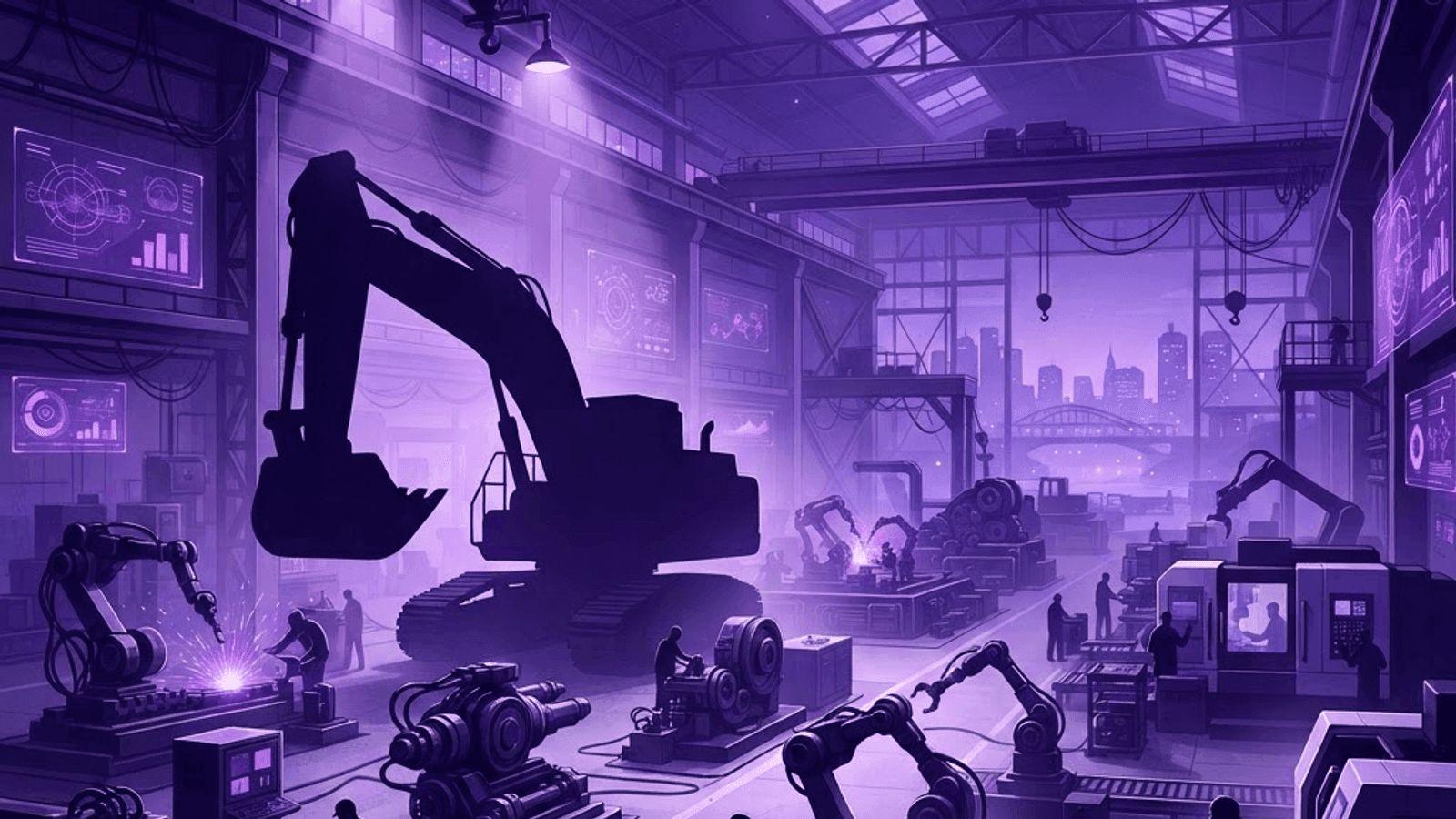
Machinery Manufacturing Is Peoria's Defining Industry
Few American cities are as closely identified with machinery as Peoria. Generations of engineers, welders, machinists, and assemblers have built earthmoving, mining, and material handling equipment here, creating a concentration of heavy manufacturing knowledge that is genuinely rare. That legacy is visible in the region's large fabrication bays, oversized machine tools, and testing grounds where prototypes are pushed until something breaks.
Just as important is the supporting network. Machinery builders in Peoria are surrounded by foundries, gear shops, hydraulic specialists, control system integrators, and test laboratories. A design change can move from concept to physical part in days rather than weeks, and that proximity is a competitive advantage that no spreadsheet fully captures.
How These Manufacturers Were Evaluated
Selection criteria included engineering capability, manufacturing scale, product durability, aftermarket support, and standing within the industry. Machinery buyers care about uptime above almost everything else, so parts availability, service networks, and documentation quality carried significant weight alongside build quality.
The Top 10 Machinery Manufacturers in Peoria
1. Caterpillar
Caterpillar is the definitive Peoria machinery manufacturer, producing excavators, dozers, loaders, motor graders, and engines used on job sites worldwide. Its strengths include exhaustive durability validation, deep dealer service coverage, and an aftermarket parts system that keeps machines productive for decades. The company's engineering standards ripple outward, raising expectations across the entire regional supply base.
2. Komatsu America
Komatsu America builds mining and construction machinery in the region, with particular expertise in very large equipment and the massive structures it requires. Its manufacturing operations combine heavy welding, precision machining of oversized components, and rigorous assembly control. The company is also recognized for machine automation and telematics that improve site productivity and safety.
3. AFC Industries
AFC Industries has built a solid regional reputation in custom machinery, automation systems, and industrial equipment fabrication. It excels at one-off and small-batch machines designed around a customer's specific process, from material handling to specialized production cells. Buyers value its integrated approach covering mechanical design, controls, build, and commissioning.
4. Prairie Machine Works
Prairie Machine Works focuses on conveyors, hoppers, screening equipment, and bulk material handling systems for aggregates, agriculture, and recycling. Heavy plate fabrication, structural design, and abrasion-resistant material selection define its output. Long service life in dirty, high-wear environments is its central promise, backed by responsive field support.
5. Illinois Valley Equipment Manufacturing
This builder produces attachments, buckets, booms, and implements for construction and agricultural machines. Weld quality, wear-part engineering, and rapid custom fabrication are its calling cards. Contractors frequently turn to it for attachments tailored to unusual applications that catalog products cannot address.
6. RiverBend Industrial Systems
RiverBend Industrial Systems designs and builds process machinery for food, beverage, and consumer goods plants, including filling, packaging, and washdown-rated equipment. Sanitary design practice, stainless fabrication, and control integration are core competencies. Its engineers work closely with plant teams to fit new machinery into existing line layouts and cycle times.
7. Central Illinois Hydraulic Machinery
Specializing in presses, shears, balers, and other hydraulic machines, this manufacturer serves metal fabricators, recyclers, and general industry. In-house hydraulic and structural engineering allows it to size systems accurately rather than overbuilding. Rebuild and retrofit services extend the life of older machines, often at a fraction of replacement cost.
8. Heartland Automation Builders
Heartland Automation Builders develops robotic work cells, assembly automation, and inspection systems for manufacturers pursuing higher throughput with stable labor levels. Simulation, safety assessment, and operator interface design are handled internally. The company's phased implementation approach helps plants automate incrementally instead of gambling on a single large project.
9. Peoria Machine Tool Company
This manufacturer builds and rebuilds machine tools, fixtures, and precision workholding used by regional metalworking shops. Way grinding, spindle rebuilding, and geometric alignment expertise restore accuracy to equipment that would otherwise be scrapped. For shops facing long lead times on new machines, rebuilding is often the faster path to added capacity.
10. Bradley Custom Machinery
Bradley Custom Machinery serves research laboratories, pilot plants, and specialty producers needing machines that do not exist commercially. Its team translates process requirements into functional prototypes, then refines them through iteration. Flexibility, documentation, and willingness to tackle unfamiliar problems distinguish it from volume-oriented builders.
Trends Driving Machinery Manufacturing Forward
Connected machinery is now standard expectation. Telematics, sensor packages, and remote diagnostics let owners monitor utilization, fuel or energy use, and component health, shifting maintenance from reactive to predictive. Buyers increasingly evaluate data platforms alongside hydraulics and horsepower.
Electrification and emissions reduction are advancing steadily, especially for equipment operating indoors, underground, or in noise-sensitive areas. Battery-electric and hybrid machines require new expertise in power electronics, thermal management, and charging infrastructure. Meanwhile, operator assistance features such as grade control and collision avoidance improve productivity while easing the skilled-operator shortage.
Sustainability also influences design. Remanufacturing programs, component rebuild strategies, and designs that simplify eventual disassembly reduce lifecycle impact and give owners more cost-effective ownership options.
How to Choose a Machinery Manufacturer
Define your duty cycle honestly before comparing machines. Equipment specified for occasional light use will fail quickly under continuous heavy loading, and the resulting downtime dwarfs any purchase price difference. Share real operating conditions, including material characteristics, ambient temperature, shift length, and operator experience.
Then investigate support. Ask about parts availability, typical lead times for wear items, technician coverage, and training programs. Request references from customers running similar applications and ask specifically about the manufacturer's response when something went wrong. Review documentation quality, since clear manuals and parts diagrams meaningfully reduce repair time. Finally, compare total cost of ownership across the expected life of the asset rather than the quoted price alone.
Final Thoughts
Peoria's machinery manufacturers combine deep engineering heritage with modern automation, connectivity, and electrification capability. Whether you need world-class earthmoving equipment, custom process machinery, or a rebuilt machine tool that restores capacity quickly, the regional industry offers credible options at nearly every scale. Match the builder's strengths to your duty cycle and support needs, and the machine will earn its place in your operation for years.