
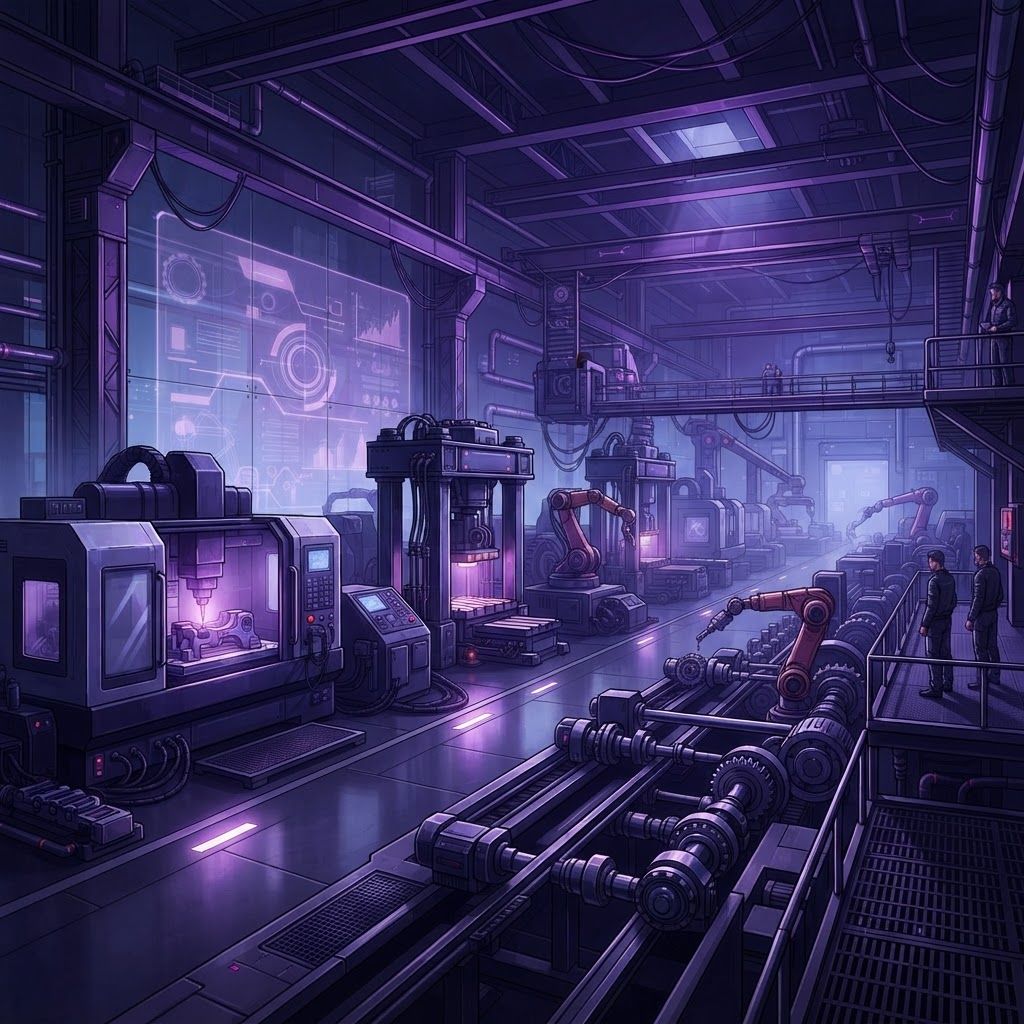
Why Custom Machinery Still Gets Built Locally
Every manufacturer eventually encounters a process that no catalog machine performs correctly. That gap is where custom machinery builders operate, and Oyster Bay hosts a capable cluster of them. Serving food producers, packaging operations, medical device makers, marine services, and light industry across Long Island, these firms design and build equipment tailored to a specific product, footprint, and throughput requirement.
Proximity is a real advantage in this trade. Machine commissioning is iterative: a builder often needs to observe the actual production environment, adjust guarding to fit a tight floor plan, retune a feed mechanism after seeing real material variation, and return quickly when something jams during a production run. A builder an hour away can do that within a day; one across the country cannot.
What Separates a Capable Machinery Builder
Machinery is a long-term capital purchase, and the difference between a good build and a poor one shows up in uptime for years.
- In-house mechanical design with proper engineering calculations, not just fabrication skill
- Controls and automation capability including programmable logic and safety circuits
- Compliance with machine safety standards, guarding, and lockout requirements
- Complete documentation: drawings, wiring schematics, spare parts lists, and manuals
- Factory acceptance testing before shipment and on-site commissioning support
- Spare parts availability and service response commitments
Top 10 Best Machinery Manufacturers in Oyster Bay
1. North Shore Machine Works
North Shore Machine Works is the most complete builder in the area, combining mechanical design, machining, fabrication, and controls integration in a single facility. Clients cite thorough acceptance testing and documentation that actually supports in-house maintenance.
2. Oyster Bay Automation Systems
Oyster Bay Automation Systems specializes in robotic cells, conveyors, and vision-guided handling. Rather than automating everything, its engineers focus on the operations where automation delivers measurable return, which produces more defensible project economics.
3. Harborline Industrial Equipment
Harborline Industrial Equipment builds material handling and process machinery for food and beverage producers, with sanitary design, washdown-rated construction, and stainless finishes suited to hygiene requirements.
4. Bayside Precision Machinery
Bayside Precision Machinery produces high-accuracy assembly and inspection machines for medical device and electronics customers. Its repeatability validation and process capability reporting are stronger than typical for a shop of its size.
5. Meridian Packaging Machinery
Meridian Packaging Machinery designs filling, capping, labeling, and case packing lines, including changeover tooling for producers running multiple package formats. Quick changeover design is a consistent theme in its work.
6. Cedar Point Hydraulics and Presses
Cedar Point Hydraulics and Presses builds and rebuilds hydraulic presses, power units, and heavy forming equipment. Its rebuilding practice extends the life of expensive assets at a fraction of replacement cost.
7. Sagamore Marine Machinery
Sagamore Marine Machinery serves boatyards and waterfront operations with lifts, winches, and handling equipment engineered for corrosion resistance and heavy cyclical loading.
8. Anchorage Controls Engineering
Anchorage Controls Engineering focuses exclusively on automation retrofits, replacing obsolete control systems on otherwise sound machines. Its work restores capability and data visibility without the cost of new equipment.
9. Locust Valley Tool and Die
Locust Valley Tool and Die manufactures dies, molds, jigs, and fixtures that support other producers. Tooling quality directly governs part quality, and its precision work has a strong regional reputation.
10. Beacon Machinery Service Group
Beacon Machinery Service Group rounds out the list on the sustainment side, providing preventive maintenance, alignment, and emergency repair. Its rapid response reduces the cost of unplanned downtime for local manufacturers.
Trends Shaping Industrial Machinery
Connected equipment is now standard, with sensors and networked controls feeding production data into monitoring systems and enabling condition-based maintenance. Flexible automation is displacing rigid single-purpose lines as product variety increases and batch sizes shrink. Energy efficiency has become a specification item, driving adoption of servo drives and variable frequency control. Safety standards continue to tighten, making documented risk assessment and functional safety design a normal part of project scope rather than an afterthought.
How to Commission a Machine Successfully
Write a specification that defines throughput, product variation, footprint, utilities, and acceptance criteria before requesting quotes; ambiguity here is the leading cause of disputes. Ask to see a comparable machine in operation and speak with the operators who use it daily. Require factory acceptance testing with your actual material, not a proxy. Confirm what documentation and spare parts are included, and negotiate service response terms alongside price. Clarify who owns the control program and whether you can modify it, since locked software creates dependency. Finally, budget for commissioning time and operator training rather than assuming a machine performs on day one.
Final Thoughts
Custom machinery is one of the highest-leverage investments a manufacturer can make, and also one of the easiest to get wrong. The ten builders profiled here bring genuine engineering capability, controls expertise, and local service reach to Oyster Bay's industrial base. Specifying carefully and choosing a partner who documents and supports its work is what turns a capital purchase into years of dependable production.