
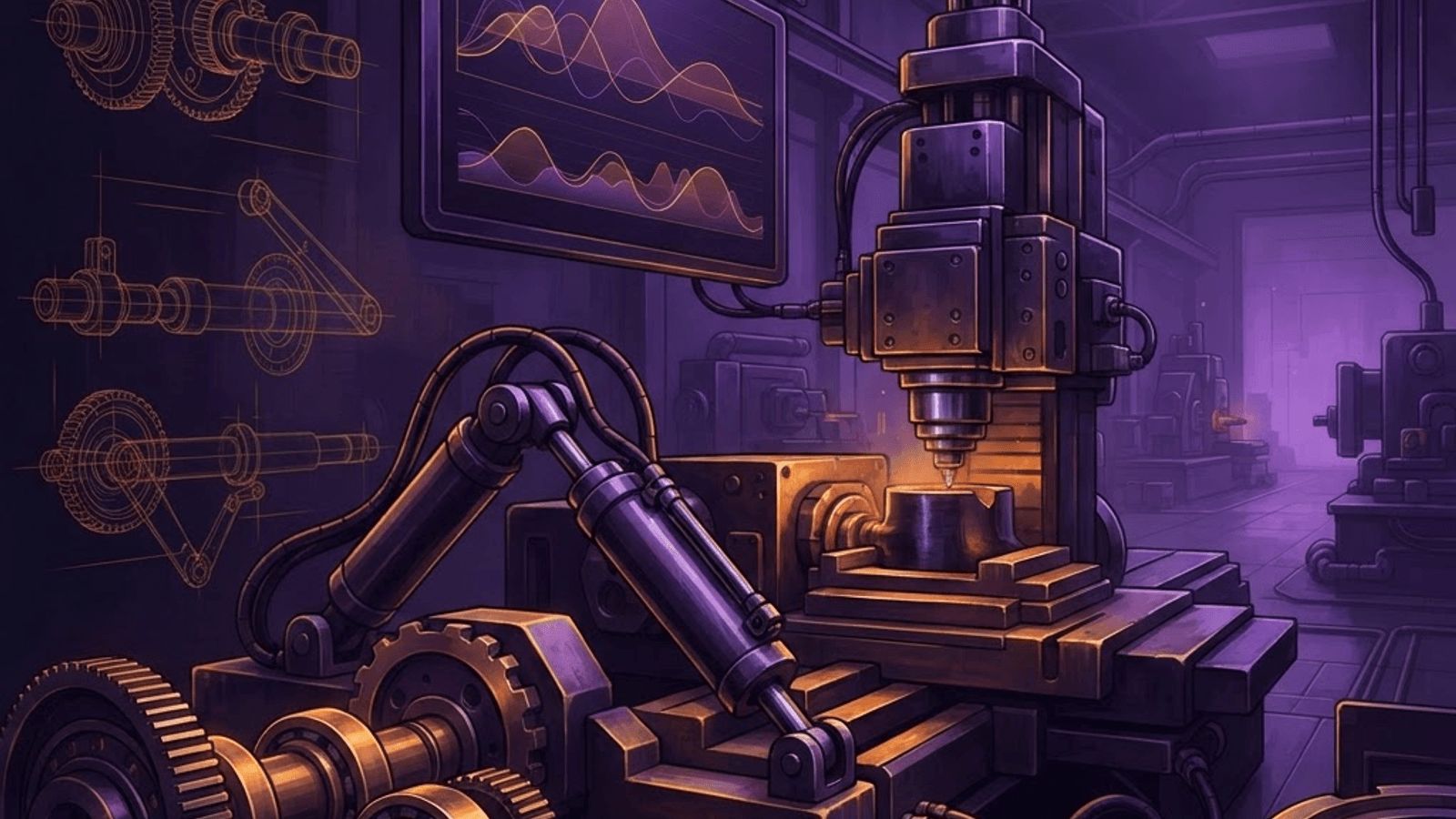
Machinery as the Foundation of Industrial Capability
Machinery manufacturing occupies a distinctive position in any industrial economy. Every other manufacturer depends on it, because equipment determines what can be produced, at what tolerance, and at what cost. Cities that retain machinery capability retain the ability to support every other kind of production.
Huntington has retained that capability. The region's machine shops, equipment builders, and automation integrators serve energy, chemical, food processing, metals, and logistics customers across a wide radius. Much of this work is custom, engineered to order, and built in quantities of one, which requires an entirely different discipline from repetitive production.
How These Companies Were Evaluated
Assessment considered engineering capability, machining and fabrication capacity, controls and automation expertise, field service and commissioning support, documentation quality, and reputation among industrial maintenance and engineering teams.
1. Ironworks Custom Machinery
Ironworks designs and builds custom production equipment, conveyors, and processing machinery to customer specification. The company handles mechanical design, fabrication, controls, and commissioning in-house, which eliminates the finger-pointing that occurs when responsibility is split among vendors.
2. Meridian Automation Systems
Meridian integrates robotics, vision systems, programmable controls, and human machine interfaces into production lines. Their strength is retrofitting automation into existing facilities, a considerably harder problem than designing a greenfield line and the far more common real-world need.
3. Summit Precision Machining
Summit operates multi-axis machining centers producing precision components for machinery builders, energy equipment, and instrumentation. Metrology capability and documented inspection reports make the shop a preferred supplier for parts where tolerance verification is contractually required.
4. Cardinal Material Handling Equipment
Cardinal manufactures conveyors, hoists, cranes, palletizers, and bulk handling systems. Their engineering emphasizes maintainability, using standard bearings and drive components rather than proprietary parts that leave customers dependent on a single source.
5. Riverbend Hydraulic Systems
Riverbend builds hydraulic power units, cylinders, and control manifolds, and provides system repair and contamination analysis. Because most hydraulic failures trace to fluid cleanliness rather than component defects, the company's diagnostic approach delivers unusually durable fixes.
6. Appalachian Process Equipment
Appalachian fabricates tanks, mixers, heat exchangers, and pressure vessels for chemical and food processing customers. Code compliance, weld procedure qualification, and material traceability are core competencies rather than afterthoughts.
7. Valley Machine Tool Rebuilders
Valley rebuilds and retrofits existing machine tools, including way grinding, spindle rebuilding, ball screw replacement, and control modernization. Rebuilding a capable machine often costs a fraction of replacement, and the company has built a strong niche on that economics.
8. Foundry Gear and Drive Works
Foundry manufactures gears, gearboxes, and drive assemblies, including custom ratios and replacement units for obsolete equipment. Reverse engineering discontinued drives keeps aging industrial assets in service, which is quietly valuable to plant managers.
9. Highline Field Service and Millwright
Highline provides equipment installation, alignment, vibration analysis, and precision maintenance. Laser alignment and balancing services extend equipment life substantially, and the company's documentation supports reliability programs rather than just fixing immediate problems.
10. Kanawha Industrial Design Group
Kanawha offers mechanical engineering, finite element analysis, and design-for-manufacture consulting to machinery builders and end users. For companies with strong shop capability but limited engineering staff, this partnership model works well.
Trends in Machinery Manufacturing
Automation demand continues to rise, driven less by labor cost than by labor availability, particularly for repetitive or physically punishing tasks. Condition monitoring and predictive maintenance have moved into mainstream specification, with vibration and thermal sensing increasingly built into new equipment. Modular design has gained ground because it shortens lead times and simplifies future capacity changes. And customers now expect comprehensive digital documentation, including models, wiring diagrams, and spare parts lists, delivered with the machine.
How to Buy Custom Machinery Well
Define the requirement in terms of outcomes, including throughput, product variation, quality tolerance, uptime expectations, and available floor space and utilities, rather than prescribing a mechanical solution. Insist on a documented design review before fabrication begins, since changes are inexpensive on paper and costly in steel. Agree on factory acceptance and site acceptance criteria in writing. Clarify spare parts, training, and support terms, and confirm that controls software and documentation are provided in a form you can maintain without the original builder.
Total Cost of Ownership
Purchase price is a poor proxy for the cost of industrial equipment. Over a machine's life, energy consumption, spare parts pricing, changeover time, maintenance labor, and unplanned downtime typically exceed the original capital cost several times over. A machine that costs less and runs slightly slower can quietly consume its savings within a couple of years of production.
The most useful evaluation compares expected annual output, staffing requirement, consumable cost, and realistic availability across competing proposals rather than headline price. Ask builders for spare parts lists with pricing, recommended maintenance intervals, and the availability of critical components in five years. Machines built from widely available standard components almost always cost less to keep running than those relying on proprietary parts, even when the initial quotation looks similar.
Final Thoughts
Machinery manufacturing in Huntington combines engineering, fabrication, and controls in a way that few regions still sustain. The companies above cover custom equipment, automation, precision machining, material handling, hydraulics, process vessels, rebuilding, drives, field service, and design consulting. For any manufacturer planning capacity changes, this local depth is a substantial practical advantage.