
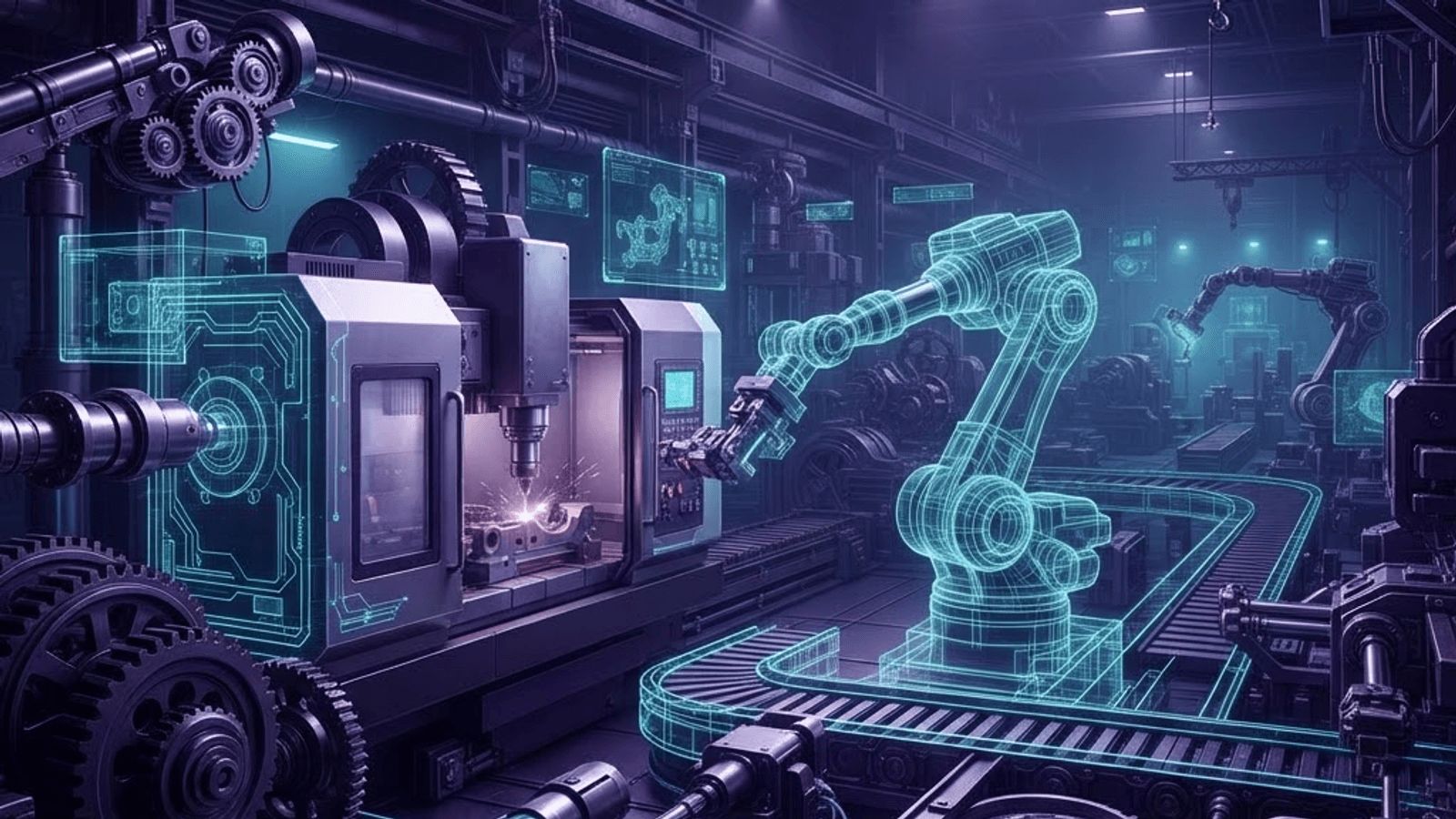
Machinery Manufacturing in Eugene
Machinery manufacturing is one of Eugene's most enduring industrial strengths, and its roots run directly into the region's timber economy. For more than a century, local shops built and maintained the saws, conveyors, debarkers, and kilns that wood products mills required. That knowledge base did not disappear as the industry evolved. Instead, it diversified into food processing equipment, agricultural machinery, packaging systems, and factory automation.
What distinguishes the sector today is engineering capability paired with fabrication skill. These are companies that design a machine, build it, install it, and support it across decades of operation. For manufacturers in the Willamette Valley, having that capacity nearby dramatically reduces downtime risk.
The Top 10 Machinery Manufacturers in Eugene
1. Cascade Industrial Machinery
Designing and building custom production machinery, Cascade Industrial serves food processors, wood products mills, and general manufacturers. Its projects typically begin with a process study, ensuring the machine fits the actual workflow rather than an idealized one. Mechanical design, fabrication, controls, and commissioning are all handled internally.
2. Willamette Conveyor Systems
Material handling determines throughput in most plants. This manufacturer builds belt, roller, chain, and pneumatic conveying systems, along with sortation and accumulation equipment. Its layouts are engineered around product characteristics, which prevents the jams and damage that generic systems cause.
3. Emerald Wood Products Equipment
Serving sawmills and secondary wood manufacturers, Emerald builds and rebuilds saw carriages, edgers, trimmers, and dust collection systems. Its rebuild service is particularly valued, restoring aging equipment to reliable operation at far less cost than replacement while incorporating modern controls and guarding.
4. Lane Automation Engineering
This integrator specializes in robotic cells, vision inspection, and programmable controls, retrofitting automation into existing production lines. Rather than proposing wholesale replacement, it identifies the specific bottleneck operations where automation delivers the strongest return.
5. Pacific Food Machinery
Food processing equipment must satisfy strict sanitary design requirements. Pacific Food Machinery builds washing, sorting, filling, and packaging equipment in stainless construction with cleanable surfaces and documented material certifications, serving berry, hazelnut, brewing, and specialty food producers throughout the valley.
6. Riverfront Hydraulics and Machine
Hydraulic power units, cylinders, and presses are manufactured and rebuilt here for industrial and mobile equipment customers. The company also performs field service, diagnosing pressure and contamination issues that shorten component life, and maintains a substantial inventory of seals and fittings.
7. Skinner Butte Precision Machine
Precision CNC machining supports the entire regional machinery sector. This shop produces tight-tolerance components, gearboxes, and shafts, and it maintains inspection equipment sufficient to document conformance. Short-run and emergency replacement work is a core service.
8. Valley Packaging Equipment
Case packers, palletizers, labelers, and shrink systems from this manufacturer serve beverage, food, and consumer goods producers. Its engineers focus on changeover speed, an increasingly critical requirement as product variety expands and run lengths shorten.
9. Northwest Agricultural Machinery
Planting, harvesting, and post-harvest equipment for specialty crops is this company's focus. Willamette Valley agriculture includes grass seed, berries, hazelnuts, hops, and vegetables, each with distinct handling requirements that mainstream equipment manufacturers rarely address.
10. Green Machine Rebuild and Service
Extending equipment life through rebuilding, alignment, and preventive maintenance programs, this operation keeps capital equipment productive well beyond its nominal lifespan. Its vibration analysis and thermographic inspection services catch failures before they cause unplanned downtime.
Why Local Machinery Partners Matter
When a production line stops, every hour carries real cost. A machinery builder located an hour away can have an engineer on site the same day, diagnose the fault, and often fabricate a replacement part immediately. That responsiveness is difficult to replicate with distant suppliers regardless of contract terms.
Local builders also accumulate knowledge about regional industries. A company that has built equipment for a dozen valley food processors understands the crops, the seasonality, and the regulatory environment without a lengthy education period.
Technology Trends in Machinery
Industrial connectivity is the dominant development. Machines now report performance, cycle counts, and fault conditions continuously, enabling predictive maintenance instead of reactive repair. The best regional builders design this capability in rather than bolting it on.
Flexible automation is a second trend. Collaborative robots and quick-change tooling let smaller manufacturers automate operations that previously required volumes they could not reach. This has opened automation to businesses that were priced out a decade ago.
Energy efficiency is also increasingly specified, with variable frequency drives, regenerative systems, and improved thermal design reducing operating cost over equipment lifetimes measured in decades.
How to Select a Machinery Manufacturer
Begin with a clear specification of throughput, product characteristics, footprint, and integration requirements. Ask prospective builders for references at installations running comparable equipment, and speak with maintenance staff rather than only managers. Review the controls platform, since supportability and spare parts availability depend heavily on that choice. Confirm documentation deliverables including drawings, electrical schematics, parts lists, and maintenance procedures. Finally, clarify commissioning support and training, because even excellent machines underperform when operators are not properly prepared.
Final Thoughts
Eugene's machinery manufacturers represent a deep, practical industrial capability shaped by generations of experience with demanding production environments. Whether the need is a custom process machine, a conveyor system, automation retrofit, or equipment rebuild, the region offers partners with the engineering and fabrication skill to deliver. The ten companies profiled here are the strongest places to start.