
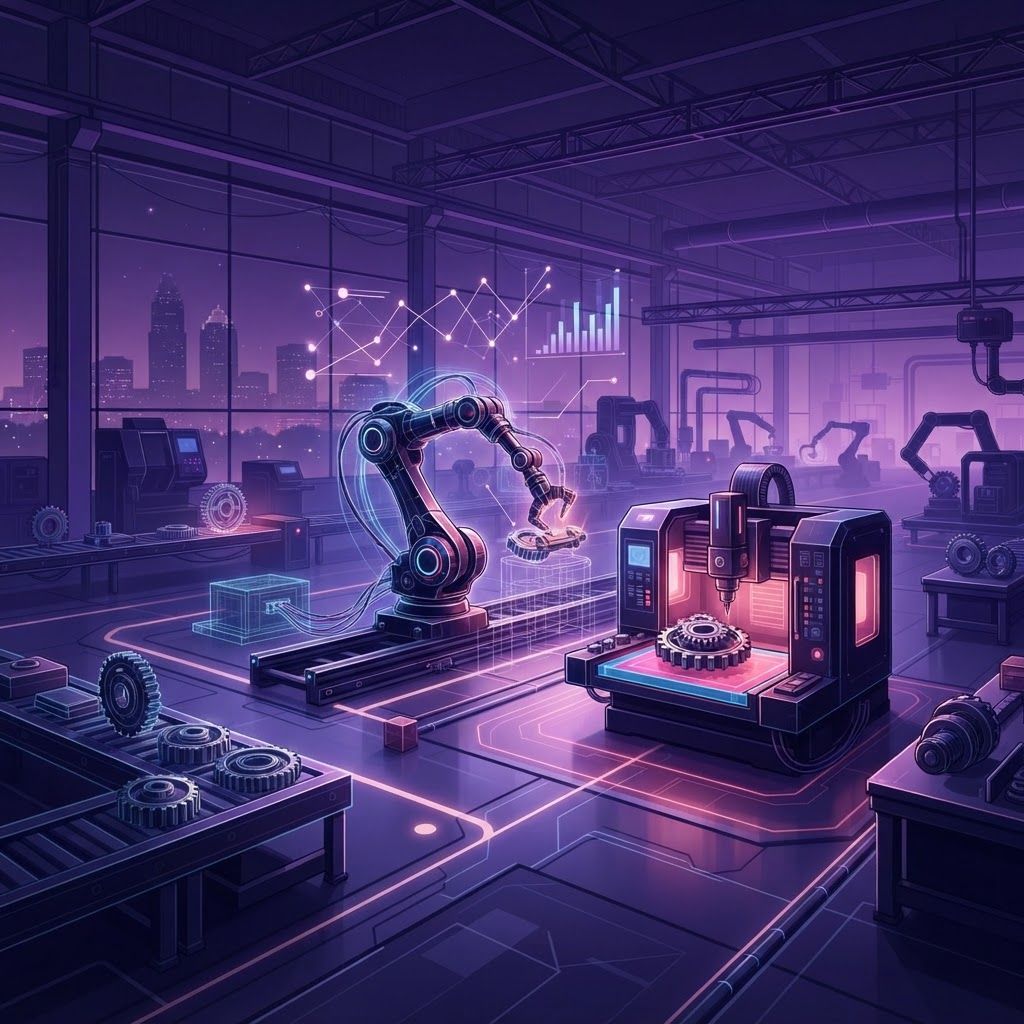
Why Cary Has Become a Machinery Manufacturing Hub
Cary sits at the center of the Research Triangle, surrounded by universities, research parks, and a deep pool of mechanical, controls, and software engineers. That combination has made the city unusually attractive to machinery manufacturers who need more than a shop floor. They need firmware developers, PLC programmers, robotics specialists, and quality engineers working in the same building. Over the past decade, that talent density has pulled in everything from packaging line builders to precision automation integrators.
The city's location also helps. Cary is minutes from RDU International, close to I-40 and US-1, and within a day's drive of most of the eastern seaboard. For manufacturers shipping heavy equipment or dispatching field service technicians, that logistics advantage translates directly into shorter lead times and lower freight costs for buyers across North Carolina and beyond.
How We Evaluated These Machinery Manufacturers
The companies below were assessed on engineering depth, manufacturing capability, quality systems, aftersales support, and reputation among industrial buyers in the region. We weighted in-house design capability heavily, because the difference between a fabricator and a true machine builder is the ability to take a process problem and turn it into a validated, repeatable machine. Service responsiveness mattered just as much, since unplanned downtime is usually the largest hidden cost in capital equipment ownership.
1. Triangle Precision Machine Works
Triangle Precision Machine Works is widely regarded as one of Cary's most versatile custom machine builders. The company specializes in precision CNC machining, tooling, and complete automated assembly cells for medical device and electronics customers. Its reputation rests on tight tolerance work, thorough documentation, and a validation process that satisfies regulated industries. Buyers consistently mention the firm's willingness to co-develop designs rather than simply quote drawings.
2. Cary Industrial Systems
Cary Industrial Systems focuses on material handling and conveying machinery for distribution, food processing, and light manufacturing. The company designs modular conveyor platforms that can be reconfigured as a customer's throughput changes, which is a meaningful differentiator for growing operations. Its controls group builds HMI and PLC packages in-house, so customers receive a single point of accountability for mechanical and electrical performance.
3. Piedmont Automation Group
Piedmont Automation Group is a robotics and automation integrator known for turnkey robotic work cells, vision-guided pick and place systems, and end-of-line packaging automation. The team works with major robot platforms and writes its own integration software, giving clients flexibility rather than locking them into one brand. Their simulation-first approach lets customers see cycle times and reach studies before any steel is cut.
4. Weston Machine and Fabrication
Weston Machine and Fabrication serves customers who need heavy fabrication paired with machining. Capabilities include structural welding, plate work, large-envelope milling, and painted, ready-to-install frames and bases. The company is often brought in as a build partner by engineering firms that design equipment but do not own production capacity, which speaks to the trust it has earned in the local supply chain.
5. Apex Line Technologies
Apex Line Technologies builds filling, capping, labeling, and inspection machinery for beverage, personal care, and nutraceutical producers. Its strength is change-over speed. Machines are engineered so operators can switch container formats in minutes using tool-less adjustments, which matters enormously for contract packagers running short batches. The firm also offers validation documentation packages for customers in regulated categories.
6. Carolina CNC Solutions
Carolina CNC Solutions provides contract machining and subassembly manufacturing at volumes ranging from prototype to mid-series production. The company invests consistently in multi-axis machining centers and automated pallet loading, allowing it to run lights-out shifts and hold competitive pricing without offshoring. Its metrology lab supports full first-article inspection reporting, a requirement for aerospace and medical customers.
7. Greenfield Process Equipment
Greenfield Process Equipment designs mixing, blending, drying, and thermal processing machinery for chemical, food, and life science plants. The engineering team is known for rigorous process modeling, which reduces the number of scale-up surprises when a laboratory recipe moves to production volumes. Sanitary design and clean-in-place capability are standard across much of the product line.
8. Preston Tool and Die
Preston Tool and Die builds progressive stamping dies, injection mold tooling, and custom fixtures. Toolmaking is a craft business, and this company has retained experienced toolmakers while adding modern EDM and high speed graphite machining. Customers value its repair and refurbishment service, which can extend the life of expensive legacy tooling by years and avoid the capital expense of a replacement.
9. Northlake Controls and Machinery
Northlake Controls and Machinery occupies the space between machine building and industrial software. It builds test stands, leak detection systems, and functional end-of-line testers with custom data acquisition and reporting. For manufacturers under pressure to prove traceability, its systems automatically log results to plant databases and generate audit-ready records without operator intervention.
10. Cardinal Packaging Machinery
Cardinal Packaging Machinery rounds out the list with case erectors, palletizers, shrink wrappers, and integrated end-of-line systems. The company differentiates through service coverage, maintaining a regional parts inventory and field technicians who can typically reach Triangle-area plants the same day. For high volume shippers, that response time is frequently the deciding factor.
Industry Trends Shaping Machinery Manufacturing in Cary
Three forces dominate local conversations right now. The first is labor availability, which continues to push manufacturers toward automation that reduces reliance on hard-to-fill roles. The second is connected equipment. Buyers increasingly expect machines to publish condition data so maintenance teams can move from calendar-based servicing to predictive intervention. The third is energy and sustainability performance, with specifications now routinely including motor efficiency, compressed air consumption, and material waste targets.
Reshoring has added a fourth dimension. As companies bring production closer to customers, demand for domestically built, quickly serviceable machinery has risen sharply. Cary manufacturers have benefited from that shift because proximity, communication, and spare parts availability are genuine competitive advantages when a line goes down.
How to Choose the Right Machinery Manufacturer
Start by writing a clear specification that describes the process outcome you need rather than the machine you imagine. Good builders will challenge assumptions and often propose a simpler, cheaper path. Ask to see a factory acceptance test on a comparable machine, and confirm who owns the controls code and documentation after delivery. Vague ownership terms create expensive dependencies later.
Evaluate the aftersales relationship with the same rigor you apply to the quote. Ask about guaranteed response times, recommended spare parts kits, operator training, and remote diagnostic support. Finally, request references from customers who have run the equipment for at least two years. Machines usually look excellent on commissioning day, and it is year three that reveals the true quality of the build.
Final Thoughts
Cary offers an unusually strong concentration of machinery manufacturers covering precision machining, robotics, packaging, process equipment, and tooling. Whether you are automating a growing production line or replacing aging equipment, the depth of local capability means you can usually find a partner within a short drive. Take the time to match your process requirements to a builder's genuine specialty, and the relationship will pay dividends long after installation.