
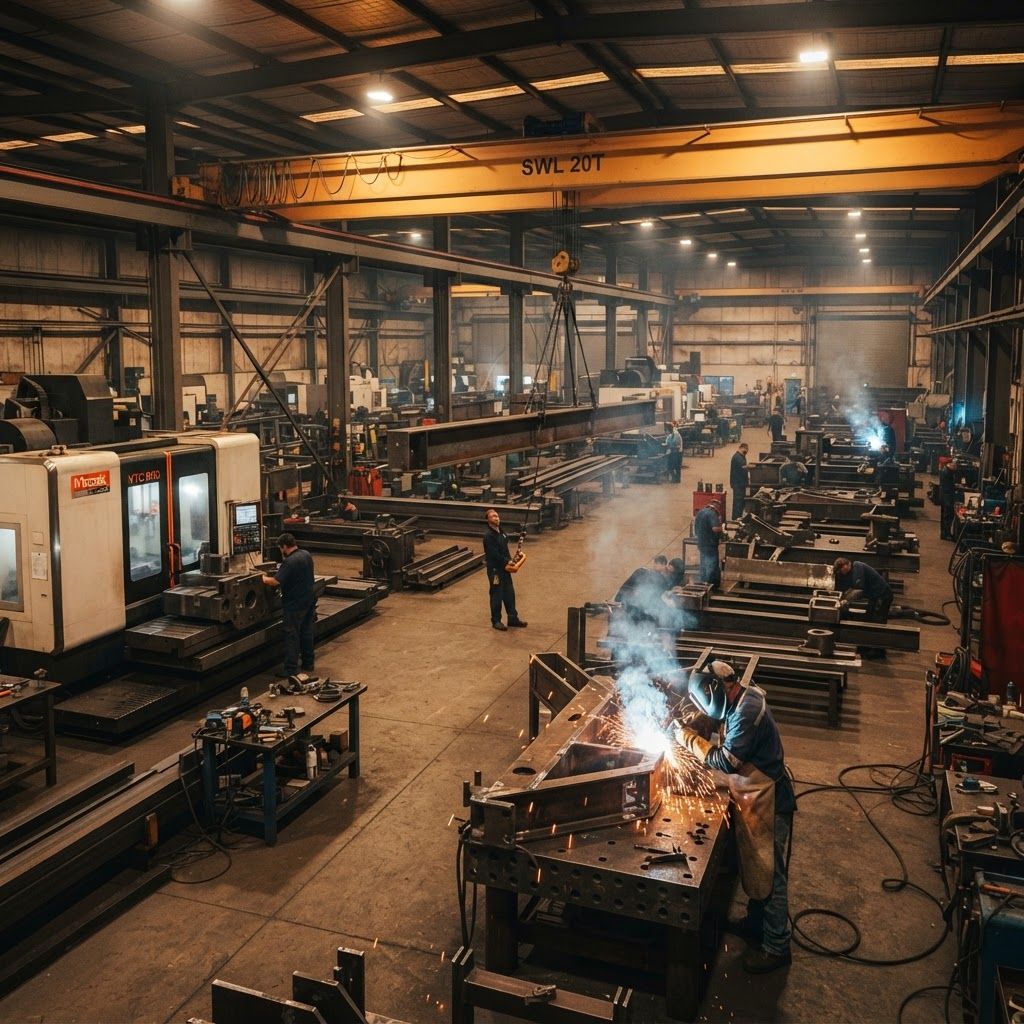
Machinery Built for Real Work
Machinery manufacturing in Boise City grew directly out of necessity. Southern Idaho's agriculture, food processing, and mining industries needed equipment that could handle potatoes, sugar beets, onions, hay, aggregate, and lumber in volumes and conditions that generic machinery handled poorly. Local shops responded by designing purpose-built solutions, and over decades that problem-solving culture matured into a machinery sector with genuine engineering capability.
Today the region's machinery builders serve customers far beyond Idaho. Food processing lines designed in the Treasure Valley run in plants across North America. Conveyor systems, sorting equipment, hydraulic implements, and custom automation cells developed here reflect a design philosophy shaped by harsh duty cycles, dusty environments, and the absolute requirement that harvest-season equipment does not stop.
What Makes a Machinery Manufacturer Worth Choosing
Capital equipment decisions are long-term commitments, so evaluate accordingly. Strong manufacturers employ mechanical, electrical, and controls engineers rather than outsourcing the thinking. They design for maintenance, placing wear parts where a technician can reach them and standardizing on components available regionally. They provide clear documentation: assembly drawings, electrical schematics, spare parts lists, and operating manuals written for the people who will actually run the machine.
Aftermarket support is the decisive differentiator. A machine is only as good as the parts availability and service response behind it. Ask how long spares are stocked, how quickly a technician can travel, and whether remote diagnostics are supported.
Top 10 Best Machinery Manufacturers in Boise City
1. Treasure Valley Machine Works
A general machinery builder with strong fabrication and machining capability, Treasure Valley Machine Works designs custom equipment from customer requirements through commissioning. Its differentiators include integrated engineering and shop floor collaboration, which shortens development, and a reputation for machines that hold up under continuous operation.
2. Snake River Agricultural Equipment
Snake River Agricultural Equipment manufactures harvesters, conveyors, graders, and handling systems for row crop and specialty agriculture. Designs prioritize gentle product handling to reduce bruising and loss, and the company's field service network keeps machines running through compressed harvest windows when downtime is expensive.
3. Foothills Food Processing Systems
Serving the region's substantial food industry, Foothills Food Processing Systems builds washing, sorting, cutting, and packaging equipment to sanitary design standards. Stainless construction, cleanable surfaces, and validated washdown ratings are standard. Processors value the firm's understanding of food safety documentation requirements alongside mechanical performance.
4. Capital City Industrial Machinery
Capital City Industrial Machinery produces material handling and process equipment including mixers, screw conveyors, dust collection systems, and bulk bag handling stations. The company is recognized for robust structural design, thoughtful access for maintenance, and pragmatic engineering that avoids unnecessary complexity.
5. Gem State Hydraulics and Machinery
This manufacturer designs and builds hydraulic power units, cylinders, and implement systems for equipment makers and end users. Strengths include proper circuit design that manages heat and contamination, careful component selection, and rebuild services that restore existing systems rather than forcing replacement.
6. Sawtooth Automation Systems
Sawtooth Automation Systems integrates robotics, vision systems, and programmable controls into production cells for packaging, palletizing, and inspection. Projects include documented control logic and operator training. Clients cite realistic throughput projections and a willingness to phase automation gradually rather than overselling a full turnkey line.
7. Riverbend Conveyor Manufacturing
Specializing in belt, roller, and chain conveyors, Riverbend Conveyor Manufacturing supplies systems for warehouses, processing plants, and aggregate operations. The company designs for the specific product being moved, addressing incline limits, spillage, and cleaning access, and it stocks common wear components locally for fast replacement.
8. Boise Custom Fabrication and Machinery
Boise Custom Fabrication and Machinery handles one-off machines, retrofits, and capacity upgrades for existing equipment. Its niche is solving problems that catalog machinery cannot, using reverse engineering, precision machining, and structural fabrication. Maintenance managers rely on the shop when an obsolete machine still has years of useful service left.
9. Sagebrush Mining Equipment
Sagebrush Mining Equipment builds crushing, screening, and conveying machinery for aggregate and mineral operations. Designs emphasize abrasion resistance, replaceable liners, and structural margin for shock loading. The company's field support and rapid liner supply reduce costly production interruptions at remote sites.
10. Northwest Packaging Machinery
Northwest Packaging Machinery manufactures filling, capping, labeling, and case packing equipment for food, beverage, and consumer goods producers. Machines are built for quick changeover between package formats, and the firm provides on-site commissioning plus operator training that helps plants reach rated speeds quickly.
Trends Shaping Machinery Manufacturing
Labor availability is the single largest driver of current demand, pushing processors and manufacturers toward automation for repetitive, physically demanding tasks. Sensors and connectivity have made condition monitoring practical, shifting maintenance from scheduled to predictive and reducing unplanned downtime. Sanitary design expectations continue to rise across food handling, influencing material choices and geometry. Energy efficiency has entered specification conversations as motor and drive selection meaningfully affects operating cost. Finally, modular design is gaining favor because it lets plants expand capacity in stages instead of single large investments.
How to Choose the Right Machinery Manufacturer
Start with a written specification covering throughput, product characteristics, footprint, utilities, and cleaning requirements, since ambiguity here causes most disputes later. Visit installations of similar machines and speak with operators rather than only managers. Evaluate documentation quality from a previous project, which predicts your own experience. Confirm parts stocking commitments, service response times, and training scope in the contract. Discuss acceptance testing criteria before ordering so that commissioning ends with agreement rather than argument. Weigh total cost of ownership, including energy, spares, and downtime, over purchase price alone.
Final Thoughts
Boise City's machinery manufacturers combine practical engineering with the responsiveness that comes from building equipment near the customers who use it. That combination produces machines suited to demanding, seasonal, and messy realities rather than idealized conditions. Define your requirements clearly, prioritize aftermarket support, and the region's builders will deliver equipment that earns its keep for decades.