
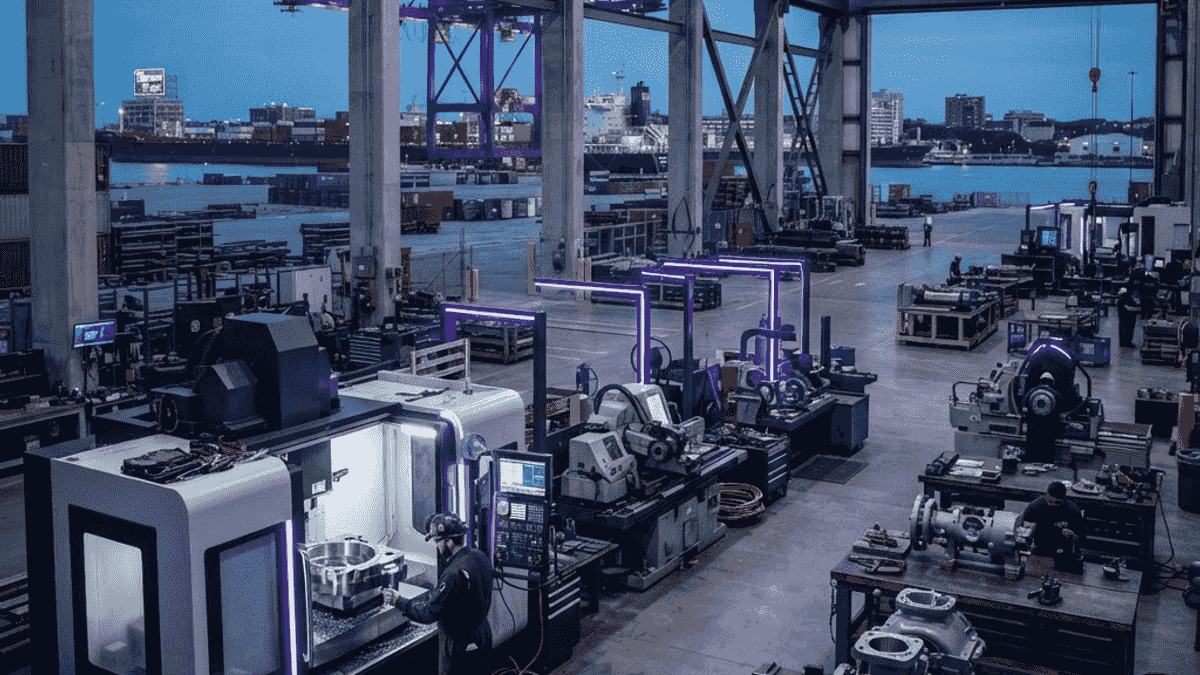
Baltimore's Industrial Machinery Sector
Machinery manufacturing has long been a cornerstone of Baltimore's industrial economy. The city's history as a major port and manufacturing hub created a strong foundation of engineering talent, metalworking expertise, and supplier networks that continue to support a thriving machinery sector today. Local manufacturers produce a wide range of equipment, from precision machine components and industrial pumps to custom fabrication and heavy machinery for demanding applications.
These companies serve diverse industries including manufacturing, food processing, energy, construction, and logistics. Because machinery must perform reliably under continuous use and often in harsh conditions, the manufacturers that succeed in this field bring exceptional engineering discipline and craftsmanship to their work. Baltimore's central East Coast location also allows these firms to serve customers efficiently across the Mid-Atlantic and beyond.
What Makes a Top Machinery Manufacturer
The best machinery manufacturers in Baltimore are distinguished by their engineering expertise and commitment to durability. Industrial equipment represents a significant investment for buyers, who expect machinery to deliver years of dependable service. Leading firms achieve this through robust design, high-quality materials, precise manufacturing, and thorough testing before delivery.
Customization capability is another defining strength. Many clients require machinery tailored to specific processes or facilities, and top manufacturers excel at translating unique requirements into effective, well-built equipment. Strong after-sales support, including maintenance, spare parts, and technical assistance, further separates the best companies from the rest, ensuring that customers get the most value from their investment over the equipment's lifespan.
Leading Machinery Manufacturers in Baltimore
Companies such as Patapsco Machine Works have built strong reputations for precision component manufacturing and custom equipment. Harbor Industrial Systems specializes in heavy machinery for material handling and logistics applications. Monument Manufacturing focuses on process equipment for the food and beverage industry.
Other respected firms include Chesapeake Fabrication Company, known for its custom metal fabrication and structural components, and Bay State Machinery, which produces pumps and fluid-handling systems. Inner Harbor Engineering provides precision machining and prototyping services, while Locust Point Equipment concentrates on packaging and automation machinery. Rounding out the list are Canton Industrial Manufacturing, Federal Hill Machine Company, and Fells Point Mechanical Systems, each offering specialized expertise that supports the region's industrial base.
Innovation and Emerging Trends
Automation and smart-manufacturing technologies are transforming Baltimore's machinery sector. Manufacturers increasingly integrate sensors, controls, and connectivity into their equipment, enabling predictive maintenance and remote monitoring. These features help customers minimize downtime and optimize performance, adding significant value to modern machinery.
Precision and efficiency continue to drive innovation as well. Advanced machining centers, computer-aided design, and additive manufacturing allow companies to produce complex components with greater accuracy and less waste. Growing attention to energy efficiency and sustainability is also influencing equipment design, as customers seek machinery that reduces operating costs and environmental impact while maintaining high performance.
Selecting the Right Manufacturing Partner
Businesses seeking a machinery manufacturer in Baltimore should evaluate factors such as engineering capabilities, industry experience, customization options, and after-sales support. A manufacturer with proven expertise in a client's specific application will better understand the demands the equipment must meet and deliver a more reliable, effective solution.
The manufacturers highlighted here represent the strength and versatility of Baltimore's machinery sector. Whether a business needs precision components, custom fabrication, or complete industrial systems, the city offers experienced partners capable of delivering durable, high-performance equipment built to demanding standards.
Questions to Ask Before Making a Decision
A thoughtful selection process should include direct questions about capacity, lead times, quality controls, workforce expertise, and contingency planning. Ask each prospective company to explain how it manages projects from the first consultation through delivery and ongoing support. Clear answers reveal whether the organization has mature processes or relies on improvised solutions. It is equally useful to request examples of comparable work, references from established customers, and details about insurance, certifications, warranties, and service agreements. These checks help buyers compare meaningful evidence rather than marketing claims alone.
Baltimore-specific considerations deserve attention as well. Companies familiar with the city's industrial corridors, port operations, transportation network, labor market, permitting procedures, and environmental requirements can often identify challenges earlier. Local knowledge is especially valuable when a project involves waterfront access, heavy freight, historic structures, dense neighborhoods, or coordination with regional utilities. Buyers should discuss how the provider handles scheduling disruptions, material shortages, extreme weather, and other conditions that can affect work in the Chesapeake region.
Finally, the lowest initial quote is not always the strongest value. Total cost includes product life, energy use, maintenance, downtime, replacement parts, training, and the quality of post-sale support. A well-run company should be willing to explain these trade-offs in plain language and document the assumptions behind its proposal. Comparing providers on safety, reliability, transparency, technical capability, and long-term service produces a more balanced decision. Readers should verify current capabilities and availability directly, since ownership, product lines, service territories, and operating conditions can change over time.